

Signs It May Be Time To Stop Mowing Your Lawn
We may receive a commission on purchases made from links.
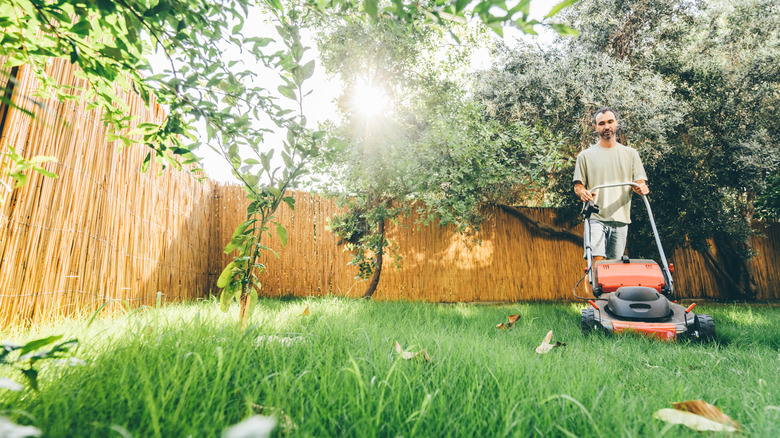
If you're a homeowner living in a climate with changing seasons, you've learned that lawn maintenance tapers during the late autumn or early winter months. During colder portions of the year, your grass generally won't need to be cut, as the plants lie dormant and stop growing. The same is true, if less obvious, in warm weather places like Arizona. Cutting your grass during this time is not only unnecessary, it's also bad for your overall lawn health, as it creates undue strain on the blades to repair themselves. If you're not careful, you could wind up with grass that's growing in patchy and needs fixing once the spring arrives. Whether you're new to lawn maintenance, or looking to reduce perennial difficulties in your life, it's worth looking into the early warning signs that your grass is ready for its last cut of the season.
Luckily, we've got you covered, with a quick but effective guide to the final mow of the year. Needless to say, the most obvious hint that your grass doesn't require any maintenance is that it ceases to grow at rapid speeds. Depending on your grass type and climate, you may find that the lawn needs multiple mows per week in the spring and summer, and begins to taper down once you get into fall. By the winter, weeks could pass without visible growth, offering a visual indication to roll your lawn mower to back of the garage for the season. Still, there are a myriad of early warning signs that can help you predict when this change is coming.
Check the thermometer for signs it's quitting time
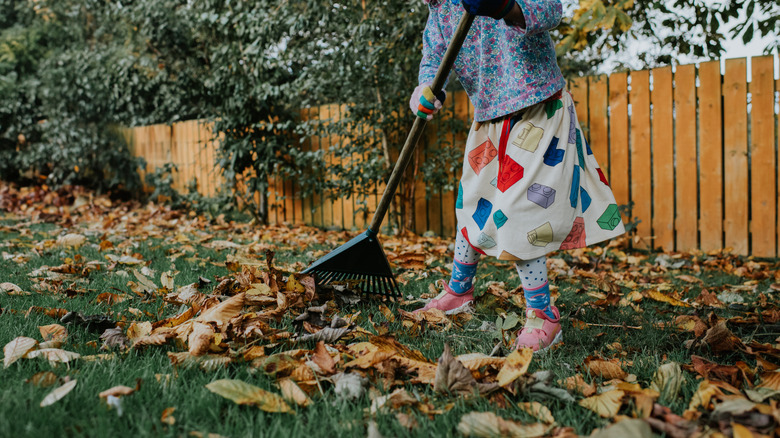
For many homeowners, the visible lack of growth is all the notice necessary to pack up the lawn tools and focus on starting plant seeds indoors until spring begins. For others, it's worth examining factors such as soil temperatures and foliage. Depending on your specific grass type, you'll know it's about time to quit cutting once the soil temps reach 40-55 degrees Fahrenheit. Use a specialized thermometer like the Taylor soil testing thermometer. Cool-season grasses, like Kentucky blue grass or fescue, lean toward the lower end of that spectrum. Another tell-tale sign that the landscape is changing comes with fall foliage: Once leaves start covering your lawn, that's a good indicator the yard is preparing for dormancy. A good rule of thumb is to wind down mowing when your trees have lost about half their foliage.
Of course, seasons can be quite temperamental, so it's important to keep an eye on your lawn even in the dead of winter. As global climates continue to shift, we're seeing warmer winters all over the world, which sometimes results in grass emerging from dormancy earlier than usual. For your final mow of the year, consider taking the blade height to roughly 2 inches, in order to keep your yard neat and tidy yet keeps blades long enough to protect your lawn's roots from frost. From there, it should be easy for you to visually spot when the growth has begun to spring back up, allowing you to take necessary measures before the length can get out of hand. Lastly, be sure to employ a carefully planned mowing technique to control weeds and other detritus, ensuring your lawn stays healthy for the remainder of the season.