

Why You May Want To Reconsider Adding A Large Water Feature To Your Yard

From the gorgeous national park waterfall views that hikers flock to each summer, to the pattering of soft rain in a sleep app, the sights and sounds of water provide something special to the human psyche. It's for this reason that homes located on the waterfront fetch top real estate dollars. But the same kind of value isn't necessarily added for backyard water features like ponds and fountains. This is especially true for large installations that require a lot of ongoing maintenance. Todd Luong, of RE/MAX DFW Associates, spoke exclusively to Outdoor Guide with insights on the value, and drawbacks, of water features.
Adding a beautifully landscaped koi pond or a DIY garden pond built from a dingy tire are both popular backyard projects. But such ponds can quickly become an eyesore if not properly maintained. Luong relays a story of a seller who had a nice house with a backyard fish pond that became an obstacle to a quick sale. "The seller was busy moving and preparing the house for sale, so she didn't have time to maintain the backyard or the pond. As a result, there was a lot of algae growth in the pond, which made the water green and murky. It definitely didn't look or smell appealing, and it probably reminded potential buyers of the extra work they'd have to do if they bought the house," Luong says. So you may want to think twice about that charming pond or waterfall feature.
Expect ongoing maintenance and cost for a water feature
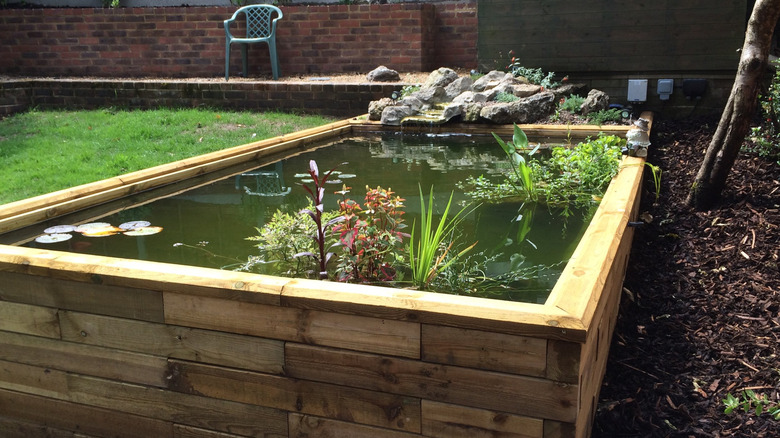
Fish ponds need to be maintained with proper chemicals and aeration to keep oxygen levels high. Pondless water features that are right for your garden, like fountains and waterfalls, can also come with their own maintenance hassles. Fountains need regular cleaning and chemical treatments. RE/MAX's Todd Luong says, "Like fish ponds, waterfalls can also experience algae growth, especially in stagnant water found in shady areas near adjacent rocks." For waterfalls near a pool, Luong says this algae can quickly spread into swimming areas. "The problem can worsen further if sanitation is inadequate (e.g., low chlorine levels) or if there is poor water circulation," he says.
The pumps and filters you need to ensure your water remains clear and flowing also come with maintenance, and aren't always an easy fix if they break. Pumps get clogged, and water pipes can crack and break, often needing a professional to come in for replacement. And don't forget the added costs of electricity to run your water feature systems. The larger the water feature, the larger the problems, and the bigger the costs. Even pools, desirable in some markets, can be seen as a liability for some homebuyers who see only the hassle and cost of maintenance. Luong notes that, "Here in Dallas, Texas, swimming pools are by far one of the most popular water features. In certain high-end residential neighborhoods, having a pool is almost expected when buyers are shopping for a home." But if you aren't in a market that equates backyard swimming with higher home values, you may want to reconsider adding a pool to your yard, along with those other high-maintenance water feature options.