

If Your Yard Is Full Of Bare Patches, Try Planting A Vibrant Ground Cover
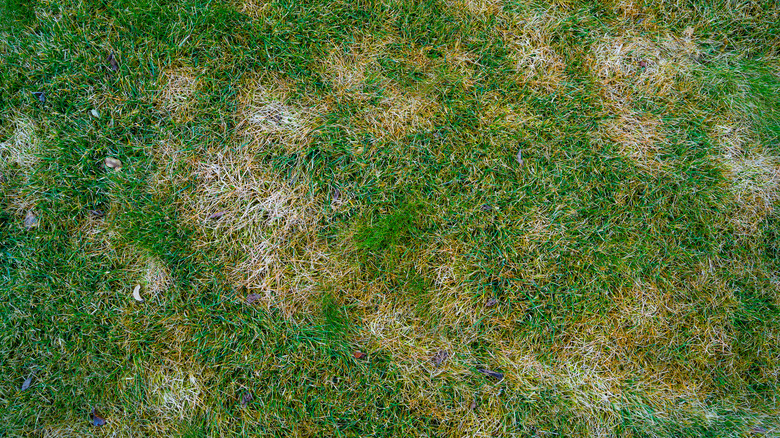
Are you struggling to keep a full, luscious lawn? Unfortunately, some soil types and climates just don't support the vibrant picturesque yard you might've dreamed of — even if you take all the right steps to foster growth and prevent common diseases like lawn rust. However, you don't need to give up yet. While you might not be able to create a show-stopping yard using grass alone, there is a clever ground cover solution that can fill in bare patches and boost the aesthetic appeal of your lawn.
Irish moss (Sagina subulata) is a popular choice for this. Soft and dense, its vibrant coloration adds to the appearance of your yard — especially when the alternative is bare patches. Plus, in areas with low foot traffic and mild conditions, it can even be used as a low-maintenance grass alternative. In all, if time after time sowing grass in your yard just hasn't worked, switching to Irish moss to fill in any bald spots can help you transform your dream lawn into your backyard reality.
Whether you're looking to cover up bare patches in your grass or add more plants that attract birds, it's important to take some time and research how a plant will respond in your location. After all, in some areas, Irish moss can be considered invasive — which means you'll have to find another option if that's the case for where you live.
How to grow Irish moss in your yard
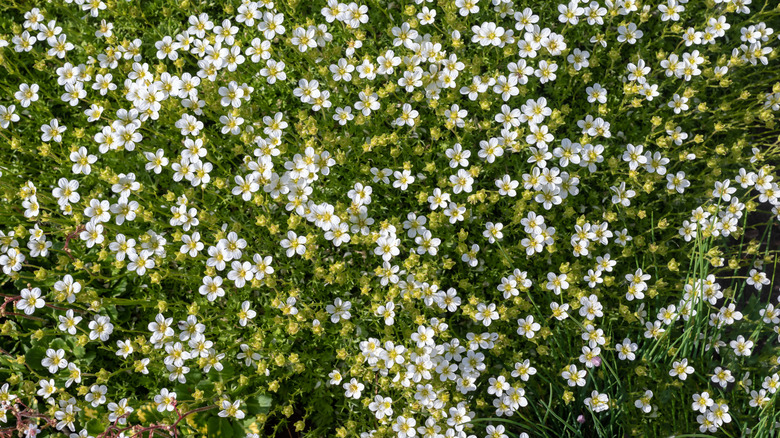
If you've decided Irish moss is the right choice for your yard, you may be wondering how to add this plush ground coverage to your lawn. Thankfully, with the right time and care, Irish moss can be easy to grow.
The first thing to do when growing Irish moss is to familiarize yourself with the conditions this plant grows best in. Specifically, Irish moss thrives in USDA hardiness zones 4 through 8. This also makes it better suited for mild to cooler climates instead of places that regularly see higher temperatures, especially considering the fact that it doesn't hold up well to drought. With the right climate, however, Irish moss grows well in both full sun and partial shade, and can tolerate areas with lighter foot traffic.
With the basics of where to grow Irish moss in your yard down, the next step is learning how to grow it. Overall, Irish moss is considered to be fairly low maintenance. This is why it makes such a good grass alternative for those looking for a hands-off lawn. And although it requires regular watering, too much water can pose a serious problem for this charming ground cover. Finally, for the most part, you don't really need to worry about diseases or pests with Irish moss thanks to its hardiness. However, you may need to keep an eye out for aphids, which can be harmful.