

Keep Your Lawn Healthy During The Summer Heat With A Simple Mowing Tip
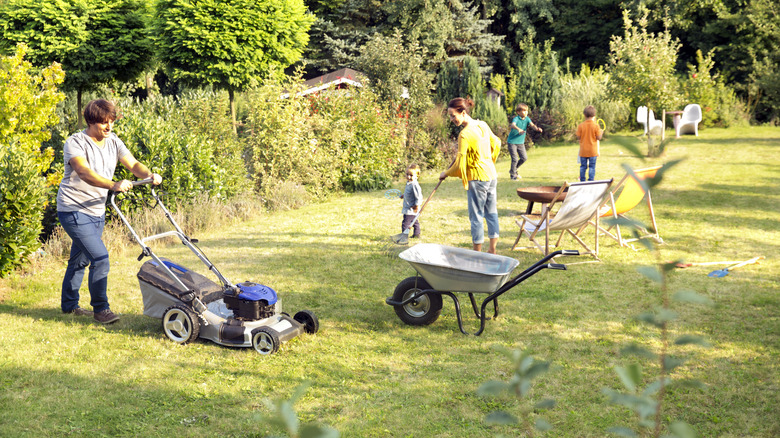
Sweltering summer heat may send you jumping into the nearest pool or heading indoors for glorious air conditioning, but your lawn doesn't have that luxury. Hot, sunny days take their toll on the grass, especially during multi-day heatwaves. Too much heat and sun exposure make it difficult for grass to thrive, even if it receives the same amount of rain it did in cooler seasons. The reason for this is that water evaporates quickly when it's hot and sunny, so there's less moisture available in the soil to nourish the grass. The shorter the lawn, the faster that water evaporates, too — which is one of the reasons why cutting grass too short could be secretly ruining your lawn.
While watering early in the day could help your lawn during times of excessive heat, other factors come into play as well. A heat-stressed lawn is more susceptible to problems such as diseases, weeds, or even pests. Unfortunately, issues like these could lead to a thinning lawn with weak blades of grass. The lawn may even look brown for a while as it goes into dormancy to conserve energy and use less water. Mowing incorrectly could make matters worse, but the good news is that a slight mower adjustment can make a world of difference to the grass. In fact, allowing the grass to grow a little longer during the height of summer helps those green blades stay strong and healthy. To do this, you can adjust the mower's blade height so that it cuts the grass an inch or so taller than usual during periods of hot weather.
Let it grow, don't mow low
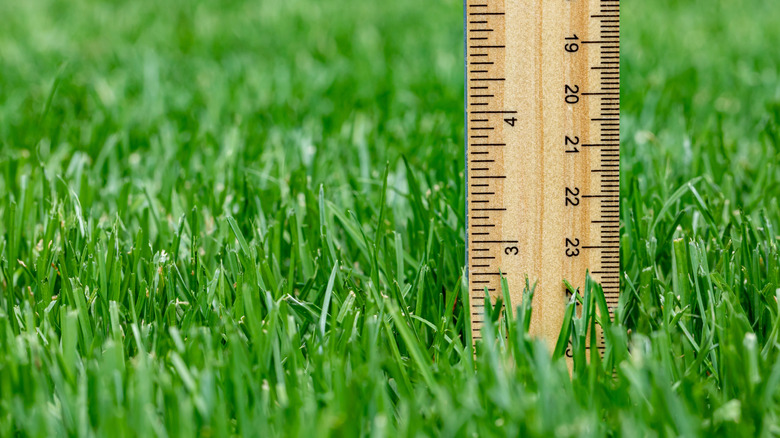
Though it may not seem like much from a human standpoint, taller grass means more shade for the soil, and more shade means moisture won't evaporate quite as quickly. This means that there will be more moisture available to your lawn — so it's a winning solution for each blade of grass, the individual roots, and the turf as a whole. Allowing the grass to grow an inch or so taller than usual also gives it more time to recover and grow healthy between mowings.
As a general rule, you should never trim off more than the top third of the grass height; any more than that causes stress to the lawn. The average cool-season grass should be about 3 inches high in summer; so you can let it grow to around 4.5 inches before mowing it again following the top-third rule. Fescues, ryegrass, and bluegrass are cool-season grasses that grow in moderate to cool climates. Warm-season grasses tend to be a bit shorter and require different care; however, the same rules apply. Once those hot summer days give way to cooler autumn temperatures, it's safe to return to a normal mowing height, based upon the recommended range for your grass type. Heading into winter, a cool-season grass height of around two inches will keep it healthy through the cold temperatures and up until the first mow of the next year.