

Outdoor Lighting Tips That'll Help Reduce Light Pollution
We may receive a commission on purchases made from links.
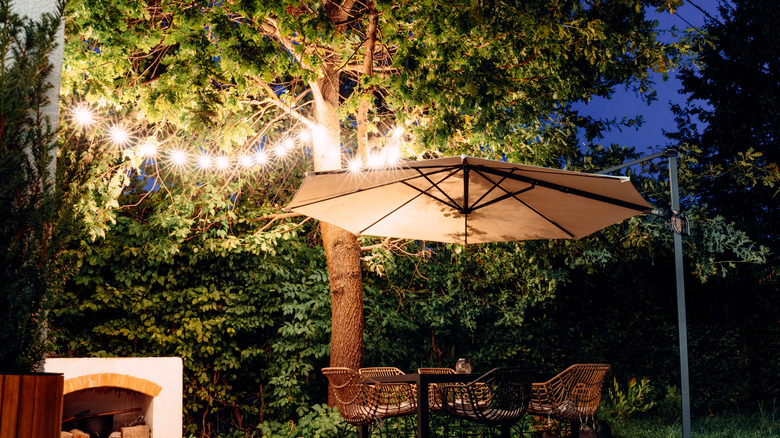
There is something magical about having outdoor lights illuminating your yard. In the middle of the night, it can feel like you're in an entirely different world. However, what seems magical to you may be harmful to others and the natural environment. Light pollution is no joke, but thankfully, you can still keep your outdoor lights while being a little more environmentally friendly if you follow a few easy guidelines. There are five main principles to try and observe when planning outdoor lights in your yard, especially at night, as outlined by DarkSky International. In short, use only necessary sources, narrow down the areas illuminated, choose bulbs with lower light levels, use timers to turn them off when not in use, and pick warmer colors.
Of course, you don't have to follow all of these principles, so don't panic before throwing away your DIY projects that add some stylish lighting to your garden. Even small differences can be beneficial. However, making as many changes as you can creates a for a better environment for wildlife. When you think of light pollution, you may just consider your ability to see the stars, but lights can also dramatically affect wildlife. Many different animals rely on the amount of light outside to determine how they spend their time. For example, some animals only come out when it's dark. Many depend on the darkness to hunt their prey as well, so with brighter lights illuminating the night, they're unable to be as successful as they should be. Then there are animals like sea turtles, birds, and moths that use the moon to determine the direction they head.
Improve light pollution with these helpful principles
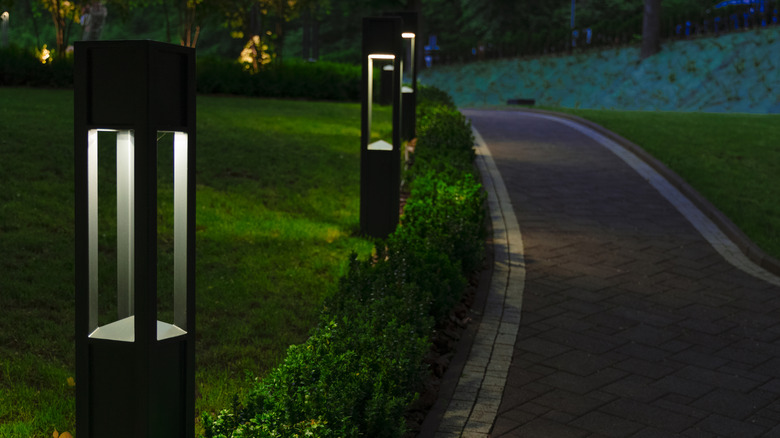
Let's dig a bit deeper into the principles that can help you cut down on all that light pollution. The first principle suggests avoiding unnecessary lights. Though it may be fun to have an abundance of lanterns in your backyard, it's suggested to try and keep it to a more practical level. Your whole yard doesn't have to be illuminated.
The second principle is to narrow down where your lights illuminate. A bare bulb, for instance, will brighten the yard in all directions. However, you can choose light fixtures and designs that narrow down the space to a directed beam, like a flashlight, or simply a smaller area. For example, these JONATHAN Y outdoor lights block the top, narrowing down where the light goes to the sides and below. Something even more directed would be better, but these are great progress.
The third principle is to choose dimmer or lower-level lighting. While having a blinding beam that lets you see hundreds of feet in front of you is necessary in some situations, you probably don't need it that bright in your backyard. Instead, consider choosing something a little dimmer (but still bright enough to see by) and warmer-toned. This usually means looking for light bulbs listed around 2,700 Kelvin versus higher ones near 5,000. Not only will your local wildlife thank you, but likely your neighbors will as well. If you can't find a design you like with dimmer bulbs, there are also options for light dimmers, including the 560W outdoor dimmer plug with a timer by Palawell.
Turn off your lights and use warmer tones
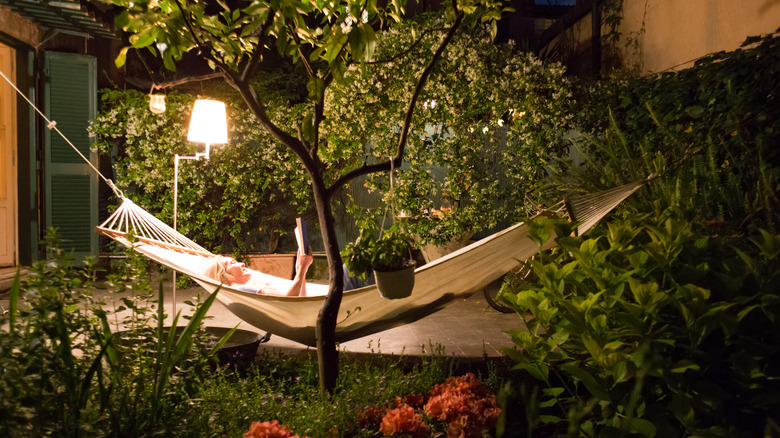
The fourth principle is to turn off your lights when you're not using them. Having them on in your yard all throughout the night allows you to see if anything is back there, but you have more practical options. Instead of just keeping your lights going all night, consider using a motion detector. This way, if something is out there, you'll be alerted immediately, and you can see it. For more decorative lights, you can use a timer. They aren't expensive, and you can get highly rated ones like the G-Homa 24-hour timer for under $20.
Set them to go off when you usually go to bed and won't be able to appreciate them. You can also set them to go on after it gets dark by themselves. This method eliminates the possibility of forgetting to turn them off when not in use. Another option is to use portable lights. Flashlights might be boring, but something like this Dollar Store vase hack provides cheap and gorgeous outdoor lighting that you can bring inside with you when you head to bed. This way, even if you keep all your normal lights, you can reduce how much light pollution you're contributing to the environment.
The fifth and final principle involves using warmer tones. Blue light is usually considered to be colder, and it's bad for many reasons. It's associated with irregular sleep cycles, and blue lights often attract wildlife. In fact, these cooler colors are what draw in the most insects. Choosing warmer options won't call attention to as many pests, which is why it's recommended to put a yellow bulb on your porch during the full moon. By switching, you can better regulate your sleep cycle and prevent animals from associating your outdoor lights with the moon.