

The Common Gardening Method That'll Bring Dying Tomato Plants Back To Life
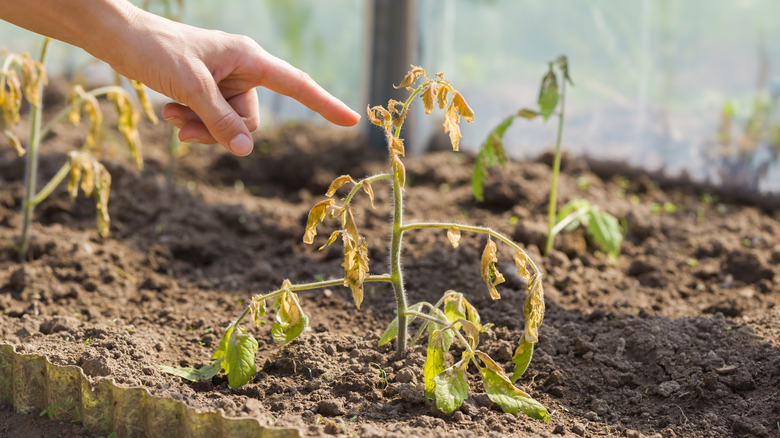
Tomatoes are a delicious addition to a summer vegetable garden, but they need careful tending to perform their best. Young tomato plants are vulnerable to several problems, including transplant shock and nutrient deficiencies. These issues can lead to drooping stems, yellowing leaves, and parts of the plants giving up completely. Hardening off seedlings before transplanting them outside can prevent them from being overwhelmed by outdoor conditions, but other problems may take a little while to troubleshoot.
In many cases, tomato seedlings look lackluster because their soil lacks nitrogen. When they aren't getting enough of this nutrient, they tend to grow slowly and develop yellowish leaves. If a soil test shows that your garden needs more of a particular nutrient, try adding fertilizer or compost. Then grab your pruning shears. Strategic pruning can help your seedlings stay alive as you wait for a nutrient booster to work or figure out what else may be troubling your tomatoes.
Lopping off dead and dying leaves encourages tomato seedlings to direct their energy toward growth and fruit production rather than attempts to save non-essential foliage. You should excise weak-looking branches as well since they divert resources from the plant's main stalk. Removing these pieces of foliage also promotes air circulation and delivers more sunshine to developing tomatoes, helping them ripen faster. Just be sure to leave a cluster of healthy leaves and stems near the top of each tomato seedling. This foliage is needed for photosynthesis, a process that assists your plants in growing new leaves and making lots of tomatoes.
Tomato-pruning tips and tricks
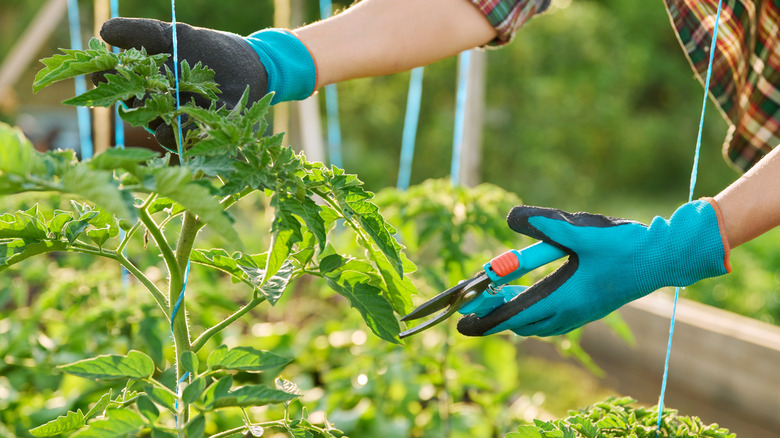
After removing dying leaves from each tomato plant, trim off branches that are intersecting or restricting airflow by growing too close together. You should also cut off foliage that's lower than the first cluster of fruit or flowers. It's mostly ornamental, so your plants won't miss it. Pruning away this growth tells tomato vines to focus on fruit production. Plus, getting rid of the lower leaves keeps them from getting splashed by mud that carries plant pathogens. (Optimizing when and how you water your seedlings also minimizes the spread of these problem-causing bacteria, fungi, and viruses.) Saying goodbye to dying foliage makes tomato plants less susceptible to a range of diseases, not just those that stem from the soil.
Though you should leave a bushy collection of leaves near the top of each developing tomato seedling, you can thin out this foliage near the end of the summer, when the growing process is finished. Doing so may help your last tomatoes of the season ripen more rapidly. Since tomato branches get heavy as they expand and set tomatoes, pruning can guard against breakage as well.
When gathering your pruning supplies, make sure your garden shears are sharp and clean. It's important to sanitize them too. This prevents the transfer of soil-based pathogens. One tried-and-true sanitizing solution is diluted bleach. Combining nine parts of water with one part of bleach will do the trick. Dip your pruning tool in this liquid, then let it dry in the sun before using it to trim your tomato plants.