

Don't Throw Away Old Plastic Lids, Reuse Them To Help Your Growing Produce Thrive
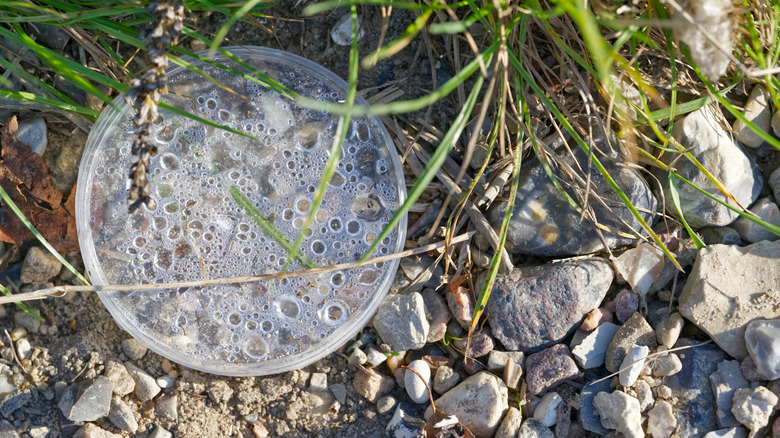
All summer, you've been watching a beautiful pumpkin grow in your garden. You've hand-pollinated its flowers and diligently pulled the weeds that cropped up next to its vines. Now it's ripe and you're eager to turn it into pie. You carefully lift it off the ground and its bottom falls out, making a stinky mess. What went wrong? The culprit may be bacterial soft rot, a leading cause of ruined crops around the globe. One of your best and easiest weapons for fighting it is a shield of sorts: A plastic lid from a food container. You probably have a couple in your recycling bin and a few more in your fridge, atop tubs of sour cream, hummus, or yogurt.
Several types of bacteria are responsible for soft rot, including the Pectobacterium and Pseudomonas species. Over time, wet-looking spots emerge on infected foliage and fruit. Eventually these lesions change color, develop a foul smell, and lose their structural integrity. Lots of fruits and vegetables are susceptible to this problem, including tomatoes, carrots, melons, squash, and cabbage. Wet soil and poor airflow create conditions that encourage rot-fueling bacteria to multiply. This perfect storm often develops where melons, pumpkins, and other crops make contact with the soil. The bacteria invade these crops through small holes, then proliferate.
Avoiding major watering mistakes in your garden can make pathogenic bacteria less likely to take over your garden. So can choosing the best garden mulch that's light and fluffy, as compacted mulch prevents air from circulating. However, you may want an additional line of defense. Enter the plastic lids. They keep ground-dwelling fruits and veggies from resting on wet ground, reducing their chances of infection.
Turning plastic lids into bacteria-blocking shields
To shield your growing veggies and fruits from rot-causing bacteria, you'll need to save a bunch of lids from plastic food containers. Try to match the size of the lid to the size of the fruit (it doesn't matter if they're circular or rectangular). For example, the lid from a small margarine container might be just right for a pattypan squash while the top of a jumbo cottage cheese tub may be large enough to prevent a cantaloupe from basking in the mud. Large plastic plates or trays flipped upside down could work for watermelons, mammoth pumpkins, and other supersized crops. You don't want any of these discs to collect water, so make sure they're flat and relatively smooth (use whichever side fits the bill).
Once you've rounded up your supplies, slide a clean, dry lid under each piece of produce as it starts sitting on the ground. Handle the growing plants carefully so you don't damage them, which could create new entry points for bacteria. Consider disinfecting the lids with rubbing alcohol from time to time, just as you would with gardening tools, and drying them off when you water your thriving seedlings or check on them after a rain shower. These steps can make your garden even less welcoming for bacteria that could make your plants develop soft rot.