

Naturally Fertilize Your Fruit Trees With The Help Of A Gorgeous Ground Cover

We may receive a commission on purchases made from links.
Many plant lovers revitalize their gardens with NPK fertilizers — synthetic soil amendments containing nitrogen, phosphorous, and potassium. They can be great for lackluster gardens in the short term, as they sometimes produce fast results. When it comes to long-term use, there are some drawbacks. Ammonium-containing NPK fertilizers can pollute air and groundwater, and tend to degrade soil when applied year after year. They also disrupt ecosystems of microorganisms that support soil health. One natural alternative is to surround nutrient-craving plants with a flowering comfrey ground cover (Symphytum officinale). This strategy is often used on fruit trees. Comfrey's roots dive deep into layers of soil that many other plants can't reach, grabbing nutrients that it then stores in its fuzzy green foliage. When these leaves drop, they provide vitamins and minerals to the trees they encircle.
Comfrey is serious about anchoring itself to its surroundings, burrowing its taproot up to 6 feet in the ground. In the process, it breaks apart hardened clods of clay and other soil, allowing air and water to move through the soil with ease. It also collects potassium, phosphorus, calcium, and other nutrients, sending them upward to its leaves. Instead of waiting for the leaves to fall off of comfrey plants, gardeners can harvest them and spread them around plants that need a nutrient boost. In the permaculture realm, this practice is known as "chop-and-drop" mulching. Adding the leaves to a convenient backyard compost trench can also return nutrients to your fruit trees, as the quickly decaying leaves work as an activator for compost. And there are even other ways to deliver comfrey's nutrients to your edible plants.
Harvesting comfrey leaves and extracting their nutrients

The quickest way to take advantage of comfrey leaves' nutrients for your fruit trees involves making a DIY fertilizer tea. Fill half of a large bucket or trash can with comfrey leaves, then add rainwater (or any non-chlorinated water) until it almost reaches the brim. Mix the leaves into the water and let them steep for a week or so, stirring every few days. Put a lid over your container to keep odors in and bugs out.
Once steeping is complete, remove the leaves and dilute the liquid, which you can apply to fruit trees that are looking stressed out or nutrient-deprived. Adding 10 parts of water for every 1 part of DIY fertilizer is a good rule of thumb. Better yet, measure the nutrient levels of your soil and let this information guide your decisions about fertilizer application. You can request a soil nutrient assessment from a local agricultural extension office or order a product such as the MySoil test kit. Your comfrey tea will be rich in calcium, phosphorous, potassium, magnesium, and vitamins A, B, and C.
There are a few things to keep in mind when picking leaves from your comfrey plants. Let each specimen grow to a height of at least 2 feet before chopping off any foliage, then let it regrow before chopping again. You can harvest comfrey leaves every 6 weeks or so if you have enough available. This herbaceous perennial grows fast in USDA hardiness zones 3 through 9, so it's likely to give you a consistent supply for fertilizer tea or mulch.
Special considerations for growing comfrey near fruit trees
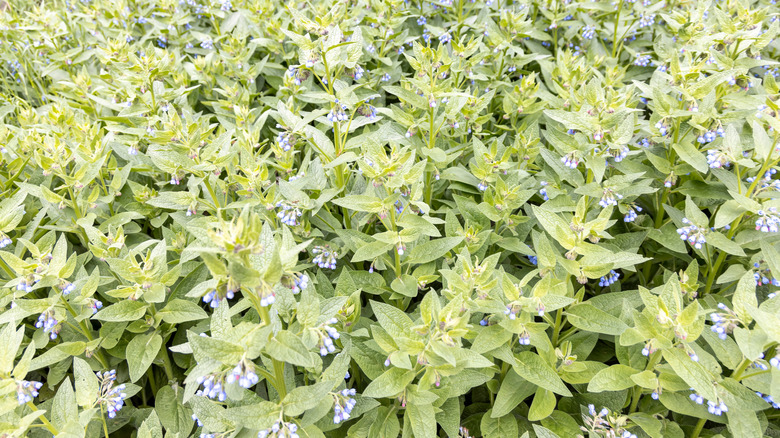
Bearing purple, pink, or white flowers and with a height of 1 to 3 feet, comfrey can be a very attractive plant. Unfortunately, it's also an aggressive grower. This has led Oregon to declare it an invasive species, so be sure not to plant it in that state. If you're growing it elsewhere, make sure to monitor its spread so it doesn't form a massive colony that outcompetes native plants in your yard. Conditions that impede the growth of some other plants — drought, low-quality soil, and partial shade, to name a few — don't hinder comfrey's quest to dominate its environment. Even if you pull it out, new plants can spring up from bits of root hanging around in the soil. In other words, you need to be thorough when removing it.
To keep comfrey from getting out of control, consider growing it in containers beside your fruit trees. This way, comfrey leaves that you don't harvest can drift down to the ground surrounding plants that need their nutrients. Alternatively, place your comfrey containers somewhere that makes harvesting convenient and easy to remember. This can help you establish a consistent habit of mulching or steeping the leaves. Since comfrey is pollinated by bees and attracts them as well, it's helpful to grow near plants that perform best when lots of nectar seekers visit. Containers of comfrey can make bees come buzzing to a garden that's also filled with squash, berry bushes, and melon vines — plants that depend on these fuzzy pollinators.