

Cardinals Will Flock To Your Yard After Planting These Delicious Herbs
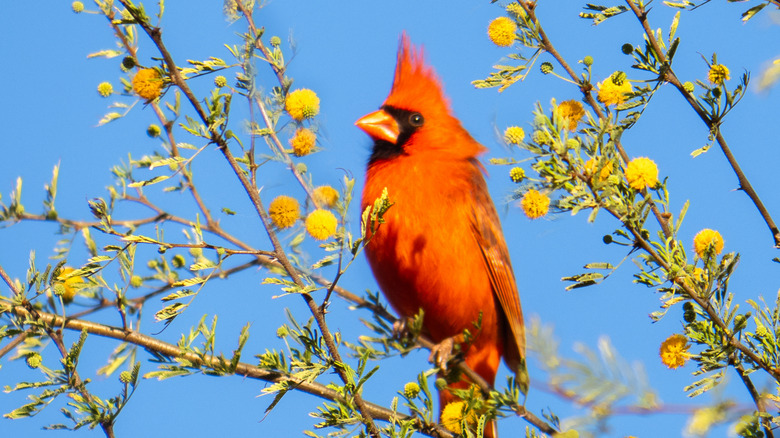
Did you know that cardinals can be year-round visitors in your yard? These show-stopping birds don't migrate, instead choosing to stay in one area all year. This means that come summer or winter, you can enjoy the sight of these beautiful songbirds in your yard, whether it's a striking ruby male visiting your bird feeder or a mated pair seed-sharing. If you want to encourage more cardinals to take up residence near your yard, one of the best ways is adding more plants that attract a diverse variety of songbirds and insects alike — especially herbs that a range of species will enjoy.
At first, planting herbs to attract cardinals may seem a little counterintuitive. After all, while northern cardinals have a widely diverse diet, they mainly eat seeds, berries, and insects. However, while cardinals do eat an abundance of plant matter, that's not the main reason you should add herbs like dill or fennel to your bird-friendly garden: instead, it's because of the insects that rely on these herbs for food.
When cardinals are young, the bulk of their diet consists of insects, especially insects that are soft, lacking a hard exoskeleton, like caterpillars. As a result, one of the best ways to encourage more cardinals to flock to your yard isn't just adding plants that they will gobble up, such as songbird-friendly berry bushes, but also adding more plants that a cardinal's prey (like caterpillars) eats.
Using herbs to invite more cardinals to your yard
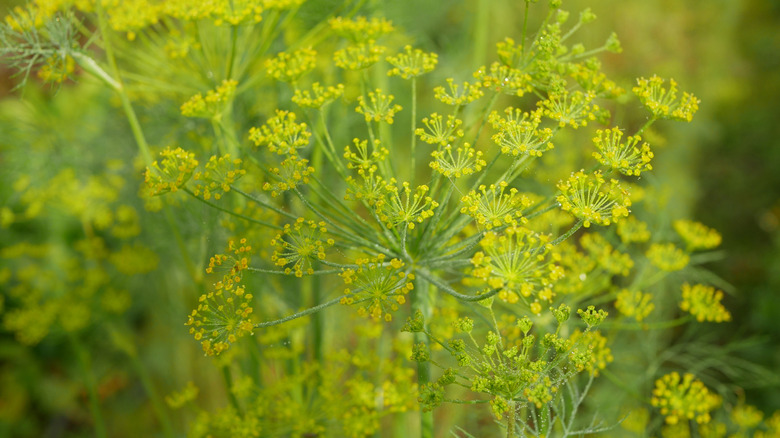
Butterflies are picky about the plants they turn into nurseries. For example, caterpillars of monarch butterflies exclusively eat milkweed — nothing else. Thankfully, some other species of butterflies have a more varied diet, although they still prefer to stick with a handful of plants. As a result, when you're designing your garden to attract cardinals, you should also include a few butterfly-friendly plants to provide cardinals with caterpillars. Plus, any caterpillars that survive grow into butterflies that add even more life and color to your yard.
Parsley, dill, and fennel are all great choices when it comes to planting herbs with butterflies and birds in mind. These herbs are favorites for the black swallowtail butterfly and other species, whose offspring cardinals will gladly turn into a tasty snack. They're also easy to grow, making them a fuss-free option for the beginner gardener. If you have room in your garden for non-herb butterfly magnets, you can also opt for flowers native to your region, which will help attract native insects.
Dill, fennel, and parsley all share similar needs, making this wildlife-friendly combo perfect for an easy container garden. All three thrive in full sun, although parsley alone can tolerate partial shade. They also do well in moist soils that aren't waterlogged, and they sport a moderate tolerance to droughts. One important thing to keep in mind is USDA zones: Dill can grow in zones 3 through 10 depending on when you plant, and parsley zones 2 through 11, while fennel thrives in zones 4 through 9. As a result, you may not be able to plant the latter everywhere you could plant dill. However, if you live in an area where these plants overlap, you can grow an herb garden that both you and the local fauna can enjoy.