

The Beautiful, Small Button-Like Flowers HGTV's Joanna Gaines Loves
We may receive a commission on purchases made from links.
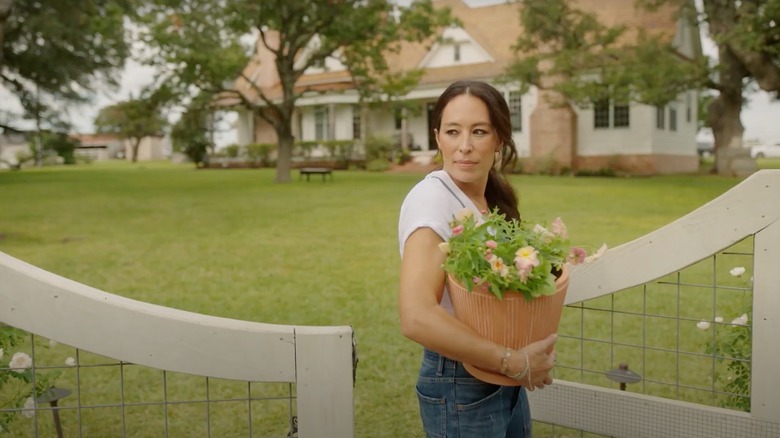
HGTV star Joanna Gaines' top gardening tip is to keep plant care as simple as possible when you're a new grower. Knowing this, it's no surprise that she loves low-maintenance pincushion flowers (Scabiosa spp.). Gaines is especially taken with 'Fata Morgana,' a cultivar of Scabiosa atropurpurea that radiates vintage vibes. On the Magnolia blog, she reported that it "grew wildly and produced the most beautiful buttercream petals" in her garden, eventually becoming her "absolute favorite bloom of the season." Gaines also gravitates toward the 'Deep Red' cultivar, but you can choose pincushion flowers with blue, gold, or pink petals if they're a better fit for your garden's color palette. Like buttons, the flowers are just 1 to 3 inches across. They also have rounded centers with stamens that stick out of them, hence their sewing-inspired nickname.
In general, pincushion flowers love full sun and function as annuals in cool-weather regions. However, they appreciate partial shade and grow as perennials in many areas with sweltering summer temperatures. Some types thrive as far north as USDA hardiness zone 3, and some are happy as far south as zone 11. In other words, research the preferences of your favorite types as you shop. Since pincushion flowers have skinny stems and reach heights of 2 to 4 feet, you might also want to purchase a product such as the Mininfa 25-pack of natural bamboo plant stakes. Or, help these tall plants thrive with supports made of pool noodles. Gaines says she'll probably use a garden trellis to encourage her pincushion flowers to stand tall in the future. Try repurposing a screen door to make a sturdy trellis of your own.
Helping your pincushion flowers thrive
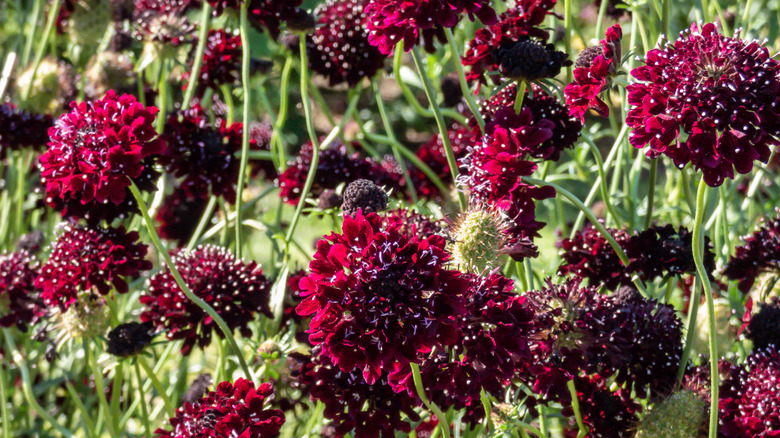
Paying special attention to your garden's soil can help your pincushion flowers excel. First and foremost, prevent their roots from perishing in standing water. Avoiding common watering mistakes and giving them well-draining soil are two of the best steps you can take. If your soil's drainage is subpar, amend it with compost. Second, make sure your pincushion flowers' growing site has a neutral-to-alkaline pH level, which helps them absorb the nutrients they need. Third, supply your plants with plenty of these vitamins and minerals. Loamy soil that's rich in organic material is a good starting point, but Joanna Gaines recommends feeding compost tea to pincushion flowers every couple of weeks. This can boost their nutrient levels while infusing your garden with soil-enriching microbes. In addition to promoting healthy plant growth, compost tea can help ward off diseases and pests. You can make this beneficial liquid by soaking 1 to 2 cups of compost in a gallon of rainwater for a week or so.
Pincushion flowers are favorite of florists because the blossoms last a long time after being cut. To convince your plants to make as many blossoms as possible for your own floral arrangements, deadhead the flowers as soon as they start to fade. Lots of flowers also means lots of pollinators visiting your yard since the nectar is appealing to hummingbirds and butterflies. Consider planting pincushion flowers in areas that would benefit from these fluttering guests, including cottage gardens, border plantings, and walkways between fruit trees that require cross-pollination.