

What To Know Before Picking Up Seashells While Exploring Shorelines

We may receive a commission on purchases made from links.
Beachcombing and shelling are popular activities for those heading to the seashore throughout the year. However, the seemingly innocuous practice of collecting seashells to take home as souvenirs can have a negative impact on the marine environment. In some areas, removing certain shells is actually illegal as well. This does not mean you can never pick up or keep a seashell, but you should be aware of applicable laws and regulations, as well as the impacts and how to go about shell collecting in a safe, sustainable manner.
With that in mind, before your next trip to the beach, you need to check for any restrictions or regulations that apply. Keep in mind, these can vary from beach to beach even within a single state. For instance, it is generally legal to pick up empty seashells along beaches in Texas. However, if you are spending time or camping on Padre Island National Seashore — which covers a large portion of the south Texas coastline — you are restricted to only keeping what you can fit in a gallon container. Additionally, some species of shells are protected from harvest seasonally along the Texas coast. In Hawaii, collecting shells with living organisms is prohibited, as is collecting large quantities. Be aware too that some beaches have additional cultural protections.
Species, season, and location-specific restrictions are also in place in Florida and other popular beach destinations. Given that, you should not simple read the rules and go. It is also a good idea to carry a Guide to North American Seashell Species or similar reference so you can accurately identify various shells and their occupants. This could help prevent the inadvertent taking of prohibit or protected species.
Problems caused by collecting shells from beaches
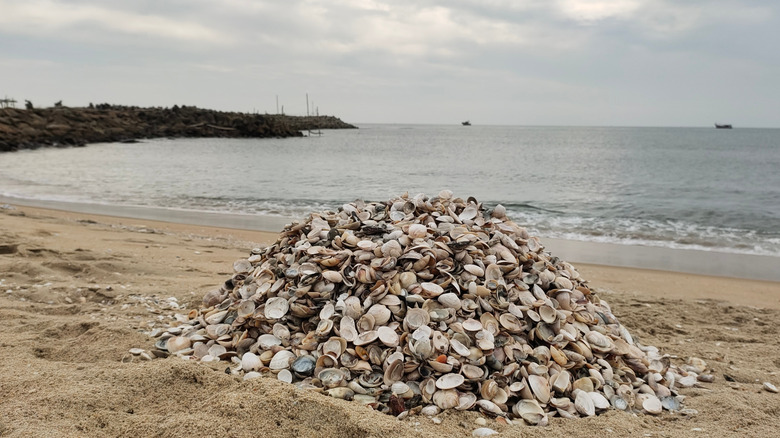
It may be hard to see how grabbing a handful of shells at the beach could have much of an impact on the environment. However, when you consider there are close to 3.5 billion beach visits each year in the U.S. alone, it starts to make a little more sense. Add to that commercial harvests, which have been dramatically increasing over the past few decades, as the demand for shells as souvenirs as well as use for roads and as alternative mulch materials grows. Additionally, a number of popular beach destinations utilize beach cleaning machines these days, which further reduces the number of shells on the shoreline.
The loss of seashells due to these activities has led to a number of negative environmental impacts. For one, removing shells effectively removes habitat. This can render species that rely on them for shelter, like hermit crabs or algae, homeless and disrupt the marine ecosystem. Shells remaining in place on beaches also serve to help prevent erosion and, as they break and dissolve, return calcium carbonate to ocean waters. As coastal tourism continues to become increasingly popular, the loss of seashells and resulting environmental impacts has accelerated.
Best practices for sustainable shelling
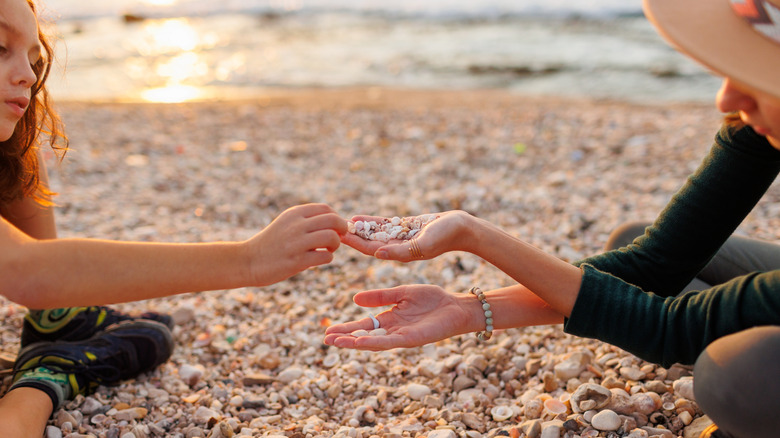
If you do hope to hope to bring back a few seashells as keepsakes or perhaps for some shell décor bringing the beach to your garden, the key is to do it in a sustainable manner. Beyond being aware of any applicable rules and regulations, you should never remove a live shell or shell with a creature living in it. Doing so is typically against the law. Even in areas where it is allowed, it is not a sustainable practice. Keep in mind some creatures that beachgoers often consider shells, such as sand dollars, are actually living creatures. Living sand dollars will usually have a somewhat soft feel to them and have countless tiny hairlike feet on their underside. Never remove a living sand dollar.
Additionally, don't overdo it. As noted earlier, some areas have a restriction on how many shells can be taken. If so, be sure you use a collection container that fits within the limit. It is also worth mentioning that a limit is the maximum amount of shells that can be taken. You can always take fewer. You may also want to consider taking photos of unique shells you find as opposed to collecting the shells themselves. That way you still have a memento, yet no damage is done.