

Get Rid Of Potholes In Your Gravel Driveway With The Help Of A Heavy Duty Tool
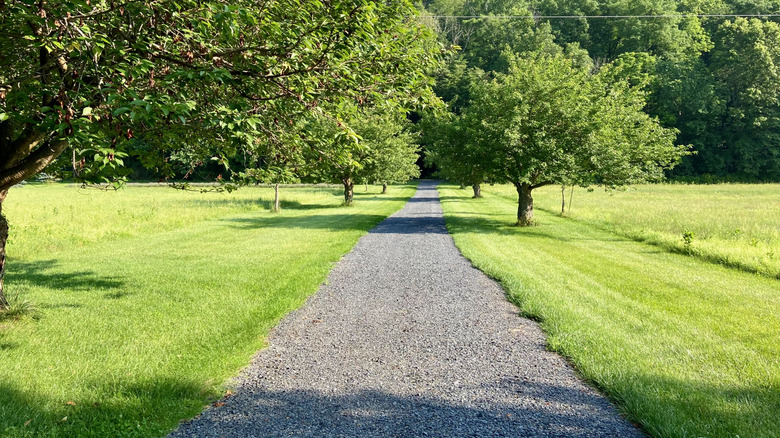
Folks who live out in the country often have long gravel driveways, and there are definitely some perks to it. They are more affordable than paved driveways, and you don't need to worry about how to clean them without a pressure washer. But even gravel driveways are eventually worn out by the elements and the weight of heavy trucks. If your gravel driveway is uneven and potholes are emerging, you might need some heavy machinery to keep it from looking like the moon's cratered surface or getting heavily rutted.
This job requires a tractor and a box blade, an implement that attaches to the tractor and drags behind, contouring the land using adjustable "teeth" called scarifiers. You'll also need a few tons of gravel, depending on how long your driveway is. While you drag these scarifiers behind your tractor, they will churn up the old gravel, break up the surface, and make your driveway relatively even again. Then, you can load up your tractor scoop and spread the new gravel.
Prices on gravel range from around $30 to $60 per ton, although specialty products can sell for even more. Keep in mind that a ton of gravel covers about 60 square feet, but the square footage increases the thinner you spread it. By the end of the day, and without too much labor, you'll have a fresh driveway. And in the future, make sure to keep this household staple on hand to easily remove snow and ice from your gravel driveway.
How to operate a box scraper
If you only need a box blade for working on your driveway, your best bet is to rent one. At The Home Depot, for instance, backhoes and box scrapers together rent for around $320 to $350 per day, depending on where you live.
The process of operating a box scraper is relatively simple, especially if you're used to operating heavy machinery. First, attach and secure the box blade to the backhoe. Lower the three-point hitch and line it up with the hooks connected to the box blade, then raise the three-point hitch and close the locking levers. Next, you'll want to lower each of the scarifiers and secure them with their locking pins. Keep in mind that unless you're experienced, it's important not to operate tools like this on your own. If you're still new to tractors, play it safe and use a hand-held shovel. Consider these options as the best shovel types for your next gravel project.
As you cruise along the gravel driveway, the scarifiers should dig into the ground like a plow, churning up the old gravel (don't go deeper than the deepest pothole, or below the base of the gravel). Once you've plowed the entire driveway, disconnect or fully raise your box blade, and fill the materials bucket with gravel. Drive the tractor forward down the driveway with the bucket angled slightly to allow the gravel to spill slowly. You don't want to let too much spill out in one place, because the recommended gravel depth is only a few inches. Next, reattach or lower the box blade to ground level, raising the scarifiers to their highest setting, and drag it across the driveway to smooth out the gravel, weaving a bit to avoid creating ruts.