

How To Check If The Wildlife Netting You Have Is Safe For Birds
We may receive a commission on purchases made from links.
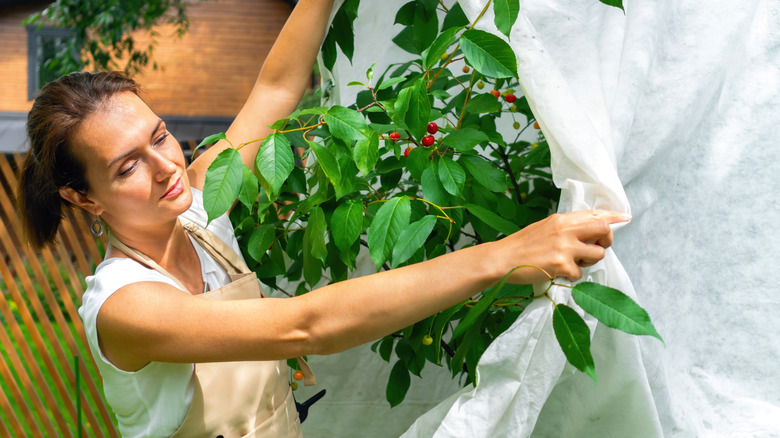
Whether you're growing towering trees rich with ripe fruit or vegetable gardens overflowing with tasty plants, you likely want to enjoy the fruits of your labor yourself — not allow the local wildlife to eat you out of house and home. As a result, you may have found yourself using plants to repel pests naturally or even wildlife netting as a way to keep any unwanted visitors from sampling your garden. However, if not used properly, wildlife netting can quickly turn from helpful to harmful, especially for birds.
Wildlife netting can be a great way to keep animals out of your garden. This can include certain pets or wildlife like birds, deer, and rabbits who may try to steal a snack. However, as beneficial as it is, netting can have a lethal downside when used incorrectly. Birds can often become trapped or entangled in netting around your garden, as can other smaller critters like snakes or rabbits. Entanglement isn't the only concern with wildlife netting, though. If trapped for too long, or if their neck is constricted, animals can also be killed by wildlife netting.
This doesn't mean you need to ditch all of your netting and turn your garden into a buffet for wildlife, however. Instead, first test if your current netting is safe for birds, and if not, switch for an option that is.
How to choose bird-safe wildlife netting
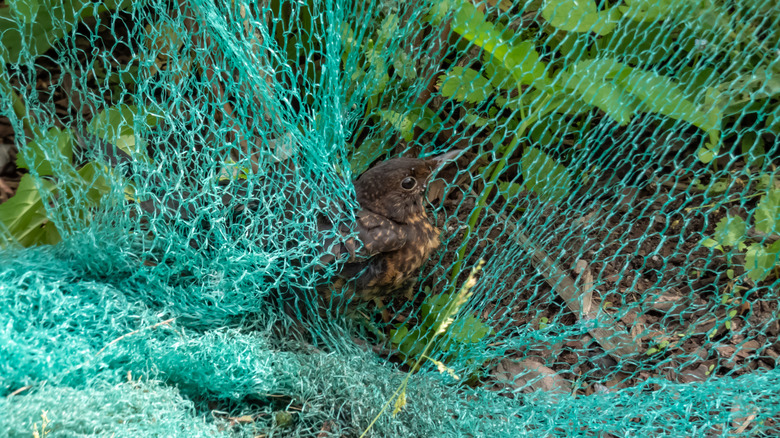
When it comes to wildlife netting, size plays a big role in whether or not it's safe for birds. When the holes on the mesh of wildlife netting are too large, this increases the likelihood of animals becoming trapped or tangled. Instead, opt for netting that is densely meshed, with each hole measuring less than 5 millimeters in across. The ultrafine 10 foot by 50 foot garden mesh barrier from Ynerhai takes it to an extreme, with mesh spaces about 1 millimeter across. You can also try what is known as the "finger test": if your finger can fit through the holes in the mesh, then they're large enough to pose a danger to birds and other wildlife.
If you do decide to forgo netting altogether, there are other wildlife-friendly ways to keep your plant safe. For example, instead of stopping wildlife from eating your crops altogether, offer them a decoy plant (also known as a trap crop) that they're free to eat from all they want, such as a delicious, bird-friendly berry bush. While some curious birds may still sample your fruit or berries, providing an array of plants that a diverse variety of birds love will encourage them to stay away from your garden.