

12 Plants You'll Want In Your Garden To Attract Colorful Butterflies
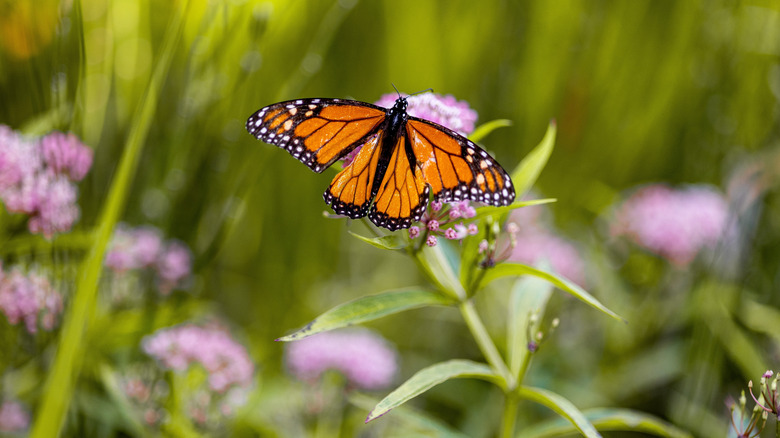
We all know that any kind of gardening is good for your health, whether growing vegetables or ornamental flowers. But did you also know that growing a garden can be good for the health of your entire yard? Getting specific about what plants you add to your garden can attract a whole host of beneficial insects you should avoid killing, whose presence will bring health and resilience to your whole yard. One of the most beneficial and beautiful of all insects to attract are butterflies.
Part of a group of bugs known as pollinators, butterflies do the job of spreading pollen between plants which helps produce new seeds the following year. Butterflies are also exceptionally beautiful. Each species has a specific type of pattern on its wings that are often an array of different colors. These are used as camouflage against predators, to absorb heat from the sun, and to attract mates. Plus, watching them flutter among plants is one of life's many small pleasures.
Butterflies being so good, the question must be asked: What kinds of plants can you grow in your garden that will attract them most? There are a wide variety of plants that butterflies absolutely love. From nectar-filled flowers to aromatic kitchen herbs, the following 12 plants are ones to consider if you want to attract the most colorful butterflies.
Black-eyed Susan
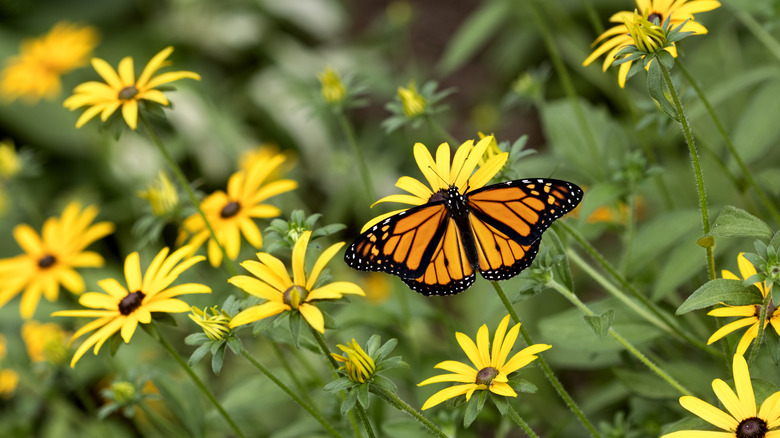
Black-eyed Susans are one of those hardy perennials that you can plant once and not have to worry about for years. Adaptive to winter temps in USDA Zones 3-9, the black-eyed Susan is one of those simple, yet beautiful flowers that brightens your garden. Blooming from 3-foot tall stalks and into multiple sunshine yellow petals that fan out from a central black eye, these flowers are incredibly simple to grow, require little care, and serve as excellent attractors for butterflies.
Blooming time for the black-eyed Susan is typically in June and July, but can often extend to first frost. This longevity makes them flowers that butterflies will return to again and again. One great thing about the black-eyed Susan is that they foster certain butterfly species, such as the silvery checkerspot, throughout their entire lifecycle. And while you certainly want certain caterpillars staying away from your vegetable garden and fruit trees, black-eyed Susans grow in large enough quantities that a few early-stage butterflies shouldn't be a problem for the overall health of the patch.
Other species like the pearl crescent and monarch also like to feast on the nectar of the black-eyed Susan. While are hanging out on the flowers, they collect the pollen which they then transfer to other flowers, allowing cross-pollination to occur and ensuring future generations of black-eyed Susans in your garden.
Lavender
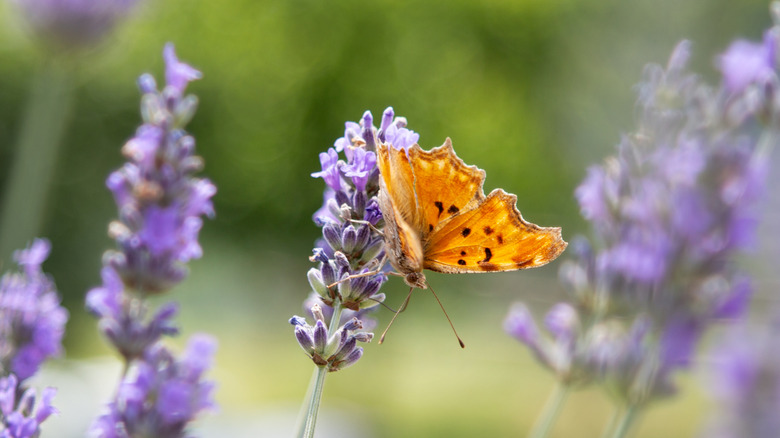
Known for its fragrance and wonderful purple colorings, lavender is one edible and medicinal herb that you will want in your garden. Lavender is renowned as a pest repellent, and also has calming effects and antihistamine properties when applied as a salve or ointment on cuts and bug bites. Butterflies, however, aren't concerned with any of that.
Lavender, as you will find with many of the plants on this list, is very colorful. Depending on what varieties you plant in your garden, your lavender can come in one or multiple different shades of purple. These colors, along with their sweet fragrance, are incredibly enticing to butterflies. It signals to them that the plant is not only safe for them to consume, but is filled with excellent nectar for them to eat. Some common species you will see descending on your lavender patch include Horace's duskywing and the western tiger swallowtail.
The type of lavender you can plant will depend on the hardiness zone of your region. English lavender can withstand cooler temperatures of Zones 5-9, while French and Spanish lavender varieties thrive in warmer areas of Zones 8-11. Just make sure you plant them in areas with good drainage and plenty of sun. Once you attain those signature purple blooms, you will see butterflies descending on your lavender patch in no time.
Bee balm
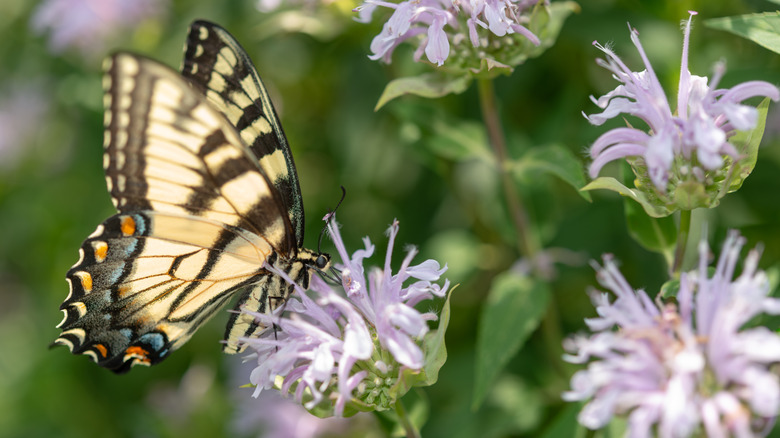
While the name suggests that bee balm is primarily concerned with attracting buzzing insects, the flower actually attracts a whole host of beneficial pollinators to the garden, including several species of butterfly. A wide ranging perennial flower that can grow well in Zones 3-9 depending on the species, bee balm's name is actually derived from a natural resin it produces that can ease the effects of bee stings. That should be reason enough to convince you to plant it in your garden.
Bee balm species come in a wide range of colors, including popular scarlet and pink varieties, as well as lighter purples. Growing around 4 feet tall when allowed to reach maturity, bee balm blossoms into numerous conical petals around a central eye. The red varietals almost give the impression of a fire bursting to life from the end of the flower.
The cone-shaped blossoms are where the nectar and pollen sit drawing a wide range of skippers, sulfurs, monarchs, and hairstreaks. Bee balms is a particular favorite of the eastern tiger swallowtail who absolutely love them for their vibrant colors, sweet smell, and excellent nectar. Bee balm prefers sunshine over shade, and likes rich, well-drained soil with a neutral pH in order to grow at its best. You'll also find bee balm to be hugely attractive to hummingbirds, which is another reason to plant them.
Tickseed
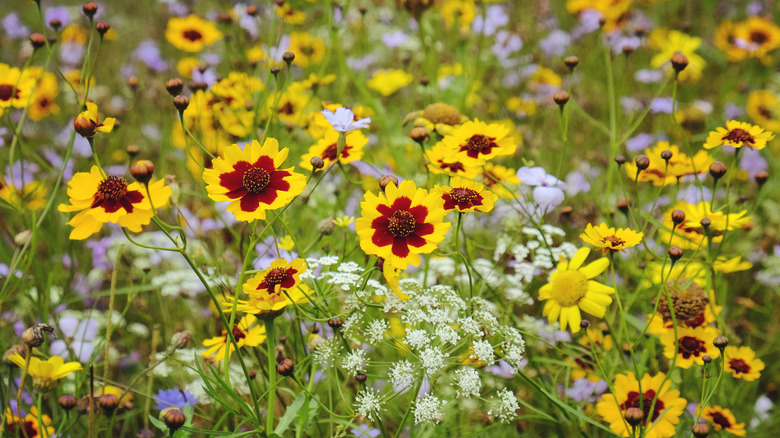
Don't worry! You won't be attracting dangerous ticks into your garden by planting this particular flower. Instead of opening you up to the risk of dangerous diseases spread by tick bites, you'll be attracting a host of more beneficial insects to help your garden thrive. Tickseed is an early and long-flowering perennial with beautiful yellow blossoms that attract a ton of butterflies. Thanks to the fact that they flower earlier in the year, tickseed patches are often the very first plants that will bring butterflies to your yard.
Generally hardy in Zones 4-9, there are some tickseed varieties, such as Coreopsis tinctoria, that will survive in the extreme cold of Zone 2 and the extreme heat of Zone 11. So, there is an incredibly wide range, geographically, that tickseed covers, and it's recommended by beekeepers as good sources for honey production. They are very low maintenance, and they bloom from June to September, meaning butterflies will visit all season long.
Owing to its tendency to compete with other perennials, it's best to establish an area solely for tickseed. It doesn't have to be a large space, but once it's established you will be attracting the likes of swallowtails, buckeyes, painted ladies, and skippers.
Sunflower
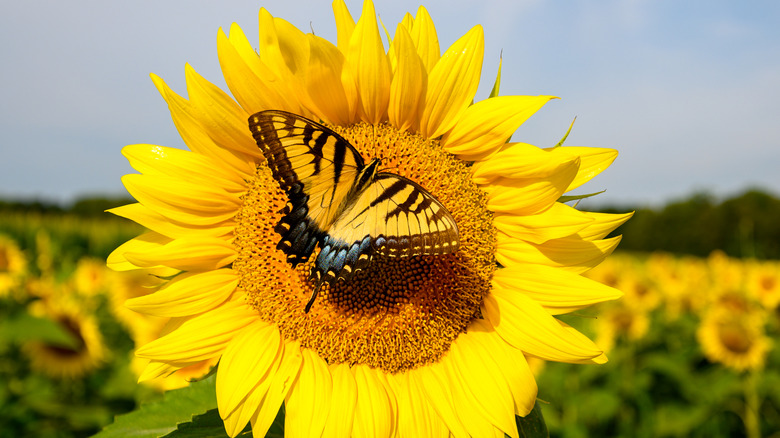
As it turns out, butterflies love sunflowers as much as people do. Growing to absolutely enormous sizes and coming in a variety of different bright colors, sunflowers have to be among the most popular flowers grown in the United States. They make a statement and bring huge amounts of brightness to any yard. And they have one big benefit for anyone who really wants to attract butterflies to their yard, because sunflowers are one of the best at attracting monarchs.
Monarch butterflies, like sunflowers,are colorful and iconic. They're what everyone thinks about when mentioning butterflies, and are incredibly crucial pollinators covering a vast territory thanks to their yearly migration. And they absolutely love sunflowers, especially the Mexican sunflower varieties they meet at the end of their long migration. Sunflowers will also attract Baltimore and silvery checkerspots.
Like the tickseed, sunflowers can be grown in a wide variety of climates. Depending on the kind you decide to grow, they can be hardy in Zones 2-11. Also, if you're hoping for single plantings, choose perennial sunflowers that return year after year. They are less maintenance, and will continue to draw essential monarchs to your yard. One tip for ensuring sunflowers will grow tall is to use pool noodles to help keep the base sturdy and supported.
Rosemary
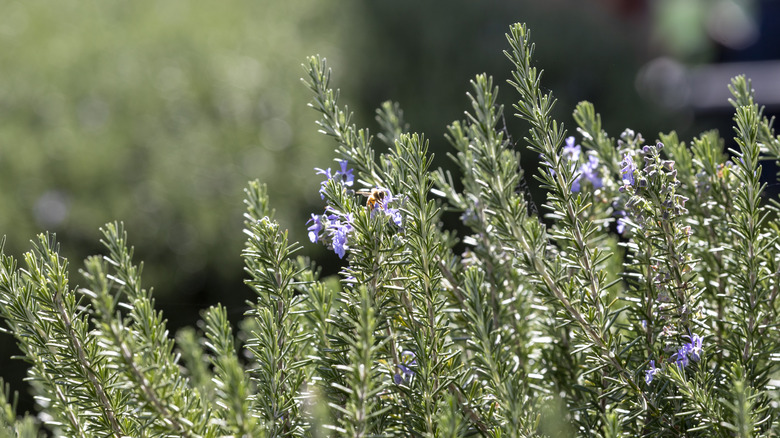
Rosemary is a common herb found in gardens around the world. Known for its unique, woody scent and strong flavor, it is an excellent choice for anyone looking to grow their own herbs for the kitchen while simultaneously repelling pests from their garden. One interesting thing about rosemary that many may not know is that, if you let them mature long enough, they will blossom. And while most of what's harvested from rosemary are the leaves, the flowers are edible as well, especially for butterflies.
Butterflies are drawn to rosemary's strong scent and the nectar of the small, pretty, purple-hued flowers. Often grouped with other herbs like lavender, oregano, and basil, you can create an entire herb garden that services your kitchen, and your local butterfly population.
Rosemary can be grown in containers or sown directly into the ground. If you would like to do the latter, you need to be in the warmer climates of hardiness Zones 8-11. Rosemary likes the heat and sun, being a native herb of many Mediterranean countries. It will tolerate lower temperatures, but withers at or below 20 degrees Fahrenheit.
Fruit trees
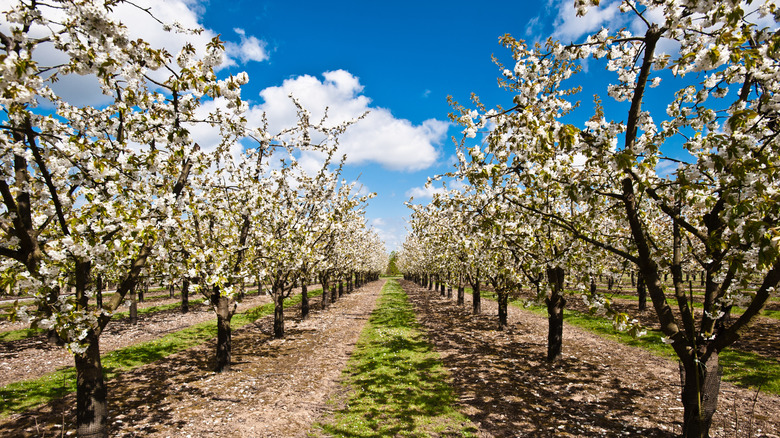
There are plenty of reasons why planting fruit trees in your yard is a good idea. For one, they can be grown almost anywhere in the United States. Whether you are growing apples in New England, peaches in Georgia, or cherries in Washington, fruit trees are adaptable to a wide range of climates across the country. And, they are not only beneficial for humans, but excellent for pollinators as well.
While you'll mainly see bees buzzing around the fruit blossoms of your trees, butterflies are known to be fond of them too, especially sweet cherries, which blossom in abundance. The nectar of the flower is what attracts them, and they are especially beneficial for trees requiring cross pollination to grow and thrive. They will also be attracted to the overripe fruit at the end of the season. Any fruit that has fallen and released its sugars will be a great, fast source of energy for them if they are in need of it. Painted ladies are particularly fond of fruit trees.
You do have to be careful, however, because trees can act as incubators for butterflies during their caterpillar stage. They can eat a lot of the vegetation if not managed, so you will want to watch for that, especially when trees are young. Overall, while it's a long-term investment, the benefits fruit trees have for you and the local pollinator population make planting them a no-brainer.
Sage
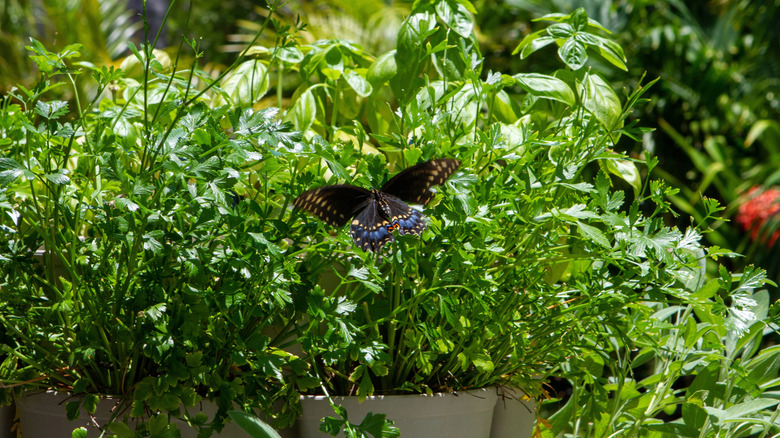
Sage is another kitchen herb butterflies absolutely love. People tend to have a love-it-or-hate-it relationship with the smell of sage. A combination of strong herbaceousness with a mildly woody undertone, the scent of sage is one of the strongest in the herb family. And it is that scent, along with the colorful flowers that, once again, attract our old friend the butterfly.
Let's be clear: Not all sage is meant for the kitchen. There are certain varieties of bush sage that flower particularly well that butterflies are really drawn to. Mexican bush sage is one variety that will attract a whole manner of butterflies, as well as hummingbirds. Since it is native to Mexico, it thrives in warmer environments, and is especially good between Zones 9-11. It does not take well to frost, so anyone hoping to grow this in a colder climate will need to limit their season to the summer, or invest in a greenhouse.
It's important to know that sage (Salvia) and sagebrush (Artemisia) are two different kinds of plants. In fact, the sagebrush you see across the western U.S. is more closely related to the sunflower. But butterflies still love it. The nectar from the small flowers of sagebrush plants is highly desired by butterflies like American and Virginia ladies.
Milkweeds
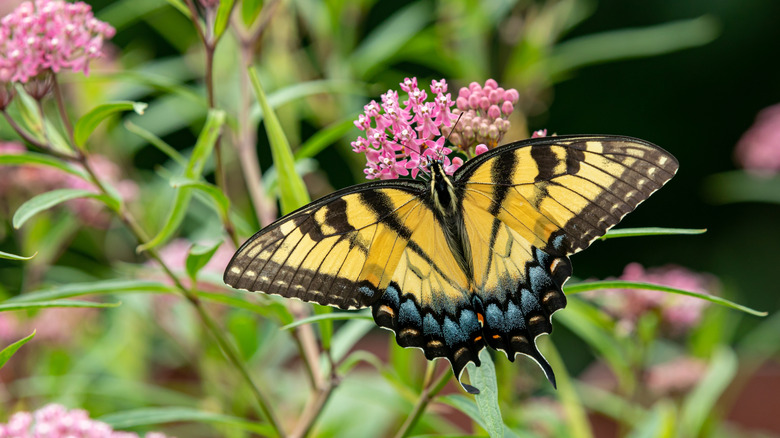
We've mentioned the monarch several times already on this list, but we haven't really gone into detail about why they are one of the most important species of pollinators on the planet. You see, monarchs have a yearly migration that takes them thousands of miles south to live out their winter. Along the way, they interact will millions of plants, allowing for pollination at incredibly high rates. It is a huge part of why plants remain healthy, and therefore why monarchs are worth protecting. And there is no better way you can contribute to that mission than by planting milkweed.
Milkweed comes in multiple varieties, all of which attract butterflies. Monarchs have a particular love for milkweed because it is the one plant they will eat in caterpillar stage. This plant nurses them to the point where they can form their chrysalis and emerge as a butterfly. When they are grown, they feast on the milkweed's nectar and spread its pollen all over the place.
While there are several different types of milkweed, the one known as common milkweed is, well, the most common. It is hardy from Zones 3-9 giving it a wide range and hardiness throughout several cool to moderate climates. As such, this is one plant you should have in your yard if you really want to see monarch butterflies and support them on their migration.
Joe Pye weed
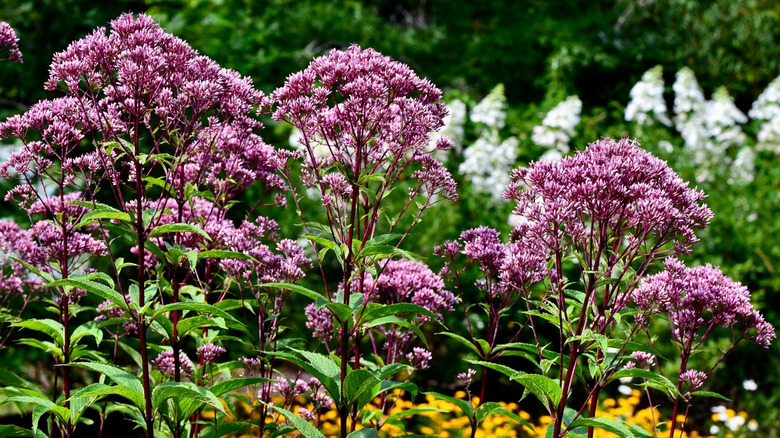
Growing in large, 4 to 7 foot high clusters of pinkish blooms, Joe Pye weed is not only mesmerizing to look at, but is one plant that butterflies absolutely love. In the wild, Joe Pye weed is found in wetlands in hardiness Zones 4 to 9. This means it is not only tolerant of significant cold, but of significant heat as well. Also, if you decide to plant it in your yard, there are a few things you'll want to take into consideration.
The chief thing you will need to do if you want to plant Joe Pye weed is to make sure you have soil that drains well, but remains moist. If you have a water feature on your property, it's best to plant Joe Pye weed there as a way of replicating its natural habitat. This is also a plant that thrives on moderate sun, so you can plant it in the shadier areas in your yard.
Known for its vanilla scent, several species of butterflies, including our friend the monarch, along with various types of swallowtails and pearl crescents(including their larvae), will descend upon Joe Pye weed like it's going out of style. Plant a whole bunch and see your garden come to life with great color and an amazing array of butterflies.
Aster
Owing to the amount of sun plants receive during the summer, a good majority of them bloom as the season begins and peak between June and July. By the waning days of summer and into the fall, the blooms of these earlier plants begin to wither, and you could see a drop in pollinator presence in your garden. A great remedy for this is to plant asters.
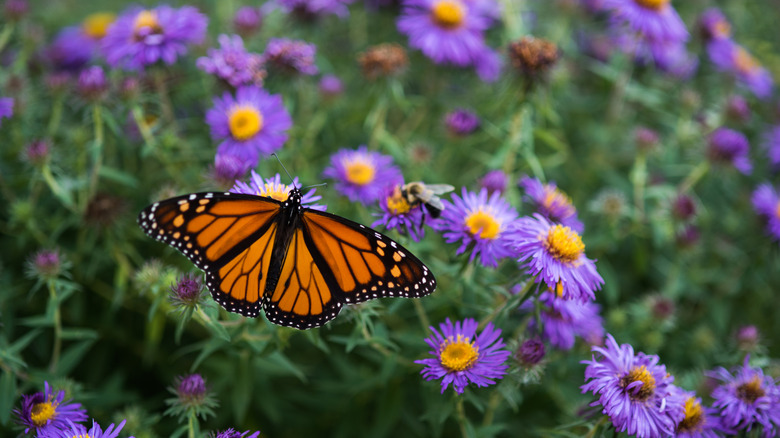
Coming in shades of blue, pink, purple, red, and white, asters — which can grow up to 6 feet tall — will add tremendous amounts of vibrancy to a late season garden. Blooming from late August and well into October, these cold hardy flowers which thrive in Zones 3 to 8, will provide some late-season food for butterflies before the winter sets in.
Because nectar is difficult for butterflies to find in the fall, a patch of asters offers up a veritable feast that will bring the winged beauties swarming to your garden. Like milkweeds, asters are beloved by monarchs and make excellent refueling stops for them along their migratory journey. In fact asters are a key component to full-fledged butterfly gardens.
Marigolds
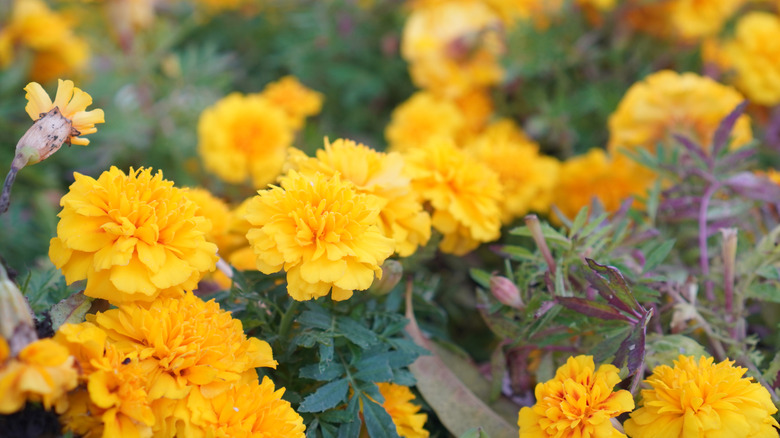
Finally, we have marigolds. These flowers are like small suns in your garden. They add brightness, a subtle scent, and act as a great companion plant for roses and marigolds work wonders with other garden crops. Part of what makes marigolds so great is that they the are anecdotally considered to naturally repel certain varieties of bad insects, while attracting plenty of good ones. Butterflies are one such beneficial insect.
With hardiness ranging from the coldness of Zone 2 to the heat of Zone 11, marigolds are among the toughest variety of flower out there. It is really hard to kill these plants, making them excellent options for those who consider themselves to have a brown thumb and a fuss-free plant for beginner gardeners. They will attract our old friend the monarch, as well as other butterflies, like swallowtails, painted ladies, and crescents.
While there are certainly other types of plants that attract butterflies, planting one or all of these 12 is a great way to get started. As our gentlest and arguably most beautiful species of pollinators, the more you are able to do to encourage their presence is a step in the right direction for maintaining a healthy and sustainable environment.