

The Surprising Way Ant Hills Can Benefit Your Garden
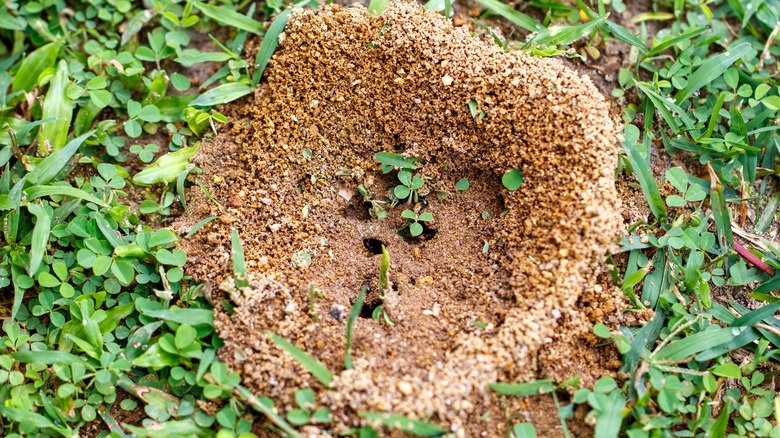
Where there's an ant hill, there's an entire colony of ants, whether you notice many of its resourceful residents not. And while an ant hill may be cause for concern to a bunch of cartoon characters having a picnic nearby, many ant varieties actually have beneficial traits in and around the garden. Any ants that build hills and live in the ground are aerating the soil with their tunnels. This aeration helps improve soil structure by breaking up compacted areas. When soil is less dense, it's easier for water, air and nutrients to reach plant roots within the soil. This is why it's also a good idea to aerate the soil to fix your patchy lawn once in a while as well.
Ant hills and tunnels do more than simply aerate soil: The ants within them also do a bit of pest control and recycling. They even protect certain types of plants that may be growing in your garden. Ants in the garden can also be an indicator of plant-damaging pests nearby, such as aphids. Aphids harm plants by sucking nutrients from them, and ants enjoy the sticky, sappy mess aphids leave behind, called honeydew. If you see an ant hill and loads of ants climbing up a plant that hasn't previously had them, aphids could be the culprit. Loads of ladybugs are another sneaky indicator of a pest problem that probably boils down to aphids.
How ant hills help a garden
When ants build hills atop their dwellings, they consistently bring in food sources and scrap materials such as dead insects and bits of decaying plant matter. These things break down underground, fertilizing the surrounding soil over time. Ants also till the soil, in a small way, by bringing up pebbles and obstructions they find during their digs.
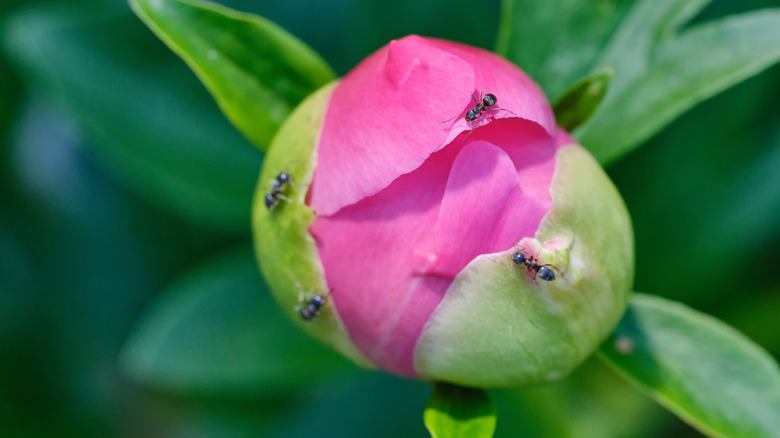
Many ants enjoy the sugary nectar produced by some flowering plants, such as peonies. While it may seem as though a stream of ants climbing over a peony could harm it, they're really only there for the nectar. Not only that, they actively protect their sweet sugar fix, and will forcibly remove other insects actually threatening the plant. Even though ants are drawn to them, peonies are worth planting in the spring, thanks to their gorgeous blooms.
Though they're not often thought of among pollinators, some species, such as black garden ants, pollinate flowers as they crawl from plant to plant searching for food. They're also a perennial part of the food chain, serving as a food source for all sorts of other creatures that may be in or near your garden. Some species of birds, spiders, amphibians, and reptiles all eat ants, so where there's an ant hill, there's a greater likelihood of another creature that thinks of it as a buffet, so they'll hang around, eating other insects that could be harming the plants as well. For instance, in addition to ants, robins love gobbling up beetles and beetle larvae, which can be harmful to plants.