

Don't Throw Away Leftover Wine Corks, Add Them To Your Compost Pile
We may receive a commission on purchases made from links.
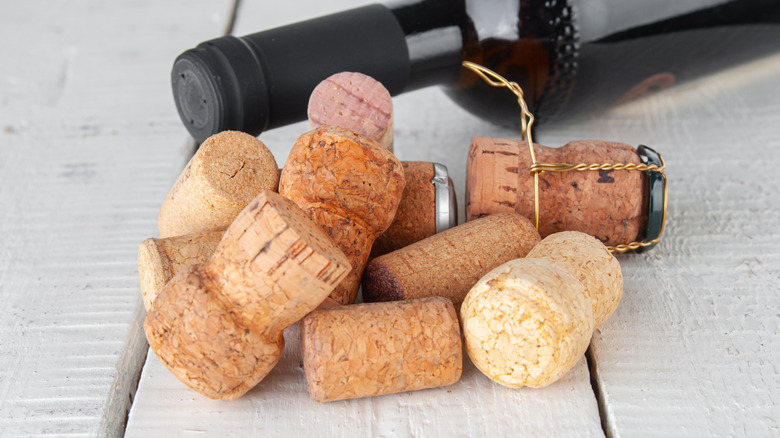
Wine corks are a leftover worth saving after your next dinner party or family gathering. Though some of these bottle stoppers contain plastic or other synthetic materials, many are made from the bark protecting cork oak tree trunks. These natural wine corks are suitable for making DIY birdhouses, filling the bottoms of plant pots to promote water drainage, and mixing into your compost pile. Since cork is made of plant matter, it will break down over time, releasing nutrients and adding organic material that helps enhance the structure of your soil. Corks infused with the fermentation-fueling yeasts wine contains can also help your pile of dead leaves, coffee grounds, and veggie peels transform into high-quality compost. The key to success is manipulating the corks to decompose efficiently. If you don't break or cut them into smaller pieces, they can take more than three years to biodegrade.
When gathering corks for composting, your first task is making sure they are made of biodegradable materials. Natural corks tend to have visible air pockets and color variation, whereas synthetic ones have a uniform color and texture. When a natural cork is used to seal a bottle of red wine, it will often take on the liquid's scarlet hue. This doesn't happen with corks made of artificial materials. Synthetic corks also aren't as squishy as natural ones. They're harder to squeeze and don't revert to their original shape as quickly after being compressed. Finally, natural cork usually has an earthy scent that reminds some people of wood. Synthetic corks don't produce this aroma. If you find synthetic corks in your collection, recycle them with your paper and cardboard, where allowed.
Preparing natural wine corks for your compost pile
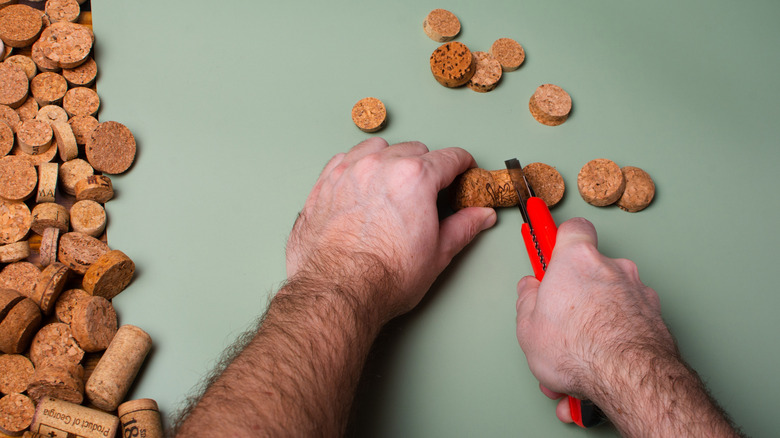
To unlock the compost-boosting potential of natural wine corks, complete a few prep steps before tossing them into your bin of biodegrading materials. First, discard any extraneous packaging materials. These may include wire, plastic or foil. Also get rid of any corks containing glue (some non-synthetic corks are actually made of composite particle cork), as they may secrete chemicals into your compost. Then, chop the corks into smaller pieces, which helps them break down faster. You can do this with a utility knife, or reach for a cheese grater. Or, you can grind up your corks in a blender to ready them for the compost pile.
Combining cork pieces with other compostables that decompose rapidly can be helpful as well. Since cork is a carbon-rich material — what's known as a "brown" in composting lingo — they benefit from being paired with "green" items such as fruit peels and grass clippings, which biodegrade at a brisk pace. Aim for at least twice as much brown matter as green matter. Also be sure to avoid items you should never compost such as invasive weeds and the leaves of black walnut trees. If you don't have a bin to facilitate the breakdown process, try trench composting, which is easy to do in a small garden. Or, invest in a handy rotating bin such as the Nazhura dual-chamber compost tumbler.