

How To Choose Between A Self-Propelled And Push Mower For Your Lawn
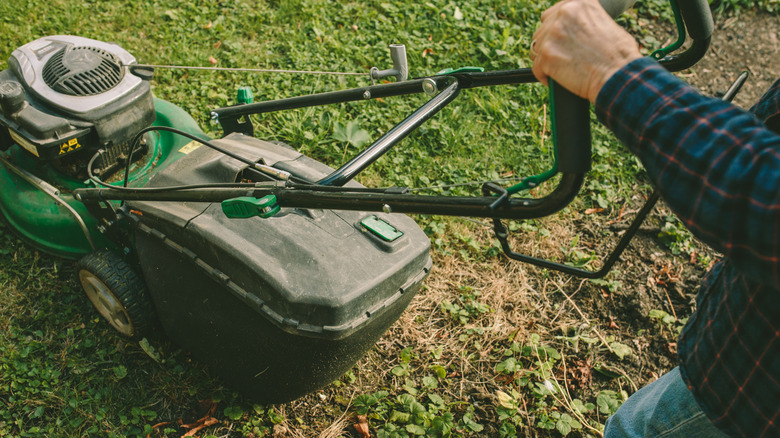
Investing in a new mower is an exciting time, allowing you to search for features you've loved in the past and upgrade those you didn't. However, when it comes time to decide between a self-propelled lawn mower and a push mower, you may be at a loss for how these two mower types are different — and how to pick the right one for you. Thankfully, either style can be a solid option for your yard. However, there are some things to look for to help decide which is the best for your needs, so you avoid common lawn mower buying mistakes.
At a glance, self-propelled and push lawn mowers may seem identical. Both are non-riding, and you can even choose electric or gas mowers for each. Each has certain advantages, with push mowers tending to be the lower-tech version of the two. However, when it comes to their actual operation, push mowers and self-propelled mowers have one major difference: the force behind their movement.
Push mowers are often lighter and low maintenance
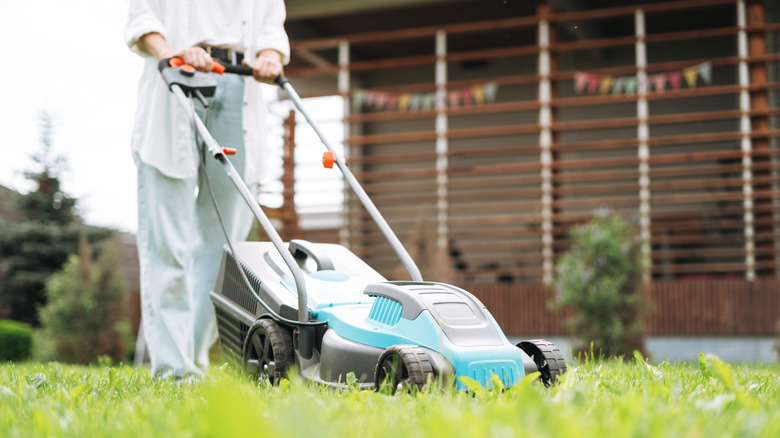
Unlike riding mowers, both push and self-propelled lawn mowers require you to actively maneuver them around your yard. However, the extent of this control varies between the two.
As the name suggests, push mowers only move if you move them. Whether that's across your yard or up a hill, they rely on your force. However, because there's no additional drive system or any extra mechanics for self-propelling, push mowers tend to be lighter in design than self-propelled lawn mowers, as well as easier to maneuver. Without the additional mechanics, push mowers may also have fewer maintenance requirements than self-propelled mowers, depending on the model. Push mowers may be a better choice for individuals with small, flat yards and limited storage space. Lawn care beginners, such as first-time homeowners, may also prefer push mowers over self-propelled lawn mowers because of these factors, as the lack of a driving system lends to straightforward cutting with no extra bells and whistles to figure out.
Self-propelled mowers can mean less work for you

While there are certain situations where push mowers may be the preferred choice, self-propelled lawn mowers (also called walk behind mowers) offer their own advantages. Have you ever used a push mower and needed to trim the grass on a hill? Going downhill may not be a problem at all, but uphill can be a different story. Although you may need to deal with more maintenance and weight with a self-propelled mower, they can help take the hassle out of cutting grass on non-flat terrain. Self-propelled mowers have a drive system that you can activate which then drives the lawn mower forward, meaning less work for you. You can find models featuring front, rear, and all-wheel drive, along with single or multiple-speed versions. This is great for people who may not be able to push and maneuver a mower as easily, whether on flat ground or hills.
Because of the drive system, self-propelled lawn mowers may be right for you if you have a larger yard or lawn with uneven terrain. With the drive system inactive, they function similarly to a push mower, although a bit heavier. However, with the drive system activated, self-propelled mowers take some of the strain and work off of you, making them a popular mower pick for hilly yards or for those who need an extra hand cutting large spaces.