

The Best Ways To Use Old Grass Seed In Your Garden
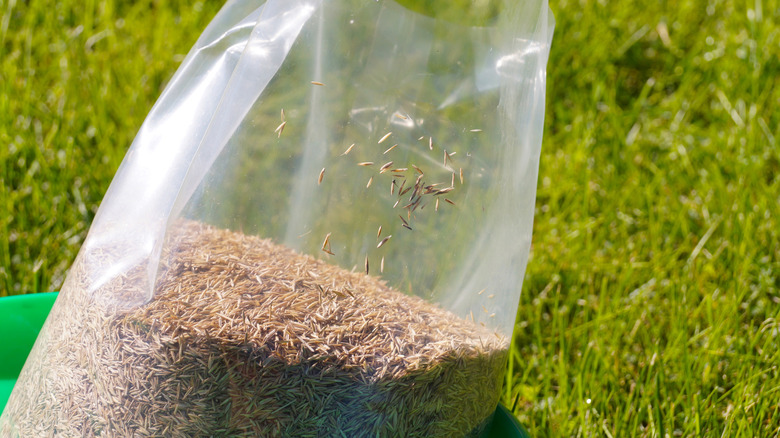
Whoops, looks like there's a bag of grass seed sitting in the garage, left over from who knows when. Is it worth saving, and could it have any useful purpose even if you aren't sure how long it's been there? In some cases, the answer is yes to both parts of that question. Under the right conditions, grass seed can remain viable well beyond the year you bought it, so that old seed may come in handy for patching bare spots or for overseeding the lawn.
If stored in dry conditions out of direct sunlight and extreme heat, cool-season grass seed such as fescue and Kentucky bluegrass can last for up to five years. In many cases, however, grass seed tends to become less viable within a couple years, so some of it may germinate while some does not, leading to an uneven lawn. A simple way to test the seed is to throw a handful in a bucket of water: If most of the seeds sink, they're probably still good. If most float, they may no longer germinate. For a more elaborate test, place 10 or so seeds on a damp paper towel, fold it up, put it in a plastic bag, and set it in a sunny location. Check the seeds after five to seven days; if all but three seeds sprout, the seed is 70 percent viable, which is fairly good. If none sprout, the seeds will no longer germinate, which means they're no longer useful during the best time for overseeding the lawn.
What to do with old grass seed
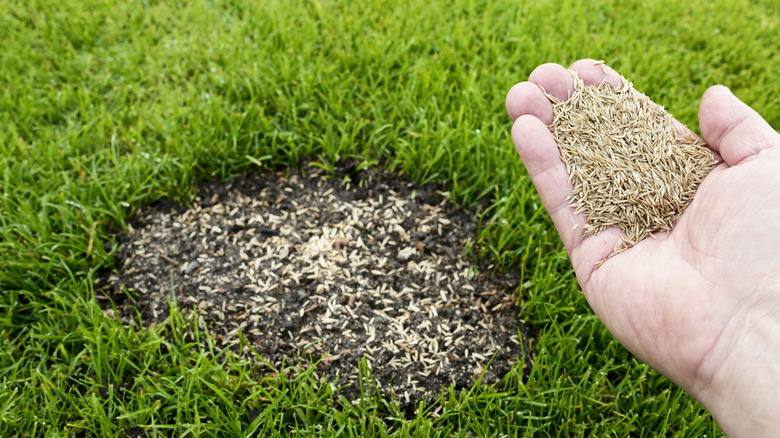
If you've determined that most of the grass seed is still viable, you can use it just about as you would with new seed. Sow the grass seed on top of soil to start a new patch of grass in a bare area, or even between pavers on a path to the garden, pool, or relaxation area. If you aren't confident that the grass will grow well, mix the old seed with new seed and use twice as many per square foot as recommended on the seed package. This way even if half of the seeds don't germinate, there will be ample coverage for seeded areas once the grass grows.
Old seeds that are still viable may not germinate enough to cover large areas such as an entire front yard, but they work for patch jobs, such as a spot near the fence that's worn bare because the dog enjoys running there. You'll have the most success if you choose the type of seed that's best for your lawn.
If old grass seed no longer germinates, you could feed it to the neighborhood birds, under certain circumstances. Don't give them seed that doesn't look or smell right; it may have mold or other issues and might not be safe for animals to ingest. Importantly, birds can eat what's called uncoated or natural grass seed, free from fertilizer or other additives. Check the product label to ensure there are no strange additives before feeding the seeds to any wildlife. If you prefer composting the old seed, the same holds true: Don't put it in the compost pile unless it's pure or organic seed with no chemical additives, and only if it's free from mold and similar issues.