

Is A Bigger Hummingbird Feeder Better? Here's What We Know
We may receive a commission on purchases made from links.
When it's time to put out hummingbird feeders, backyard birders know they will have to regularly fill them with nectar to continually attract hummers. The frequency of filling factors into where the hummingbird feeders are hung, as birders want easy access to make this task simpler. It can also influence thoughts in regards to feeder size, with some birders opting to go with larger models to reduce how often feeders must be refilled. But, is a bigger hummingbird feeder always better? The short answer is no.
Several issues ranging from bird behavior to cleaning difficulty can make large feeders less desirable. The largest single factor influencing the size of a hummingbird feeder, however, is the risk of spoilage. Regardless of size, hummingbird feeders should be emptied and cleaned at least once every few days. In warmer weather, this should be done every day. Not only will regularly cleaning feeders attract more hummingbirds, it will also keep them healthy by removing contaminants such as mold and bacteria. So, while it may seem that a feeder capable of holding more nectar won't run out as fast (thus reducing the time you spend refilling), it typically just leads to more waste.
Other reasons to avoid big hummingbird feeders
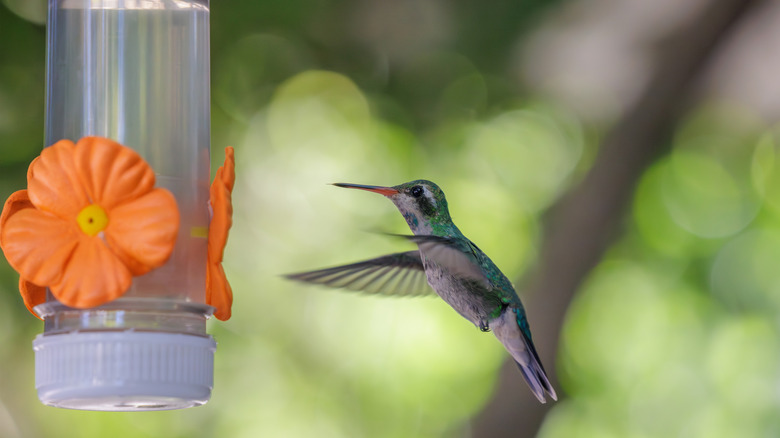
Many bigger models can also be more difficult to clean. Feeder reservoirs should be no larger than 3 inches wide and 8 inches tall. Models like the Feed Garden 16-ounce Hummingbird Feeder fit within these dimensions and are easy to clean thanks to the large opening at the base of the reservoir.
If you are considering going with a big hummingbird feeder, you may think that the larger source of nectar will attract more birds which, in turn, will drop the nectar level faster, reducing potential waste. However, in actuality, it doesn't usually work out that way. For one, it is the number of feeding ports, not the size of the nectar reservoir, which will attract more hummingbirds. Secondly, even if the bigger feeder has multiple ports, due to bird behavior, each feeder will only support so many birds at a time, as hummingbirds tend to be territorial. Because of this, putting out several smaller feeders, each fitted with multiple feeding ports, will allow for the support of many more birds.
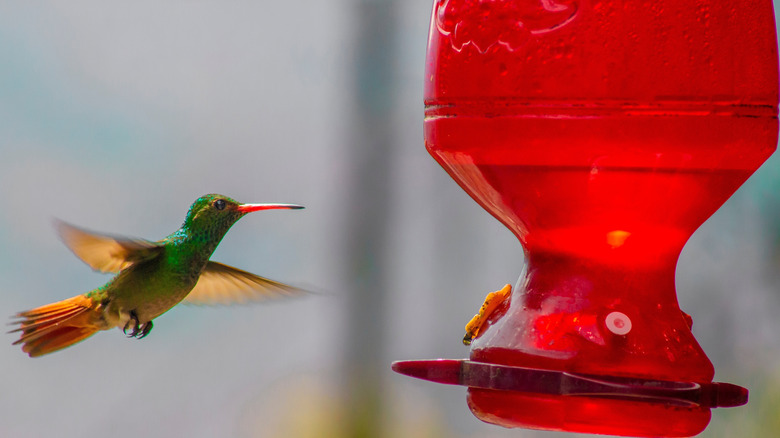
One final consideration is ease of flight around the feeder. Bigger feeders often have a bulbous nectar reservoir, which can be problematic for hummingbirds when attempting to maneuver around them for access to the feeding ports. So, the 3 inch maximum width guideline for nectar reservoirs not only helps reduce spoilage, it also allows easier access for feeding. Models that feature feeding ports on a wide base extending beyond the reservoir or with ports that have direct access to the reservoir make feeding even easier for hummingbirds.