

Cleaning Your Hummingbird Feeder Just Got Easier With These Kitchen Staples
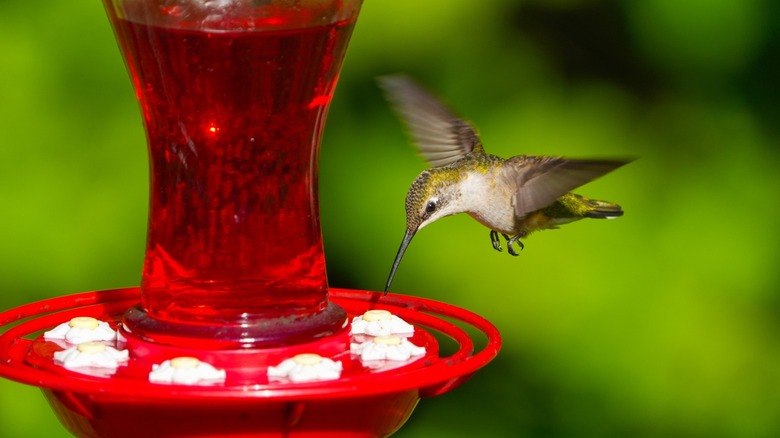
It's exciting when you figure out where to hang a hummingbird feeder in your yard to keep them coming back. But it's vitally important that you don't forget about it once you hang it up in that perfect spot. Hummingbird feeders, like all bird feeders, require proper care to keep them hygienic. If you're not careful, you could be spreading germs and making hummers sick. Fortunately, it's not hard to clean your hummingbird feeder. In fact, it takes just two common kitchen ingredients: baking soda and vinegar.
Using baking soda and vinegar is the preferred way to clean hummingbird feeders. The acidic properties of the white vinegar solution work great for killing mold and bacteria, including the kind that can grow in an enclosed hummingbird feeder on a hot day. Adding baking soda creates the perfect cleaner to scour stains or debris away, too. Avoid using soap or detergent, which can leave behind harmful residue. Baking soda and vinegar are strong enough to remove germs, but not harsh like certain chemical cleaning agents. While it's possible to clean hummingbird feeders with diluted bleach, these two kitchen ingredients also work well as long as you clean your feeder regularly.
Before cleaning, grab your supplies. You will need a scrubbing tool to reach inside small spaces, like an old toothbrush or smaller bottle brush. Make sure to prep your cleaning agents. Dilute 1 cup of vinegar with 2 cups water to lessen its acidity. It's also best to create a gritty paste out of your baking soda, mixing it with water or lemon juice, to use for scrubbing stubborn stains and residues.
How to use baking soda and vinegar to clean your feeder
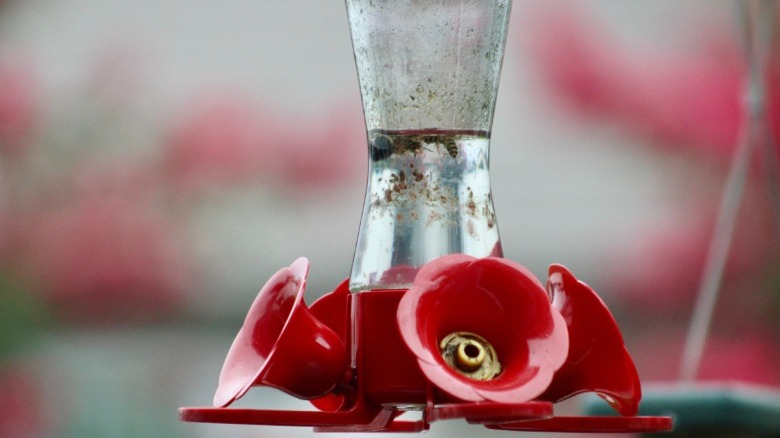
The absolute best time to put out your hummingbird feeder depends on your location in the U.S. according to annual migrations. If you want to join in for the next migration, it's important that you know how to keep your feeder clean with baking soda and vinegar. First, take apart your feeder and begin by cleaning the ports. The ports of a traditional hummingbird feeder often get very dirty, so scrub them with your baking soda mixture, using a brush to reach every corner inside and out. After removing any dirt, debris, or nectar residue, it's best to sanitize the feeder by soaking it in your diluted vinegar for at least one hour. Afterwards, rinse with hot water, leaving behind no baking soda, and let the feeder air dry before reassembling and adding more nectar.
Regular cleaning is necessary for happy, healthy hummingbirds. Clean your hummingbird feeder once every two to three days, depending on how much nectar the birds have used up. In warm weather, however, plan to clean out the feeders more often so that they don't grow mold in the hot weather. If possible, every day or every other day is best. It's also best to clean the feeder every time your hummingbird visitors finish all of the perfect homemade nectar, usually in a span of two to three days. It might be tempting to simply refill the feeder, but the baking soda and vinegar cleaning method makes it so easy to clean. And the hummingbirds will definitely thank you!