

Why You Should Think Twice Before Planting Pachysandra In Your Yard
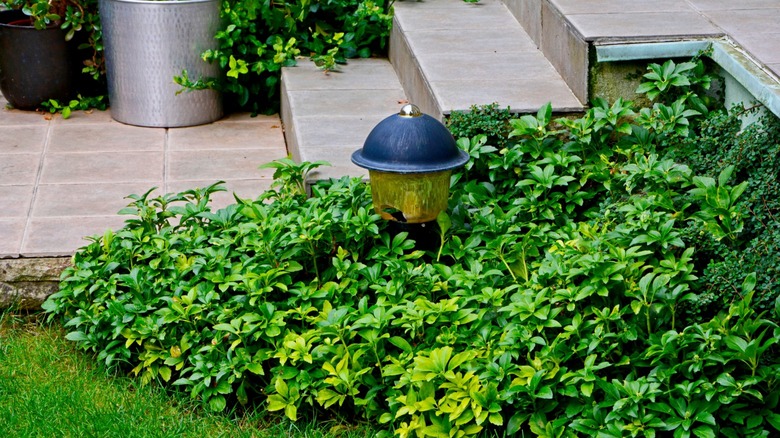
Choosing the best ground cover for your climate conditions can be difficult. Pachysandra (Pachysandra terminalis), also known as Japanese spurge or carpet box, is a popular option used for ground cover in the U.S. There are many reasons people enjoy using it: For one, it doesn't grow much higher than 6 to 12 inches, which is ideal for a ground cover. It also spreads easily to cover a space and helps prevent erosion. However, using this evergreen plant for ground cover might be something you regret. Despite its good qualities, non-native Japanese spurge very easily becomes invasive.
This ground cover is so popular because it grows in shady areas and doesn't require any soil amendments to thrive in USDA Hardiness zones 4 through 9. Pachysandra will grow out from where you initially plant it, overtaking your yard, and eventually escaping it. If there's one thing your neighbor secretly hates about your yard, it's when you neglect your lawn and plants start encroaching on their space. Unfortunately, it's difficult to either control or get rid of pachysandra once it's been established.
Avoid planting this blight-prone ground cover
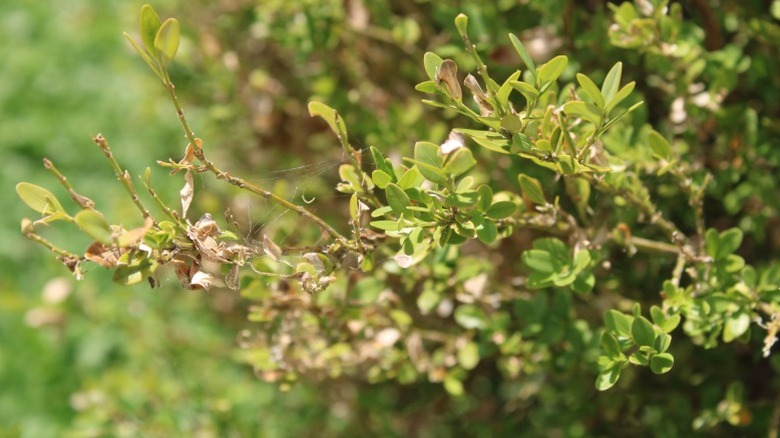
Even if you think you can control this invasive ground cover, think again. Pachysandra, as a member of the boxwood family, is notoriously prone to both leaf blight (Volutella pachysandricola) and boxwood blight (Calonectria pseudonaviculata). You can tell if a boxwood ground cover has blight from its appearance: With leaf blight, you'll notice the stems become brown, shrivel up, and eventually die. Leaf blight is common when pachysandra is not grown in shade. With boxwood blight, there will be brown or black spots on the leaves, as well as on the stems. Loss of leaves is a major problem. Unfortunately, preventing boxwood blight can be difficult, especially if you live somewhere with too much humidity or moisture. Excess moisture and lack of air flow is the perfect formula for blight to crop up.
If your main goal with planting a ground cover is to prevent or control erosion, there are other options besides Japanese spurge that are not susceptible to boxwood blight. Creeping phlox (Phlox stolonifera) is a native phlox ground cover that can grow in either full sun or partial shade. It also helps control erosion without becoming aggressive the way invasive pachysandra can. Remember our top tips for successfully planting ground cover in your yard, especially planting with care. Creeping phlox requires deadheading and air circulation for best results, so prepare your site accordingly. By growing this alternative to Japanese spurge, you can avoid common issues that you may come to regret.