

The Pinwheel-Shaped Flowers That'll Look Perfect In Your Summer Garden

Imagine stepping into your yard on a pleasant summer day and seeing an array of colors thanks to your beautiful, blooming garden. With the right weather-resistant choices, this dream can be a reality, even in areas known for their heat. You can even choose plants with fun and unique appearances, like the pinwheel-shaped annual vinca (Catharanthus roseus), also known as periwinkle.
Annual vincas are beautiful flowers with a notable tolerance for heat and drought. As a result, they're the perfect summer flower to add to your garden. They can bloom from late spring to the first frost when well taken care of in tropical climates. Annual vincas are also low-maintenance, with a solid tolerance for poor soil and no pruning needed to keep their beautiful petals looking vibrant and full.
Because of this, even if you're a beginner gardener who only has experience with the easiest fuss-free plants, you can hone your green thumb and try your hand at these bright little flowers. But, before you can start growing your very own annual vincas, you have to pick the type of vinca you want to grow and know all their care requirements.
How to grow annual vincas
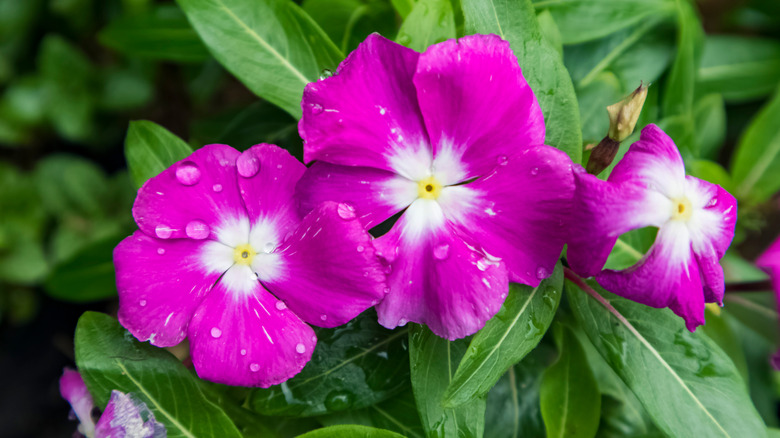
These pinwheel-shaped flowers come in several varieties, known as cultivars. While there are similarities between the different cultivars, they differ in bloom time, size, and color. There are both upright and trailing varieties. Once you've picked the perfect annual vinca cultivar for your garden, you can then move on to planting and growing your own.
If you start your seeds indoors, you'll want to hold off on planting them outdoors until the threat of frost has passed. You can also plant adult vincas from a garden center directly into your garden once the weather is right.
Overall, you'll find that annual vincas are fairly hands-free, so long as you plant them in the right locations. Vincas can thrive in containers like this DIY planter from a repurposed wine box or garden beds, but they need full sun, with at least eight hours of light exposure each day. And, while they are tolerant to poor soil, they do their best when provided with plenty of drainage. This is because, as drought-tolerant plants, vincas have adapted to low-moisture conditions, and overwatering or poor drainage can be harmful. With plenty of sunlight and the right amount of water, vincas tend to thrive with little maintenance, producing show-stopping flowers you can enjoy all season long.