

Swimming In These Dangerous Lakes Could Cost You Everything
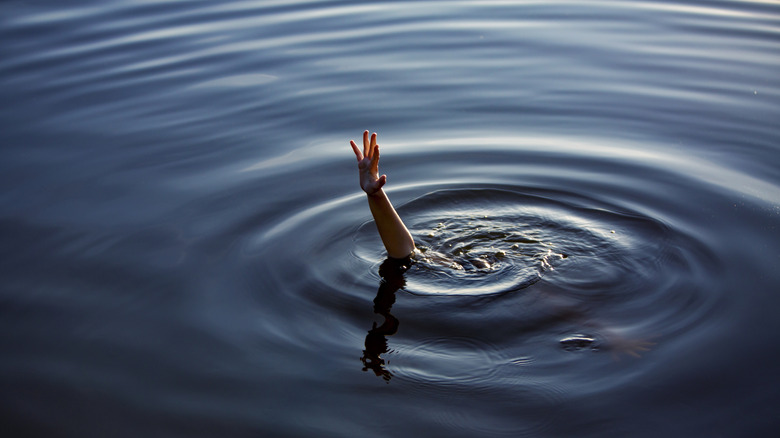
Swimming is one of the most enjoyable of summer activities. Who doesn't remember how fun it was to go to the lake, the beach, or the town pool and splash around for hours? Yes, swimming is excellent fun. It can also be extremely dangerous. According to the CDC, over 4,500 Americans died of drowning every year between 2020-2022. On top of that statistic, there are several lakes in the United States with many hidden dangers that could, if you're not careful, cost you your life. There's a reason a lot of people prefer going to pools than lakes.
We've written in the past about the most dangerous spots to swim in the entire world. Now, let's shine a light on lakes within the United States that are incredibly dangerous for swimming and other water-related activities. Whether you're planning your first open water swim, or are looking for spots for a vacation, if you plan on visiting any of these lakes we strongly recommend extreme caution, or avoiding them all together.
The following lakes are considered to be the most dangerous in the United States. Some are enormous and well known, while others are smaller and their notoriety is locally known. There is one thing, however, they all have in common: If you're not careful ... these lakes could kill you.
The deadly currents of Lake Michigan
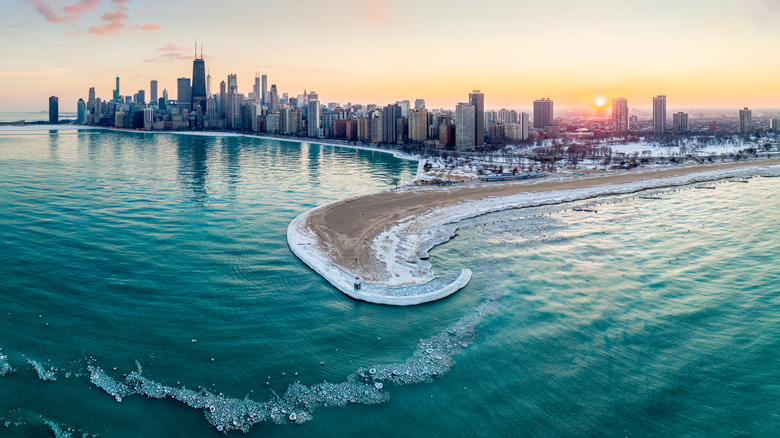
At 307 miles long, 118 miles wide, and with over 1,600 miles of shoreline, Lake Michigan is more like an inland ocean than a charming lake. The highly built-up shoreline across four states (Michigan, Indiana, Illinois, and Wisconsin) make Lake Michigan extremely popular with locals and tourists seeking a lakefront getaway. And while it has some of the most beautiful beaches and islands of any of the Great Lakes, Lake Michigan is a lake you should think twice about swimming in.
According to ABC 57, Lake Michigan is considered the most dangerous Great Lake to swim in. In 2022 alone, over 40 drownings were reported. These were likely caused by a combination of factors that contribute to Lake Michigan's personality being more oceanic than a normal freshwater lake.
Lake Michigan is notorious for the strength of its currents. Strong rip and longshore currents can be a great struggle, even for accomplished swimmers. These currents occur fairly close to shore, meaning that you don't have to swim far to get stuck in one. Wind and waves, as well, are a huge danger on the lake. They can easily pummel you into rocks, or capsize a boat if you're not careful. So, be sure to approach Lake Michigan with the understanding that swimming there could cost you your life or get you injured.
Lake Lanier's disturbing body count
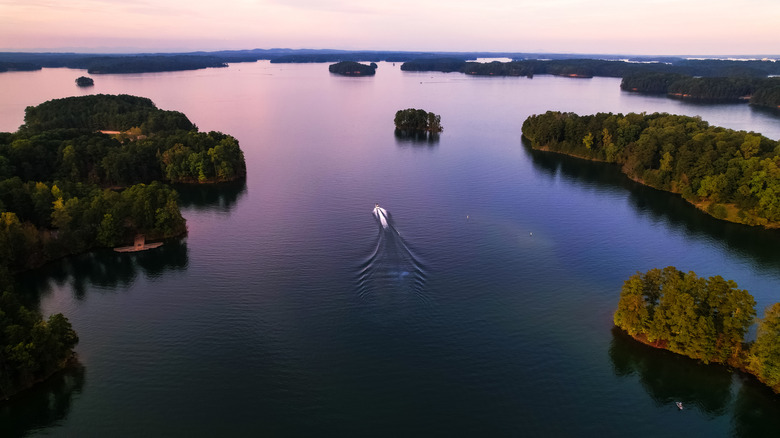
If you're someone who believes that there is always a logical explanation for everything, then this next choice of lake might confuse you. Lake Lanier in the state of Georgia is said to be the most haunted lake in North America. Several specters are said to exist on its shores. Some say it's because the graves of locals who inhabited the area before the lake was created have never been moved. Others say it's the spirit of two young girls who drowned there. But, whether haunted or not, there is very little that can explain exactly why Lake Lanier has such a disturbingly high body count.
Built by the Army Corps of Engineers in 1956 as a means of flood control, hydroelectric power, and drinking water, Lake Lanier is the largest man-made lake in Georgia. Since its establishment, however, over 500 deaths have occurred there, 200 of which have happened in the last 30 years. So ... what's the reason?
There is plenty of logical evidence. Reckless boating, submerged debris, and low visibility in the water have led to accidents and drownings over the years. However, these numbers are shocking. 13 deaths occurred in 2023, and the sheer amount of overall drownings and accidents have made Lake Lanier the single deadliest lake in the United States, per Time Magazine. With its weird history and disturbing body count, no wonder people think it is haunted.
Onondaga Lake is the most polluted in the U.S.
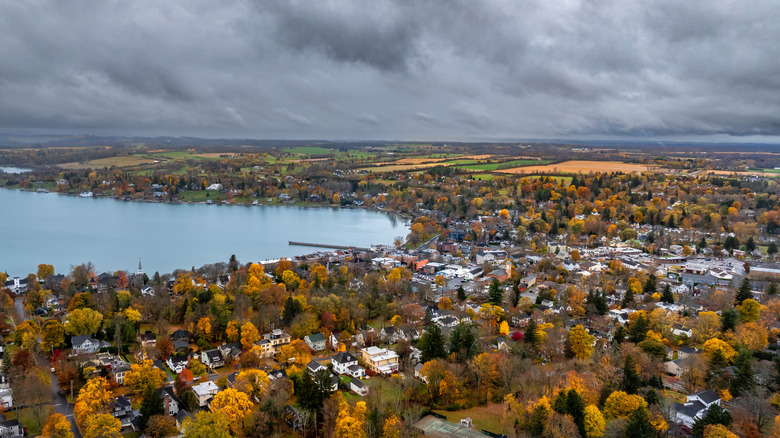
Next we travel northwards from the most haunted lake in America to one of the most polluted. Onondaga Lake, which sits on the outskirts of Syracuse, New York, was once considered sacred to the Native American tribes who lived in the area. As the city built up however, these sacred waters became victims of industrial and civic pollution. After many decades of waste being pumped into the lake, it became one of, if not the, most polluted lake in the USA. Things were so bad that the swimming was banned in the lake in 1940.
For several more decades, Onondaga Lake was a veritable cesspool of toxicity. Swimming was a no go, as were other forms of marine recreation (fishing was banned in 1972). However, during the 1970s, pollution control efforts began to take place. The goal was to remove enough of the pollutants to make Onondaga Lake once again useable for recreational purposes.
While there are clean-up efforts going on today, many sections of Onondaga Lake are still nowhere near safe toxicity levels for swimming. According to the New York State Department of Environmental Conservation, only the northern third of Onondaga is considered swimmable thanks to the pollution control and recent cleanup efforts. However, as other portions of the lake are still considered unsuitable for swimming due to potential toxins and sediment issues, we would strongly advise caution when thinking about whether or not to dive in.
Lake Mead is beautiful but dangerous
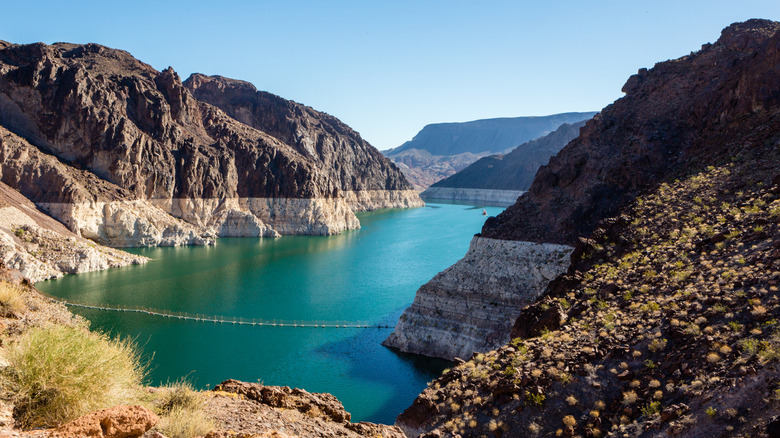
Lake Mead National Recreation Area sits just outside of Las Vegas on the border between Nevada and Arizona. Famous as the location of the Hoover Dam, Lake Mead is technically a reservoir filled by the Colorado River. Its size and proximity to one of the main hubs of the American southwest has long made Lake Mead a popular destination for locals and vacation goers. However, that very popularity has led Lake Mead to become a potentially deadly place to swim making it home to one of the most dangerous campgrounds in the country.
There are several factors that play into this, not least of which is the lake's location in the middle of the high desert of southern Nevada. Hyperthermia — when the body overheats — is common, and the weather can often be erratic and unpredictable. Vicious winds can also be a challenge for those hiking or boating on the lake. Frequent toxic algae blooms can also have an effect on swimmers.
The biggest killers on the lake are reckless boating and drownings. According to St. George News, 56 people drowned at Lake Mead between 2013 and 2023. An additional 27 vessel-related deaths have been reported on the lake, per information sourced from Valiente Mott Injury Attorneys. A total of 317 deaths from various causes have been reported at the lake between 2007 and 2024. Whether from the amount of people swimming in her waters, or the unpredictable weather that accompanies a visit to her shores, Lake Mead can be one of the most dangerous lakes to swim in.
Dangerous boats on Lake of the Ozarks
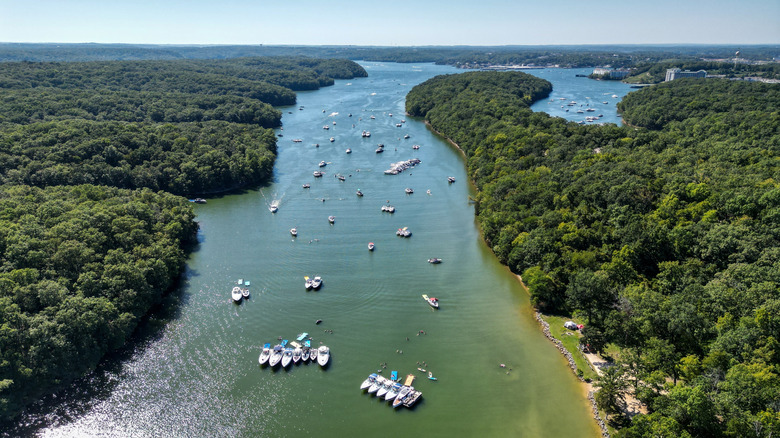
Lake of the Ozarks in Missouri is a lake where fatalities are, sadly, incredibly common. Over the past two decades, 33 lake deaths have occurred, according to Insider Monkey. When you take into account its relatively small size, Lake of the Ozarks becomes a contender for one of the most dangerous lakes in the United States.
One of the biggest problems for swimmers is boating congestion (there can be over 165,000 boats on the water on any holiday or weekend during peak season) and pilots boating while intoxicated. In fact, the latter had gotten so bad that Missouri recently passed a law severely limiting the amount of alcohol one could drink on the water, per The State Journal Register. Blind corners and lack of a speed limit during the day is another reason why this lake can be so dangerous. Many accidents have occurred because of boaters driving far too fast and hitting embankments. It's important, if you plan on swimming or paddling here, to be aware of the dangerous nature of the boating environment.
Environmental factors are at play here too. E-coli bacteria is a common occurrence which can easily infect bathers. Also, it's been reported that alligators could soon become an issue at Lake of the Ozarks due to changing climates. So, watch out for that.
Lake Jesup has alligators
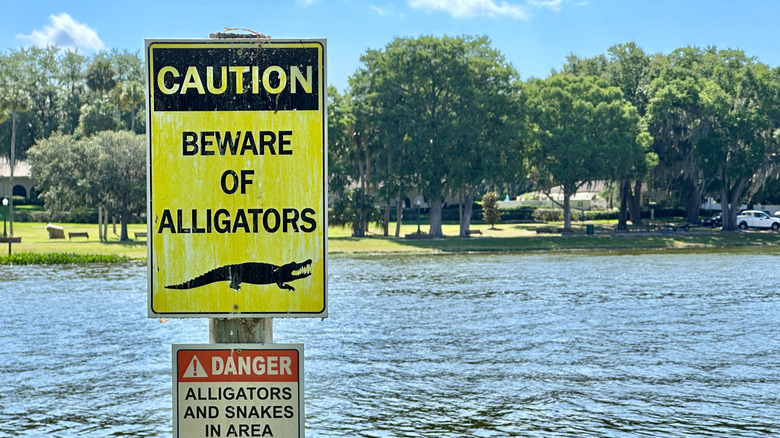
And speaking of alligators ... our next lake is in Florida! Did you know that the Sunshine State is the only place on Earth where you can find waters infested with both alligators and crocodiles? That's a mildly terrifying thought, but it doesn't stop thousands upon thousands of tourists and locals from descending upon Florida's waters each year. If there is one lake you want to avoid swimming in, if you're afraid of alligators, it's Lake Jesupin central Florida.
According to Fox 35, Lake Jesup is home to the single densest alligator population in the U.S. By most recent counts, there were at least 13,000 enormous Florida alligators infesting its waters. And while the lake is extremely popular and there have been no fatal attacks reported here, the amount of alligators should give you cause for concern.
While your chances of getting attacked by an alligator are low, it's not impossible. Swimmers and anglers need to be aware they are visiting an apex predator habitat. Alligators are brutal and strong when provoked. They could easily kill or maim you if you are not cautious. So do yourself a favor, and think twice about swimming at Lake Jesup this year.
Lake Erie's dead zone
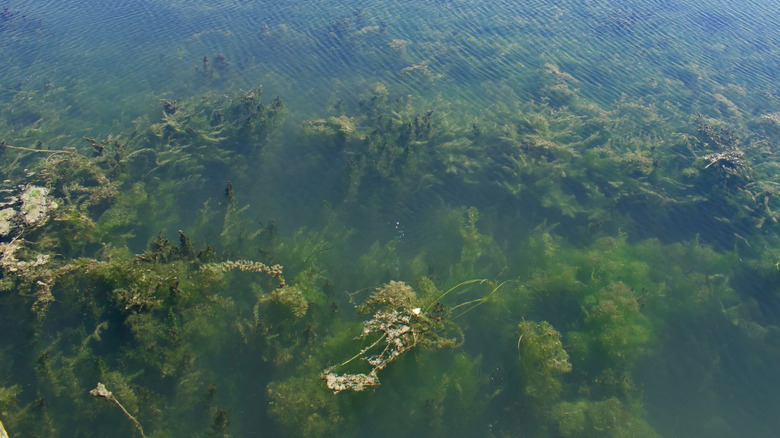
Despite being the smallest in volume of the Great Lakes, Lake Erie nevertheless boasts some incredible scenery. Driving along its shores in New York, Pennsylvania, or Ohio, you feel as though you've stumbled across a great inland ocean. However, owing to its proximity to built-up urban areas like Cleveland, and several thousand of acres of agricultural lands within its watershed, Lake Erie is also the most likely Great Lakes to be affected by pollution and temperature changes. in fact, in 1969, the Cuyahoga river (which feeds into Lake Erie) actually caught fire due to all the pollution, and "dead" Lake Erie became the poster child for sweeping environmental reform.
As such, Lake Erie is commonly subject to what is known as a dead zone. According to Michigan Sea Grant, dead zones occur when a lake is depleted of oxygen. This can come as a result of pollution or elevated water temperatures. What then occurs are massive algae blooms and the death of underwater life. The resulting bacteria not only smells atrocious, but can be harmful to humans.
Swimming in a dead zone could easily lead to severe infection and illness. And while it is the smallest of the five Great Lakes, the dead zone in Lake Erie is the largest. Some years it can measure up to 10,000 square kilometers during the late summer. This affects swimming areas along the lakeshore, many of which have to be closed off due to bacteria levels.
Lake Ontario has astonishing winds
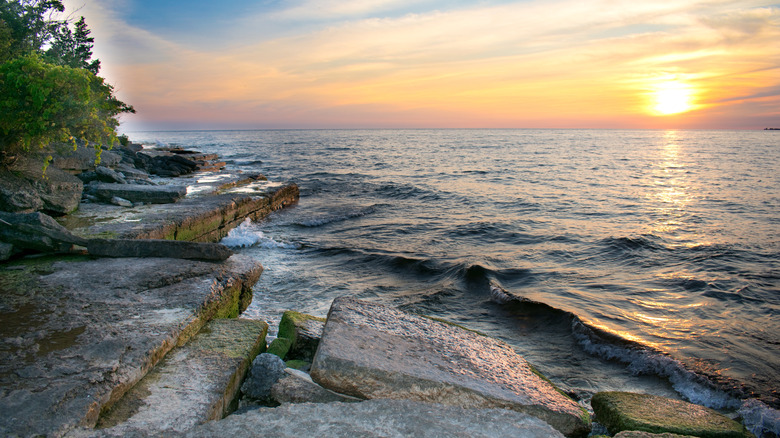
Lake Michigan may hold the title of the most dangerous of the Great Lakes, but Lake Ontario might just be the most unpredictable. One of only two Great Lakes whose coast is confined to one U.S. state, Lake Ontario offers an abundance of outdoor recreation for upstate New Yorkers. Fishing, swimming, and paddling are all popular summer activities. However, in spite of its awe-inspiring beauty, Lake Ontario can pack quite a wallop, even in the summertime.
According to Great Lakes Surf Rescue Project, Lake Ontario saw 11 deaths total in 2024. While most were on the Canadian side, three of those deaths occurred in New York waters. The deaths were listed as marine vehicle accidents and drownings. With a lake that has some of the coldest freshwater in North America and strong rip currents, it is sad, though not surprising, that Ontario claims so many lives.
The winds on Lake Ontario are especially difficult. Even if you are swimming closer to shore, a good wind can stir up the water and push you farther out into the lake. This is even worse if you are on a boat. Anyone who is not a strong swimmer is looking at some real trouble if they get swept away by the waves.
Jacob's Well is deep and dangerous
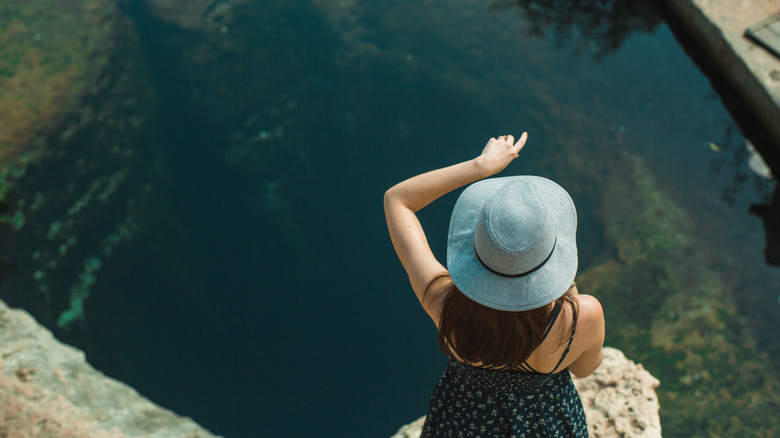
Jacob's Well in Wimberly, Texas does not look particularly menacing. However, what lurks beneath has the potential to take lives. What appears on the surface to be a small pool of mildly deep water is deceiving, for Jacob's Well is nearly 150 feet deep. It's also filled with a maze of caves and caverns extending almost a mile. The challenge this presents has drawn scuba divers to Jacob's Well for years. Unfortunately, all too often, this notoriously tricky topography can turn fatal.
Jacob's Well has claimed the lives of at least eight divers over several decades' worth of exploration. Venturing too deeply, running out of air, and becoming trapped in the loose underwater gravel soil or small caves have been the causes of these deaths. Rescue attempts have also turned potentially fatal, with Visit Wimberly reporting that a local dive shop owner, Don Dibble, ruptured his stomach and nearly drowned while attempting to recover the bodies of two young divers from California.
This is the issue with Jacob's Well: While it begs to be explored, the incredibly tricky and dangerous underwater landscape makes it a severe risk for even the most experienced diver. Best to just dip your feet in and not venture any farther.
Brain-eating amoeba at Lyndon B. Johnson Lake
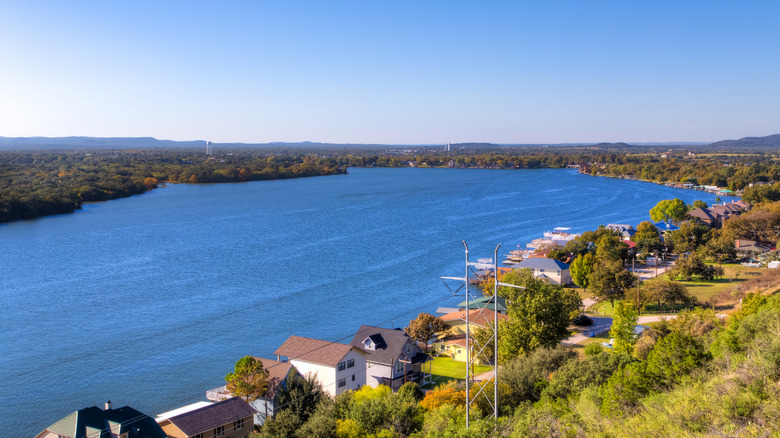
This one is disgusting, we will admit. But it is well worth pointing out for the potential risks involved in swimming here. In 2023, as reported by CBS News, a man who swam in Lyndon B. Johnson Lake in Texas became ill and died from an absolutely terrifying malady. It was discovered that he had picked up Naegleria fowleri, a brain-eating amoeba, while swimming in the lake. The creature ate away at his brain tissue until he became incapacitated and died.
The reasons behind why the amoeba was present in the water are unclear. However, after the man's death was reported to the CDC, they confirmed the amoeba as Naegleria fowleri, which caused the amoebic meningitis that killed the man.
This is uncommon in Texas, as only 39 people have been reported as killed by this since 1962. However, warm water temperatures can lead to the presence of this amoeba, which can enter through the nose and cause the infection. Results are universally fatal. That, to us, is reason enough to avoid this body of water altogether.
Lake Tahoe's wildfires and water temperatures
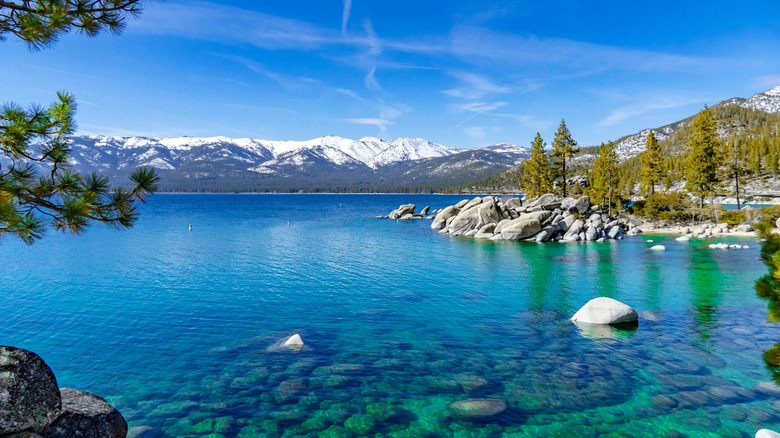
Straddling the border of Nevada and California, Lake Tahoe is a beautiful and much-loved area to hike, swim, and paddle. As the second deepest lake in the United Statesat 1,645 feet, Lake Tahoe is a spectacle to behold from any angle. Yet, the popularity of this lake is part of the reason why it rounds out our list as the final most dangerous lake in the United States.
According to Tahoe Quarterly, the Coast Guard has seen a dramatic increase in distress calls since the COVID-19 pandemic. A combination of weather events and inexperienced people have caused a number of boat crashes and swimming-related incidents requiring attention. High winds and intense waves have also been an issue, making it difficult for small craft and swimmers to navigate safely.
Frequent forest fires surrounding the lake and the frigid water temperatures have also made Lake Tahoe a dangerous place to swim. Hypothermia is a common issue, and drowning as a result of fatigue brought on by the cold water is also common. As such, this final lake is one we would highly recommend caution over before attempting to swim or boat.