

Want A Bigger Flower Bed? Try This Clever No-Dig Method
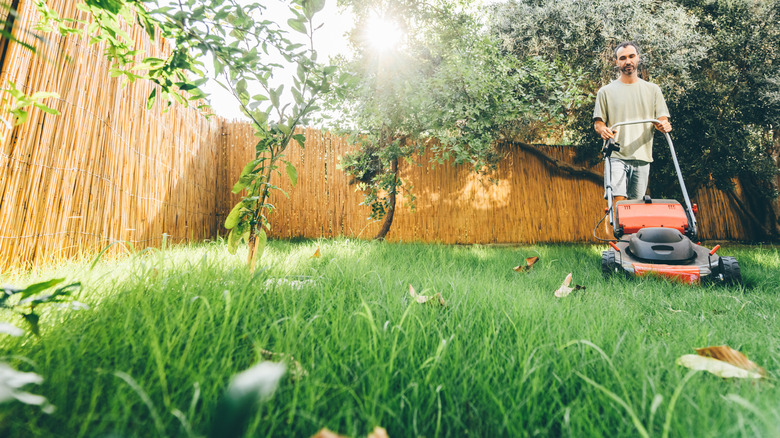
If you're looking at your uneven lawn and fantasizing about a picture-perfect flower bed for your colorful perennials instead, there's a more efficient way to add space to your garden without grabbing a shovel and rooting out sod. The secret is to work with the grass instead of seeing it as an obstacle. In fact, there's a way that allows you to construct right on top your lawn to make a bigger flower bed: Sheet mulching or no-dig gardening. This method essentially starves the grass already present long enough to provide new plants with a head start while suppressing weed growth.
Instead of yanking out a delineated area of grass, mow it as short as possible. What you'll do next involves layering rather than digging, using materials you probably already have at home or can easily find at a warehouse store. You're not trying to remove or kill the grass outright; you're letting it die off beneath a layer of biodegradable cardboard or paper and soil, choking it off from sunlight.
The no-dig method is successful because it creates an environment where weeds won't grow, new plantings can establish themselves, and soil conditions over time improve without disturbing what's underneath. It's efficient, environmentally friendly, and surprisingly satisfying. Just to be clear: This isn't instant gratification. It's a low-effort, high-reward approach that transforms previously unavailable garden space into bloom-ready soil. And best of all, it's entirely scalable.
Layer cardboard like a sandwich for long-term soil health
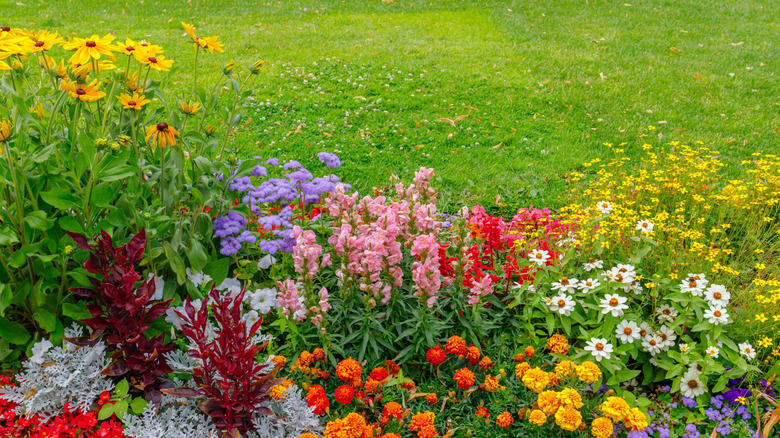
After your lawn gets its buzz cut, it's time to smother it on purpose. The bottom layer of cardboard or paper must prevent sunlight from hitting the grass, essentially halting its growth. To accomplish this correctly, use wide, heavy materials that won't deteriorate too rapidly or have open seams. Opt for deconstructed Amazon boxes (remove any tape or labels), or the large pallet cardboard sheets typically found jammed between bulk items at big-box stores (a hack recommended by gardening YouTuber Hooked and Rooted). They are heavy-duty and block light, preventing weed growth. It's important to interleave the cardboard so there are no gaps for grass or weeds to poke through.
Corners, curves, and narrow areas are where grass recovers its turf if not covered adequately. In these peripheries, overlapping paper supermarket bags can cover gaps the larger cardboard fails to reach. After laying down your barrier, soak the whole thing. Wetting the cardboard promotes decay and causes it to conform to the landscape, sealing everything into position. Next add a layer of soil and or mulch. If you're planting immediately, you'll want to cover everything with an inch or two layer of soil and compost. On top of that, add a substantial layer of mulch. If you're not planting right away, you can skip the soil and just use mulch. Once it's all installed, give it a good soaking.
Plant directly into the soil or wait a few weeks when the grass dies off entirely. Once done, consider ground cover (a good alternative to mulch) to stop any weeds from appearing in the bed and use the lawn edging tools that will take your yard to the next level.