

Glass Or Plastic Hummingbird Feeders: Which Is Right For Your Yard?
We may receive a commission on purchases made from links.
Whether you are a serious ornithologist or a casual backyard birder, odds are you have — or wish to have — nectar-filled feeders in your outdoor space to attract hummingbirds. Deciding on the type of feeder can be perplexing, as there are a wide range of sizes, colors, shapes, and designs from which to choose. However, the nectar reservoir of each of the feeders in this dizzying array are made from one of two materials — glass or plastic. While there are some ceramic models, for all practical purposes, they can be considered in the same category as glass in terms of pros and cons.
How do you know which is right for your yard? Much of that depends on which qualities you value most — affordability, durability, aesthetics, or ease of use. If cost is your only concern, the answer is simple: plastic. However, although they tend to be less expensive up front, plastic feeders often aren't as durable as glass, meaning you may buy new ones more often. Plastic feeders can warp in extreme heat, which causes leakage. This makes them a poor choice for those living in areas where temperatures frequently hit triple digits. Additionally, plastic feeders can become discolored or crack over time. Some types of plastics also contain BPA, which could possibly leach into the nectar.
However, there are practical reasons to choose plastic feeders as well. If you are putting out multiple feeders, the affordability certainly gives the advantage to plastic. Where you place hummingbird feeders to keep them coming back can also play a role in your decision. Since they do not shatter as glass models do, plastic feeders are a better choice if you are hanging them over a hard surface such as a concrete patio, or in an area subject to high winds.
Advantages of glass hummingbird feeders
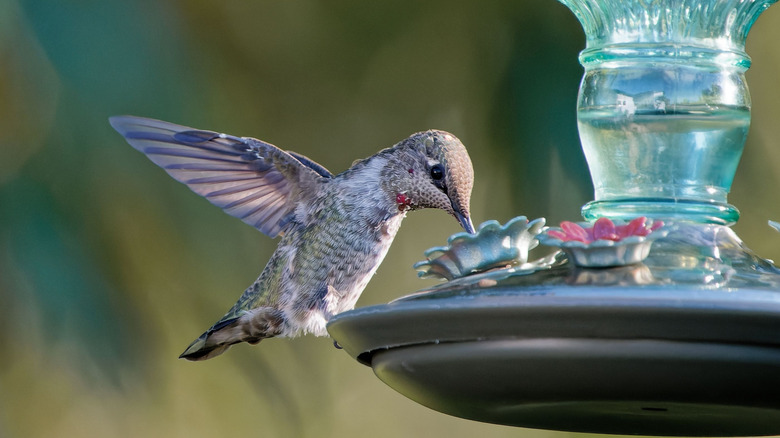
Although they tend to be heavier and more expensive, there are advantages to glass feeders. For one, the extra upfront cost often pays off in the long-run, as glass feeders stand up better to the elements. While it is often necessary to replace plastic versions each year when it is the right time to put out hummingbird feeders, glass models can remain in service for years. Additionally, many models of glass feeders are easier to clean than plastic versions. The glass also resists mold and mildew better than plastic. This is especially important given that clean feeders attract more hummingbirds and help keep the birds that drink from them healthy.
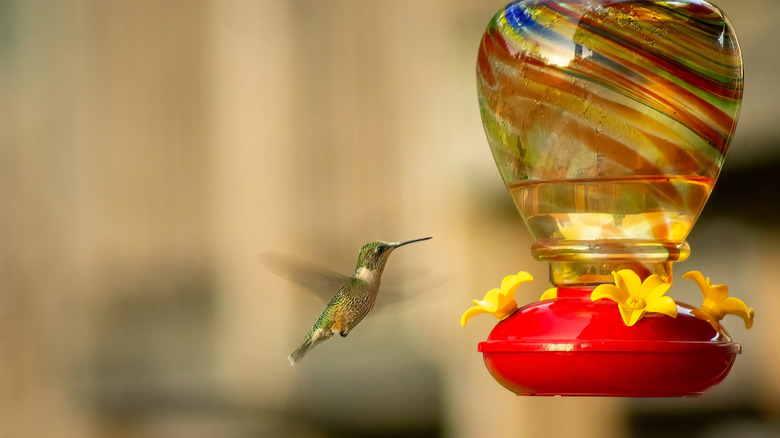
Another advantage to glass feeders is their aesthetics, which can appeal to both people and birds. Many glass models such as the Feed Garden glass hummingbird feeder feature red or vividly colored nectar reservoirs. Given that hummingbirds are particularly fond of colors such as red and orange, this can assist in attracting them to feeders. Additionally, a number of glass feeders are very decorative in design, including those like the LUJII hand-blown glass hummingbird feeder, which is available in an array of colors. These options allow backyard birders to choose feeders that fit with the décor of their outdoor living space. Just remember, highly decorative feeders may be more challenging to keep completely clean, thanks to narrow curves and unusual features.