

The Drought-Tolerant Ground Cover That's The Perfect Addition To Your Sunny Garden
Ground cover plants bring all kinds of benefits to a landscape, from fending off weeds to reducing erosion. Some gardeners prefer to use ground cover plants instead of mulch in flower beds because they don't need to be replaced as often. You can even reduce a garden's watering needs by planting a drought-tolerant ground cover, such as hardy ice plant (Delosperma cooperi), which is also non-invasive, unlike other ice plant varieties. This fast grower thrives in desert-like conditions as well, including hot weather and soil that's both sandy and dry. It's ideal for a low-shade location in your yard, since it craves at least 6 hours of daily direct sunlight.
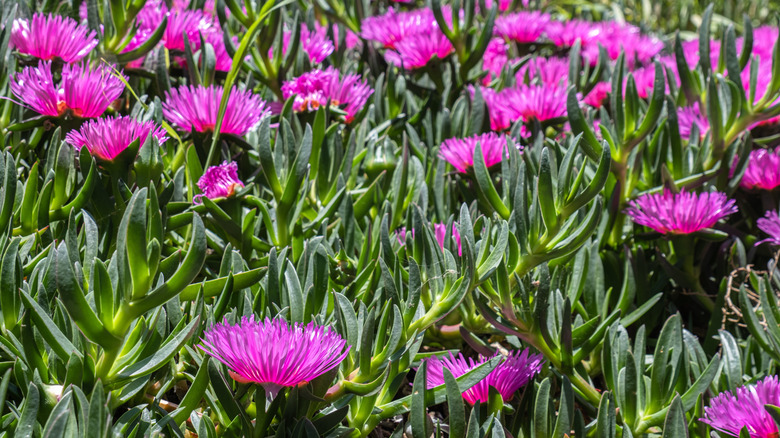
Hardy ice plant is easy to use as a ground cover because most of its growth is horizontal rather than vertical. Its height is typically 3 to 6 inches, while its width often reaches 2 feet. This plant is best suited for USDA hardiness zones 6 through 10. When planted in groups, hardy ice plants form a mat of plump green foliage that helps keep the ground cool in the summer. The plants also offer brightly colored flowers in the summer and fall. These blossoms are shaped like daisies, but are typically pink or purple. Hardy ice plants are willing to live in crevices and in other spots that many other plants can't handle. This makes them a great choice for rock gardens and borders beside gravel paths. You can even plant them near roads that get salted in the winter since they can manage slightly saline conditions.
What to avoid when growing hardy ice plants
In general, hardy ice plants' biggest threat is wet, heavy soil. If your yard's soil contains clay, it may be prone to pooling water and other drainage issues. This can spell trouble for plants that love light, dry soil. To remedy the situation, add compost or another organic material to the growing site. Also avoid overwatering a hardy ice plant ground cover. Water these plants once a week during the hottest parts of the summer, and stop watering them as the cold season approaches. Mulching your hardy ice plants with gravel or pine needles can help keep water away from their foliage during the winter and beyond. If your geographical area has soggy winter weather, you may need to grow hardy ice plants as annuals. Otherwise, you can grow them as a perennial ground cover.
When using hardy ice plants as a ground cover, leave a gap of 15 to 18 inches between each specimen so the plants form a blanket of foliage, but don't grow so densely that excess water struggles to evaporate. Also make sure to fertilize them at the right time of year. In general, these plants don't require much of a nutrient boost. If they do show signs of needing fertilizer — for instance, older foliage turning yellow, which signals that your soil lacks nitrogen – you should feed them after their growth season is done. This is typically in the fall. When you fertilize them in the spring or summer, their greenery retains lots of water, which increases the likelihood of a fatal freeze come winter.