

Attract More Hummingbirds With These Simple Feeder Cleaning Tips
We may receive a commission on purchases made from links.
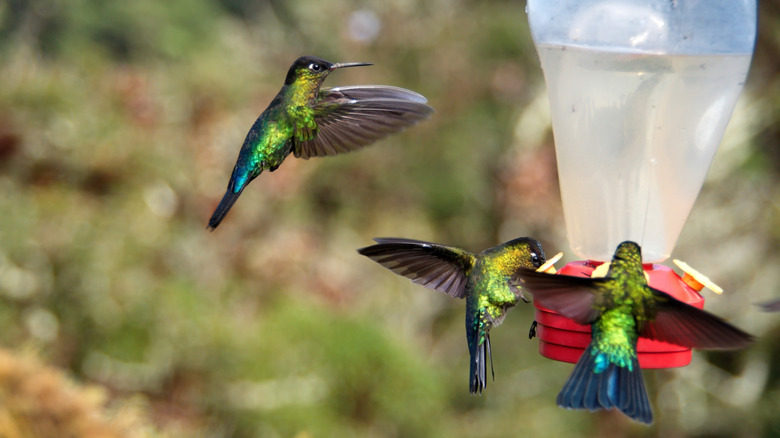
It's common practice for backyard birders to place hummingbird feeders like the Feed Garden Glass Hummingbird Feeder around their yard to attract hummingbirds. While much thought is given to the best time to put out hummingbird feeders and the right place to hang feeders, what you do once your feeder is up is just as critical to attracting hummers. Keeping feeders full of nectar is important, but so is keeping your feeders clean. Dirty feeders can present an array of issues ranging from predators to disease, which will cause hummers to stay away. To that end, you can attract more hummingbirds with these simple feeder-cleaning tips.
The sweet nature of nectar is a potent attractant to ants, bees, wasps, and other insects whose presence may prevent hummingbirds from visiting your feeders. These pesky insects can also clog feeders, making it impossible for hummingbirds to reach the nutritious nectar. On the opposite end of the spectrum, predators ranging from praying mantis to black bears can also be attracted to the scent of sweet nectar. While the presence of a hummingbird feeder alone can tempt any of these creatures, when the outside of the feeder goes uncleaned and becomes coated with the sugary substance, its appeal is all the greater to unwanted guests.
While a messy coating of nectar on the outside may attract pests, allowing the innards of the feeder to go uncleaned can result in dangerous — and even deadly — issues for hummingbirds. Nectar left for too long in a feeder can spoil. Additionally, bacteria and fungus can begin to grow, making the mixture all the more dangerous to the birds that drink it. This can happen using a commercially created concoction or a DIY homemade hummingbird nectar.
How and when to clean hummingbird feeders
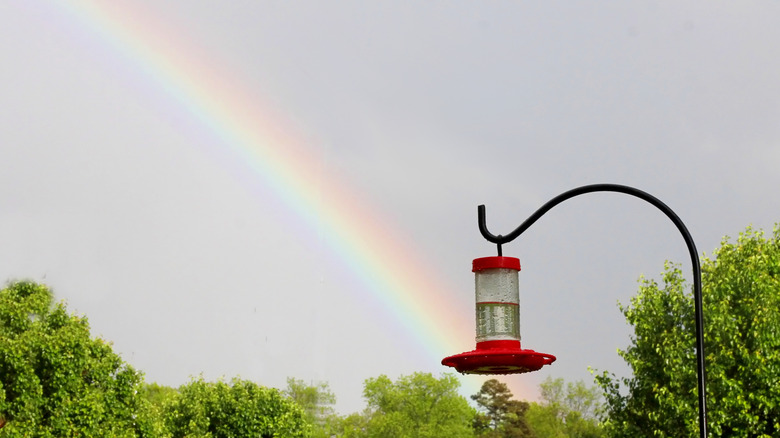
How often you clean your hummingbird feeder will vary based on where you live and the time of year. At the very least, the feeder should be cleaned each time the nectar needs to be replenished. Although dumping the remaining nectar may seem wasteful, simply topping it off will only cause the new nectar to become contaminated, leading to even greater waste. However, you shouldn't necessarily wait until the feeder is almost empty before cleaning and refilling. Throughout the year, it is advisable to clean feeders a couple of times per week at a minimum. During the heat of summer and in areas such as the Deep South, where temperatures can soar, feeders should be emptied and cleaned every couple of days.
There are numerous ways to clean hummingbird feeders. The simplest method for routine cleaning involves emptying the nectar reservoir and then soaking the individual parts of the feeder in warm, soapy water. After soaking for an hour or so, thoroughly scrub all parts of the feeder, using a small bottle brush to reach crevices and the tiny holes of the feeding ports. Following the scrub, rinse all the parts and allow them to dry before reassembling and refilling.
Should you find mold, mildew, or fungus remaining in any part of the feeder following a cleaning, you can utilize hydrogen peroxide to remove it. To do so, fill the feeder with peroxide just as you would typically fill it with nectar. Let the feeder sit upright for a quarter-hour or more. Then, empty, rinse, and dry the feeder. While this may sound like a potential issue for hummingbirds, hydrogen peroxide converts to water and poses no threat to the birds, even if traces remain after rinsing.