

Simple Tips For Successfully Planting Grass Seed During Spring
We may receive a commission on purchases made from links.
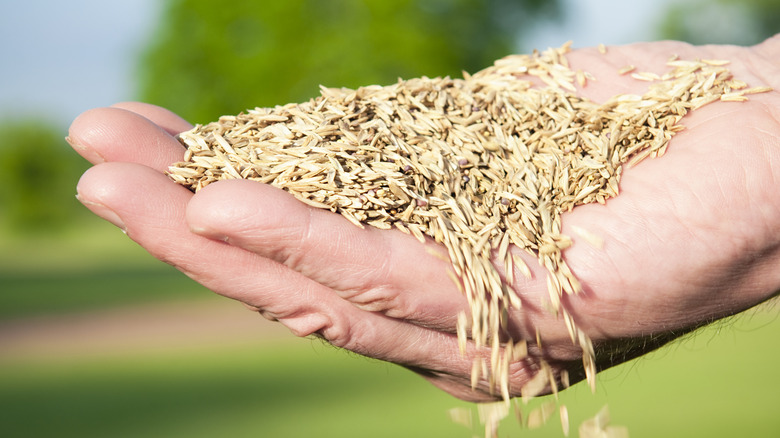
Planting grass isn't as simple as scattering seeds wherever you'd like them to grow. For starters, you need to choose the right grass seed for your yard and determine the best time to aerate your lawn. If you decide to plant grass in the spring, you can set yourself up for success by preparing for hot weather and the challenges it may bring, including droughts and pests. Keeping your soil moist should be a top priority, according to Bryan Clayton, CEO of GreenPal, a service that connects lawn care providers with potential customers.
During his 25 years in the landscaping business, Clayton has learned a great deal about grass seed's needs. For example, he has observed that grass seed does its best in warm weather if it receives sips of water on a regular basis. This creates ideal conditions for germination and helps keep vulnerable seedlings from withering.
"Short, frequent watering is the trick to keeping seed alive in the heat," he told Outdoor Guide in an exclusive interview. Clayton also recommends that you "mulch lightly with straw to hold moisture ... and make sure irrigation is consistent." According to Clayton, a light watering is best because it keeps the seeded area damp without making it swampy. When the ground is too wet, the seeds may struggle to put down roots. They're also likely to float to unintended locations and develop fatal fungal problems.
Preparing your soil for grass and addressing lawn pests
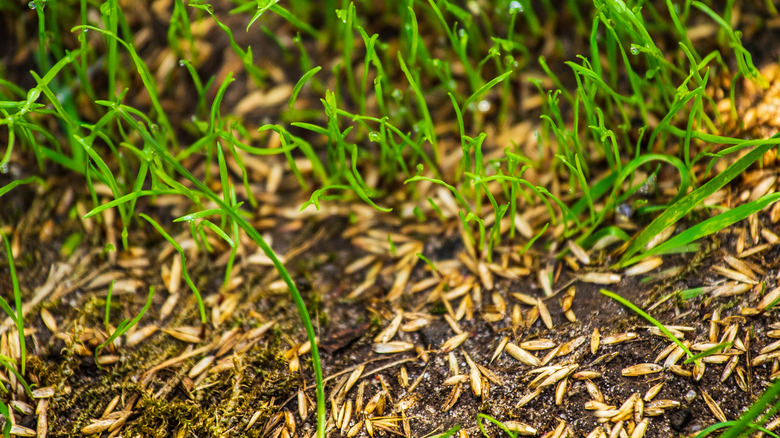
If you're sowing grass seed in the spring, remember that each blade that sprouts is a plant that needs care. This means tending to your lawn's soil and sunshine needs as well as its moisture demands. "You have to think like you're a farmer," explains GreenPal CEO Bryan Clayton. "Loosen up and aerate the soil before seeding," he adds. In addition to helping grass seeds burrow into the soil, these practices ensure that their fledgling roots receive the oxygen, water, and nutrients they need to thrive.
To encourage your new grass to establish itself, keep a few threats to its existence as far away as you can. The first threat is feet, which can trample it into oblivion. The second threat is the appearance of pests, whose numbers tend to multiply in the summer. "Watch out for grubs — these guys love stressed lawns in hot weather. Keep an eye out and treat proactively in June or July, ideally using a product like GrubEx," says Clayton. Lawn mowing can also help you get rid of grubs once your grass has gained a foothold. For best results, keep your new grass 3 to 4 inches tall and fertilize its soil on a regular basis.
If your attempts to grow grass in the spring go south, don't worry: You can try again in a few months, when temperatures are cooler and pest pressure is less intense. In general, the best time to overseed your lawn depends on the type of grass seed you're using. Kentucky bluegrass and other cool-season grasses tend to perform best when planted in the fall.