

The 8 Bear Species You Can Spot Around The World (And Where To Find Them)
Anyone who has spent a decent amount of time exploring the outdoors knows that the world has no shortage of bears. From the ones that ramble through a campsite because of a careless mistake to the ones you find pillaging your trash bins since you didn't bear-proof them, nearly everyone on the planet will have some kind of bear encounter in their lives. Whether you're observing them from the relative safety and comfort of the zoo, or coming face to face with one in the wild, it is worth knowing exactly what kind of bear species you are running into.
But which are the ones you'll be able to spot wherever you go? Can you really expect to find a bear in the jungles of southeast Asia, or the Andes Mountains of South America? As it turns out: yes you can! Bears are a global species, and there are a few common ones that you can expect to see almost anywhere in the world.
The following is a detailed list of the eight different species of bear you can spot throughout the world. We'll explain what they look like, their natural habits, and any potential dangers they pose when encountered in the wild. Plus, as a bonus, we'll tell you exactly where you will be able to find these bears, and how you can observe them safely.
Brown bear
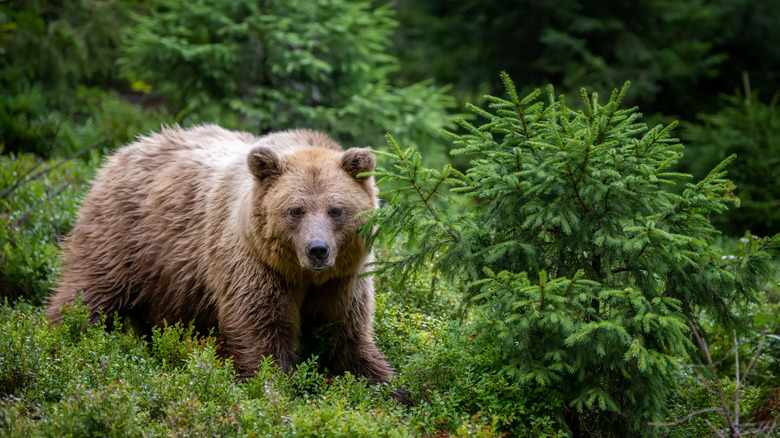
Found across North America, Europe, Russia, and parts of Asia, the brown bear has the largest ranges of any ursine. They are the single most widespread bear species in the world, which means you have a really good chance of seeing one if you're exploring the northern hemisphere. A typical brown bear is about 3.35 feet tall at the shoulders on all fours, and weighs up to 1,500 pounds. They operate on an omnivorous diet, eating berries, nuts, insects, fish, and small to large mammals.
There are several subspecies of brown bears, the most iconic of which has to be the Kodiak. Specific to Alaska, the Kodiak brown bear is the largest in North America. On its hind legs, they can stand up to 10 feet tall and can easily clock in at well over 1,500 pounds. The Kamchatka brown, which lives in Russia, is the largest bear in Europe and Asia.
Owing to their high population status, the chances of you encountering a brown bear while you're hiking in the northern United States, Canada, Russia, and other European countries is quite high. Professional guide services, like Alaska Grizzly Safaris, can get you up close to brown bears and experience them in their natural habitats. If you prefer your bear viewing to be done in the comfort of a zoo, you can find brown bears at the Greater Vancouver Zoo in British Columbia, Canada, the Louisville Zoo in Kentucky, and both the Bronx Zoo and Central Park Zoo in New York.
Polar bear
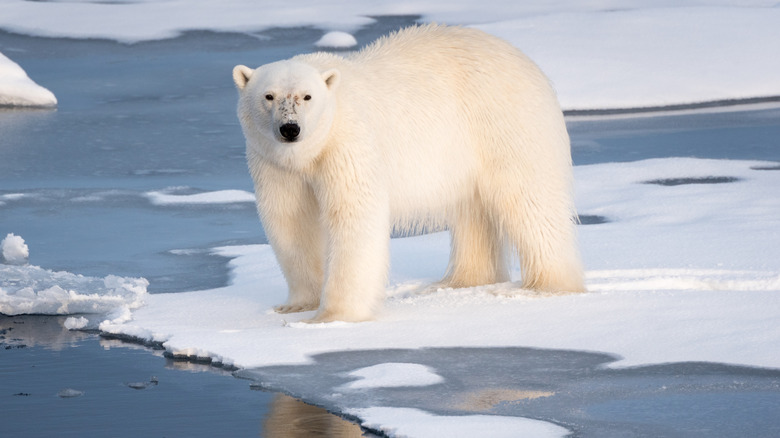
As the single largest bear species in the entire world — standing over 10 feet on their hind legs and weighing just shy of a ton — polar bears are a sight to behold. Natives of the Arctic Circle, which wraps around Russia, Canada, Alaska, and Scandinavia, polar bears have a massive range. Almost purely carnivorous, polar bears subsist on a diet of seal, walrus, bird, and fish meat, while occasionally foraging for vegetation and fruit if they are hungry.
While there are several ways you can go about seeing a polar bear, we strongly recommend caution. Polar bears may be vulnerable as far as their populations and range is concerned. However, they are the single most dangerous bear species in the entire world. Now, there are methods of avoiding bear attacks. But it's best if you never get yourself into those kinds of situations to begin with.
All things considered, it's probably best if you take to seeing a polar bear in the safe captivity of a zoo. Luckily, there are over 100 zoos worldwide that house polar bears, including the Beijing Zoo in China, the Calgary Zoo in Alberta, Canada, and the Point Defiance Zoo in Tacoma, Washington. If you absolutely must see one in the wild, you need to go with a trusted guide. Gold Star Canadian Tours offer some of the best polar bear safaris out there, with day-long, aerial expeditions that send you over a highly populated area near Churchill in Manitoba.
North American black bear
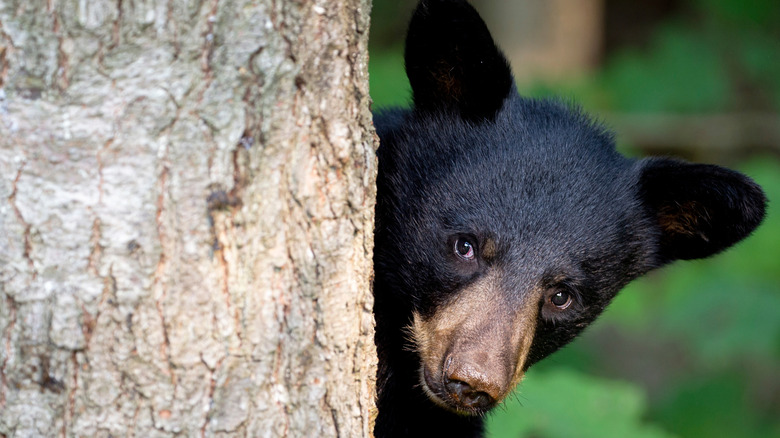
The most common bear species in North America, with a range from Florida to Canada, the North American black bear is one that you will commonly find stuffing its nose into trash bins, or attempting to make off with small livestock. While they are not overly aggressive, an encounter with a black bear can still leave you worse for wear. Don't let their relatively small size of 2-3 feet at the shoulders and 500 pound average weight fool you. These little guys can pack a wallop, so you should be careful.
According to a 2024 report by Newsweek, there have been upwards of 46,000 encounters with black bears across the United States in the last few years. Being able to access the plentiful food sources around suburban and rural towns, along with habitat degradation, has caused black bears to become more reliant on human food. As such, bear attacks and encounters are certainly on the rise. Thanks to their wide range, there is a high chance you could see one in your neighborhood or on your local hiking trail.
However, as these bears are entirely native to North America, if you live abroad, you will likely need to come to North America to see one. This can easily be done at a number of different zoos across the country, including Cincinnati Zoo in Ohio, the Lowry Park Zoo in Florida, and the San Antonio Zoo in Texas.
Asiatic black bear
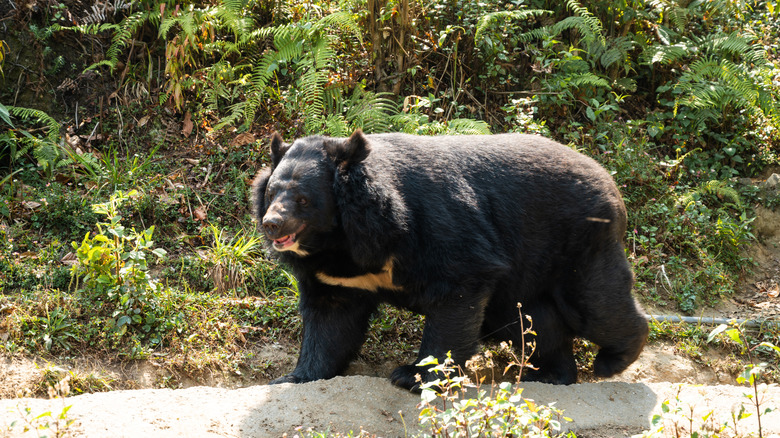
There are a number of different species of Asian bears that are defined by their unique chest markings. The first of these is the Asiatic black bear, also known as the moon bear. This ursine gets its secondary name from the white patch stretched across its chest that looks very similar to Batman's logo. The moon bear is one of the most common bears in the whole of the Asian continent.
With a range extending from the mountains of Afghanistan to the forests of Japan, anyone living in or planning a trip to Asia is likely to find one of these bears if they put in the effort to look. Averaging about 4.5 feet at the shoulder and weighing between 300-400 pounds, the moon bear is not the largest in Asia, but certainly makes an impression thanks to its expressive face and unique markings. Despite being mostly vegetarian, moon bears are opportunistic feeders who will eat whatever they can find that smells good.
Seeing a moon bear in the wild is a one-of-a-kind experience. Free the Bears, an educational non-profit, provides tours of Laos that take visitors directly into parks and wildlife sanctuaries where moon bears are thriving. Again, there are numerous zoos that house moon bears, too. One notable mention is the Roger Williams Zoo in Providence, Rhode Island, which has a large exhibit with some very expressive bears. I speak from experience, having grown up going to Roger Williams.
Giant panda bear
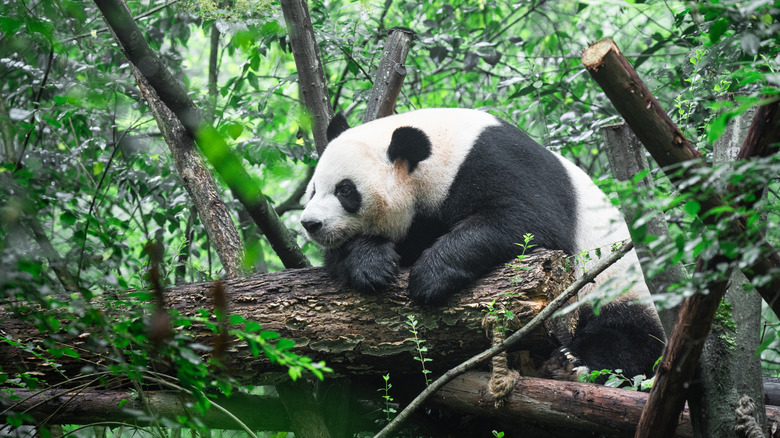
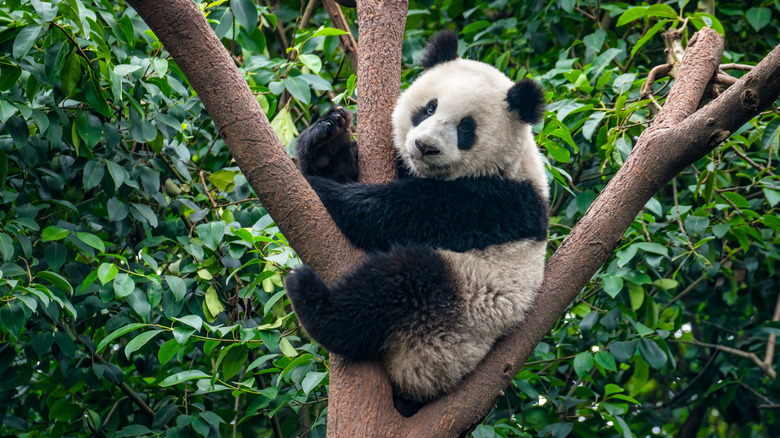
Arguably the most iconic bear species in the entire world, the giant panda is the most easily identifiable bear on the planet. With their distinctive white and black markings, these natives of China are highly expressive and humorous to look at. Yet, while the panda maintains a reputation for being cute and cuddly, people underestimate how dangerous and sneaky they can really be.
Despite being an average of 4 feet tall at the shoulder and weighing around 250 pounds, panda bears can nevertheless become all but invisible when immersed in the thick vegetation of their native bamboo forests. If you encounter one in this type of habitat, be sure to keep your distance. Pandas are not overly aggressive, but like most other bears, they will attack and become defensive if they feel you've gotten too close.
The World Wildlife Foundation – whose logo is a panda — and Natural Habitat Adventures host a 12-day panda bear tour through the Minshan Mountains of Sichuan province in China. It's an expensive trip, but it's worth it if you've ever dreamed about seeing these bears in the wild. As for zoos, pandas can be found around the world in places like the Toronto Zoo in Canada, ZooParc de Beauval in France, and the Adelaide Zoo in Australia.
Andean bear
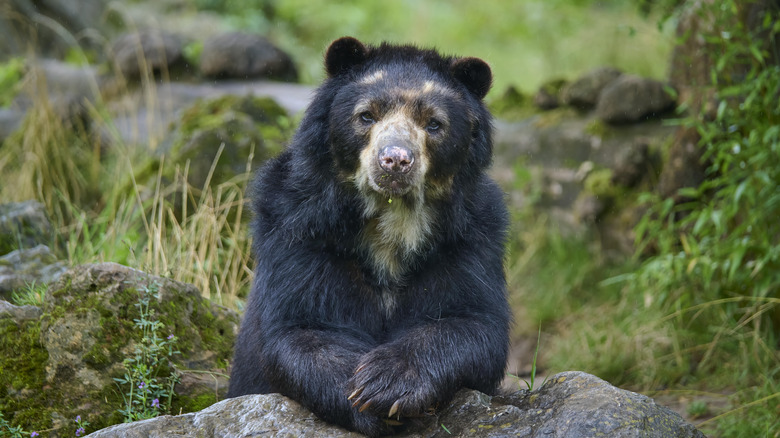
While the most famous bear to come from South America is a well-mannered, extremely rare, Peruvian bear who can speak perfect English and is known to be living in London, there is another species of bear native to the Andes Mountains of South America that deserves some attention. Known as the Andean bear or spectacled bear thanks to the distinctive white markings around their eyes, this species of ursine lives primarily in the forests and grasslands of the Andes from Venezuela to Bolivia.
With a diet of over 300 plants and 20 animals, this omnivorous bear is relatively small, standing a little over 3 feet high at the shoulder, and weighing between 130 to 400 pounds. As the only species of bear native to South America, the Andean bear has a bit of a cornered market when it comes to being able to find them.
While world-class zoos like the Philadelphia Zoo house Andean bears, seeing them in the wild has to be on the list of any explorer. The Wildlife Collective offers Andean bear photo tours that can run anywhere from 6 to 11 days. One unique thing about these bears is how they communicate. They make loud cooing noises that sound much more shrill than what you'd expect from a bear. This means you will likely hear one well before you see one.
Sloth bear
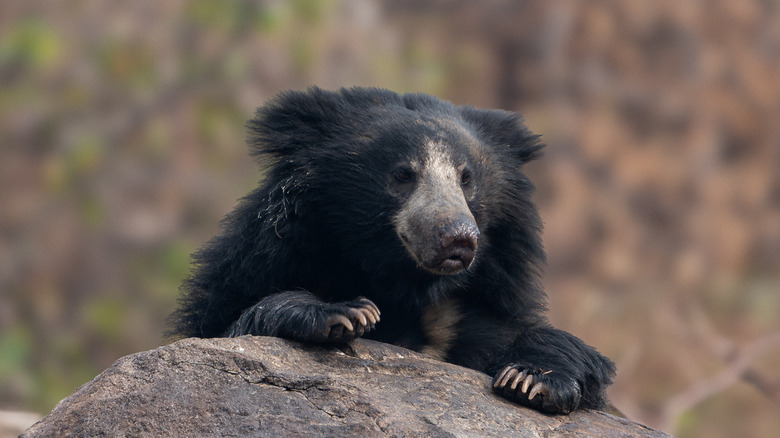
Don't be confused by the name of these bears. They may look like giant sloths, but they can be quick when they are after prey or attacking someone. As such, carrying and knowing how to use bear spray will be incredibly important when encountering an aggressive sloth bear. Unlike many bears, sloth bears will attack at random instead of out of defense. This is why you need to be prepared and understand the safety measures involved in participating in any kind of bear watching activities.
At 2-3 feet high and weighing an average of 200 pounds, sloth bears are among the smaller bear species in the world. Their range, however, is enormous, stretching from the hills of Nepal, down through the jungles of India, and into Sri Lanka. They have long, curled paws which are excellent for digging and climbing. Sloth bears are another breed of Asian bear that can be identified by the unique markings on their chests.
One of the best zoo exhibits to see sloth bears is on the Asia trail at the Smithsonian National Zoo in Washington, D.C., which contains a number of active bears who love to put on a show for visitors. You can explore Tadoba National Park and Bori Wildlife Sanctuary in India with Audley to get close up to sloth bears in the wild.
Sun bear
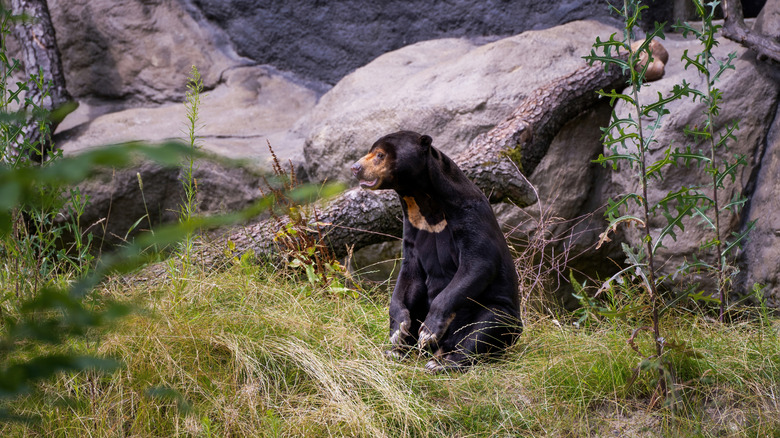
Growing to be only about 5 feet long and often weighing under 100 pounds, the sun bears of the tropical forests of southeast Asia maintain their status as the world's smallest bear. Noted for the unique markings on their chest, the sun bear is an easily identifiable creature that can often be found hanging from tree branches in its native Malaysian jungles. They have a diet based on the bounty of the jungle, feasting on fruit, plants, and small mammals.
The Saint Louis Zoo in Missouri has an exhibit of sun bears, as does the San Diego Zoo in California, and the Audubon Zoo in New Orleans. For viewing sun bears in the wild, Natural World Safaris recommends visiting the Borneo Sun Bear Conservation Centre in order to view these bears in their native habitat all year round. It'd be a journey for sure, but worth it if you truly love seeing these quirky bears.
Whether you are trekking out into the wilderness or observing from the protected confines of a zoo, these eight species of bears are the most common you will see anywhere in the world. With their various sizes and unique personalities, you'll definitely begin to understand why so much effort is going into protecting them for generations to come.