

The Drought-Tolerant Grass That'll Thrive In Your Shady Yard
We may receive a commission on purchases made from links.
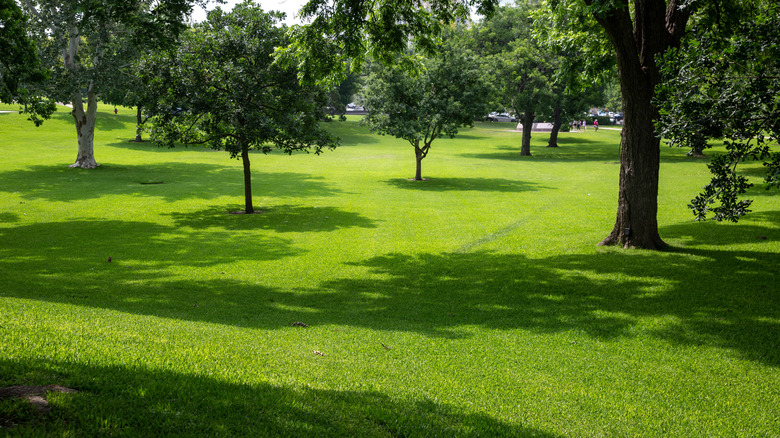
The idea of mature shade trees casting shadows across your lawn sounds enticing. However, although trees, pergolas, and other shade-producers may offer a respite from the summer sun, they can also present major challenges when it comes to growing grass in your yard. For those living in the southern portion of the United States, St. Augustine grass just may be the solution, as it is a drought-tolerant grass that'll thrive in your shady yard.
St. Augustine occurs naturally throughout the southeastern United States. However, it can be cultivated throughout hardiness zones 7 through 12. Coincidentally, those who live in these areas are the ones who benefit most from shade, as harsh sunlight and soaring temperatures are often the norm in these regions. In the upper reaches of its tolerance range, St. Augustine may go dormant for a brief period when the weather drops. But, in the majority of its growing range, this wide-bladed, hardy grass provides a lush green lawn throughout the year.
Because St. Augustine grass can be hard to start from seed, most people choose to buy sod squares of mature St. Augustine. These can be placed for complete coverage of the lawn or staggered with a few feet of space between each square. The idea with the spacing is you can buy less grass and allow the quick spreading St. Augustine to fill in the gaps. This grass is known for sending out runners to expand its territory, with roots dropping into the soil from beneath the runners and broad blades of dark-green grass extending above. Once it is established, maintaining St. Augustine follows pretty much the same protocol as other warm season grass lawn care.
Caring for your St. Augustine grass lawn
Caring for your St. Augustine grass lawn doesn't need to be complicated, but it does take a bit of routine. For starters, St. Augustine is considered a moderate drought-resistant grass. Although it can outperform that label for stretches of more severe drought, it is best to ensure it gets adequate hydration if possible. St. Augustine usually requires 1 or 2 inches weekly. Watering should take place twice weekly. To see how much water you are providing your lawn, you can use the empty tuna can trick. However, it is also important to determine how deep the water is penetrating by using a device like a HiHydro Soil Probe. Your grass will be healthiest if the water is getting down at least 6 inches into the soil.
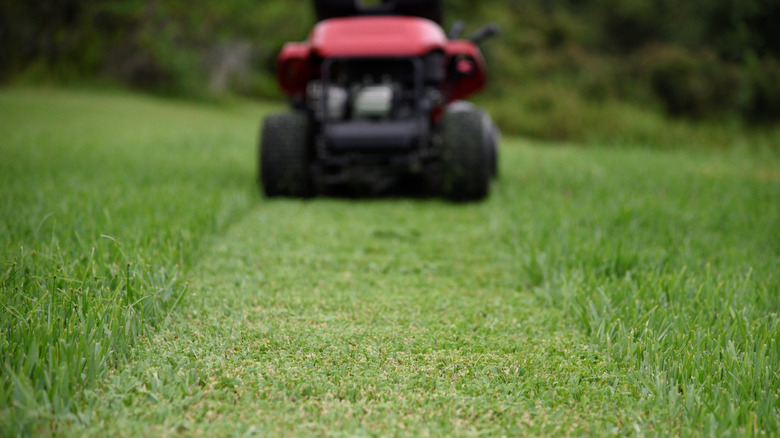
St. Augustine should be maintained at a height of around 3 inches. Following the one-third rule for mowing, that means the grass should be 4 to 4.5 inches tall before you cut it. During winter and early spring, the grass can be cut slightly shorter. Conversely, during the heat of summer or periods of drought, allowing it to grow a bit longer can help. Regardless of the height to which it is cut, you should always use sharp blades to avoid ripping or tearing through the broad blades of St. Augustine grass, which makes it easier for disease to take hold. So, be sure to sharpen lawn mower blades frequently.
While it is possible to maintain a healthy St. Augustine grass lawn with just proper mowing and watering, frequent fertilization during the growing season is a big help. A good routine for St. Augustine grass is to fertilize every couple of months from early spring through fall. The ratio should be around a pound of nitrogen per 1,000 square feet of grass.