

Think Twice Before Using Your String Weed Trimmer To Edge Your Lawn
We may receive a commission on purchases made from links.
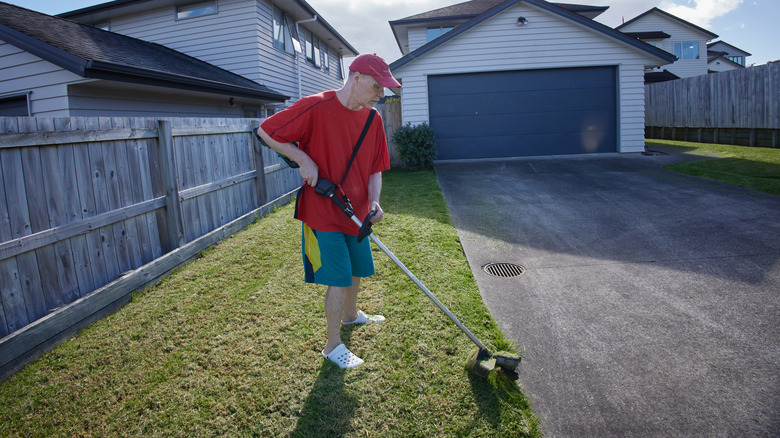
Mowing and maintaining a luscious green yard shows pride in ownership and keeps your property tidy. However, there's more to it than just mowing. You also have to clear your yard of debris, ward off pests, tame weeds, and trim edges. Plus, you need different tools for all these disparate jobs. With all the labor, tools, and maintenance involved, it's no wonder you might want to cut corners and use a string trimmer to edge your lawn — but it may not be worth the risk.
Using a trimmer to edge your lawn could shorten its lifespan. The exposed string hits hard concrete as you trim around curbs, using more line than you might normally. This requires stopping the work to reload the string. Then there is the damage to your body. Trimmers are designed ergonomically to be held in one position. Most folks tilt the trimmer sideways or upside down when edging, requiring balancing the trimmer at an awkward angle for extended periods.
Some folks remove the guard when edging, which risks bits of string, rocks, and other detritus launching at car doors or house windows. There is also the potential of injury to you or others in the range of these projectiles, so always wear personal protective equipment (PPE). People also tend to walk backward while edging, which can be a tripping hazard. Lastly, trimmers could harm your lawn by shearing grass at the wrong angle or damaging roots by cutting too deeply — not to mention that the process will take longer and won't be as precise as using an edger.
Knowing the differences between trimmers and edgers can help you make the right choice
You can use a tool designed for one thing to do something else, but with diminished results. It's usually better to have the right tool for the job. String trimmers, also called weed whackers, go where mowers can't — around fences, flower beds, and foundations. This handheld lawn care tool runs on a small gas/oil 2-stroke or cordless battery-powered motor and is designed to fit into tight spaces. Trimmers excel at tackling weeds. If you're not controlling weeds, it may be one way you're secretly ruining your lawn. As the name implies, a string trimmer uses plastic string (known as monofilament nylon) as its cutter. Trimmers can also be used as a scythe to cut down tall grass before mowing.
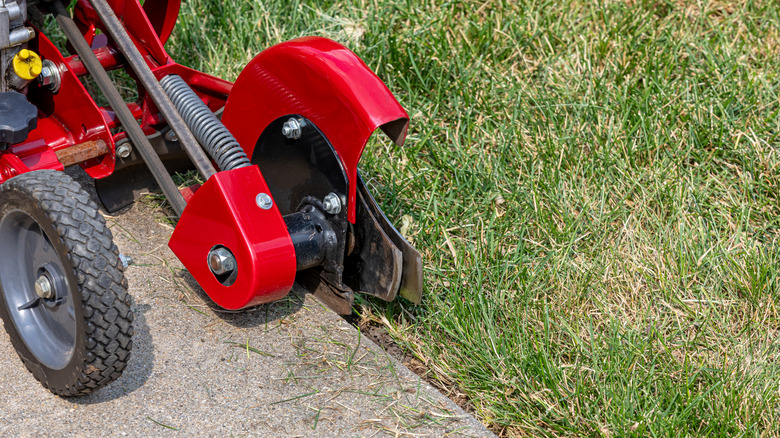
Lawn edgers sculpt and shape the edges of your lawn around sidewalks and driveways, establishing clean border lines. Most edgers resemble string trimmers, while some more powerful models look like mini mowers. Either option is a push-behind machine supported by wheels, whereas trimmers can be operated in a few different positions. A 4-stroke gas-powered motor or a cordless battery powers the edger's vertical, stiff steel blade. An edger's uber-specific design makes them ideal for creating crisp, precise borders around your lawn. For the best of both worlds, you can buy a universal edger attachment for your trimmer, such as the WORKX WA0223 40V 8" Universal Lawn Edger Attachment.
Tips and tools for edging your lawn properly
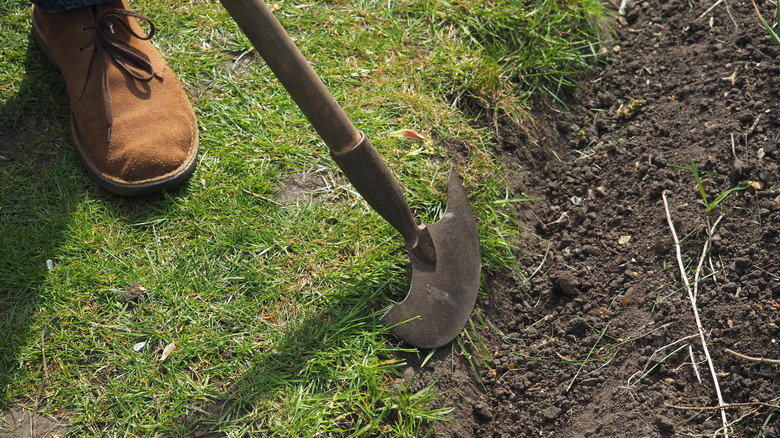
Knowing how to edge your lawn is the first step to crisp edges. Once you have that down, you can choose the tools right for you and take your backyard to the next level. For small yards or around garden beds, a manual edger may do the trick. This hand-powered tool resembles a shovel in both looks and use. Insert the blade into the ground, and press with your foot to its full depth. Pull the blade up, move it along your edge, and repeat the process. A manual edger can define landscaping lines and help tidy up the edges around your trees. A rotary edger may be the next step up in edging tools. This manual tool resembles a garden tiller, but with fewer blades. It works the same way, and like the powered versions, you push it from behind to define those neat borders.
One downside is that these handheld tools are not as adjustable as the powered versions and are typically limited to a fixed depth. They're best for smaller yards or only around garden beds and landscaping areas, so they're limited in what they can accomplish. Also, jobs might take longer than if you were using their gas and battery-powered siblings. On the other hand, manual edgers, like most hand tools, are the perfect thing when you need a bit of finesse, they require less maintenance, and no gas or oil. Those very qualities also make them quiet and safe to use.