

The Beautiful Type Of Grass That'll Thrive In Your Shady Yard
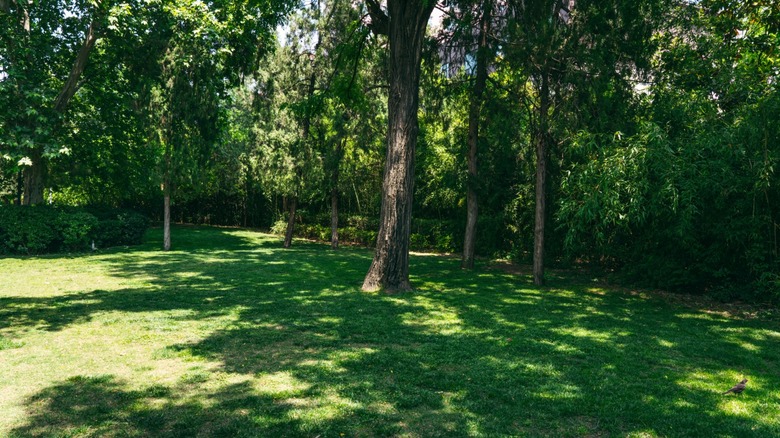
Many traditional turf grasses used in the U.S require full sun, meaning at least 6 hours of direct sunlight a day, to thrive. For homeowners living in wooded areas or with lawns with dense tree cover, this fact can make it seem near impossible to grow lovely turf grass. While you can go the extra mile to keep grass growing in the shade, it's not necessary if you choose to grow carpetgrass (Axonopus) instead. This turf grass option is slow-growing and coarsely-textured, with a pleasant green appearance. Knowing how to choose which type of grass seed is right for your lawn can be difficult, but not impossible with shade-tolerant carpetgrass as an option.
Carpetgrass is sometimes called Louisianagrass because it was first introduced from the West Indies to the southeastern United States. There are two main options you can choose for your yard: narrowleaf carpetgrass (Axonopus affinis) or broadleaf carpetgrass (Axonopus compressus). Broadleaf is the best choice if you want your turf grass to be incredibly shade tolerant and thrive with little sun. Both types of carpetgrass are fairly similar, but the broadleaf variety is a bit more vigorous.
Successfully growing carpetgrass in your lawn
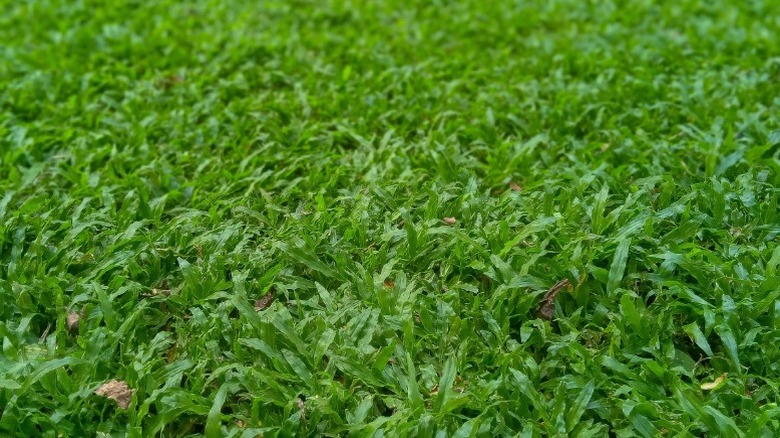
If your shady yard struggles to grow other types of grass, it might benefit from carpetgrass. Carpetgrass grows well in most types of shaded lawns, and can thrive in a variety of soil types, including loam, silt, and clay. It can be cultivated in areas with poor fertility, making it a great option for a low-maintenance turf that you don't need to spend a lot of time to establish. If you want to grow turf to suppress weeds in a wetter area of your yard, carpetgrass fits the bill. Cultivating this species as turf can also limit erosion in those spots in your yard.
However, it's important to note that carpetgrass, while shade-tolerant, is not drought-tolerant. Excessively dry soil will give you trouble when trying to grow this grass species that has shallow roots. A way you're secretly ruining your lawn is not paying attention to the ideal growing conditions of your turf grass. Choose to grow carpetgrass in shady, wet spots in your yard for the best outcome.
Carpetgrass should be maintained similarly to other turf grasses. During the growing season take care to mow it down to 1 ½ to 2 inches, although mowing is not required as often as other grasses. Develop a dense, beautiful green turf using carpetgrass by taking care to fertilize with about 2 pounds of nitrogen per 1,000 square feet. The best time of year to fertilize your lawn cultivated with carpetgrass is once a year in late spring.