

Reconsider Planting These Fast-Growing Tree Varieties In Your Yard
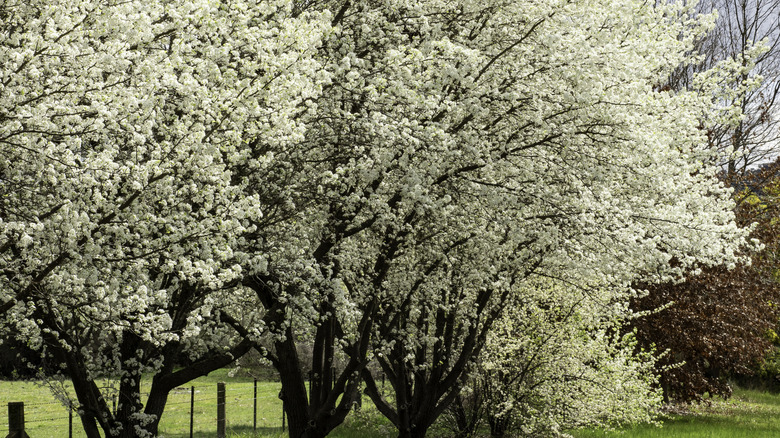
Trees are a wonderful addition to any yard. Whether you are using them as ornamental privacy barriers or establishing a fruit orchard, having trees in your yard can add both beauty and function. Yet, the main issue many have with growing trees is that they can take an eternity to establish. We all remember the oak tree our parents planted when we were kids that took 20 years to actually grow to a substantial size. The instinct, then, would be to search for faster-growing trees. However, we would advise caution with this approach.
While there are plenty of fast-growing trees that will actually be beneficial for your yard, there are a higher number of varieties you might want to reconsider planting. From invasive tendencies, capacity for disease, weak wood, and potential toxins leaching from the roots, the trees on this list are ones that ought to either be avoided or planted with extreme care.
We'll be joined on this journey by Eva Monheim, Author of "Shrubs & Hedges," garden coach, educator, consultant, and co-creator of VEE — Verdant Earth Educators, LLC, and an instructor for the Professional Gardening Program at Longwood Gardens. Her expert insights will provide a better understanding of why trees grow faster than others, which ones to avoid, and fast-growing alternatives that can lead to a healthier yard.
Why some trees grow faster than others
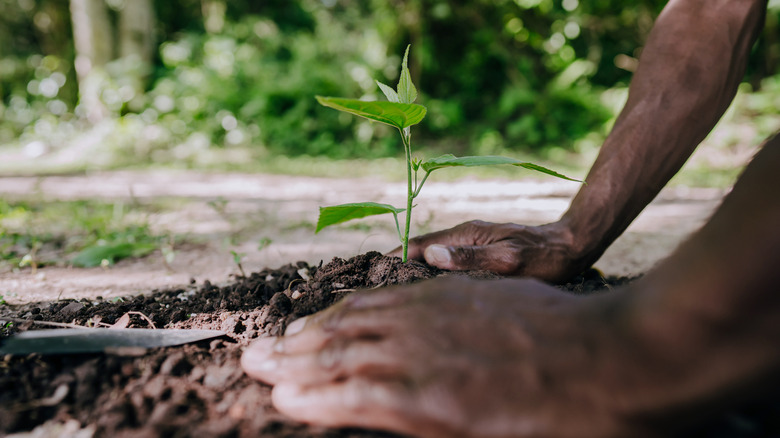
There are numerous reasons why some trees will grow faster than others. "When trees are young, some are very fast, growing over a foot a year, and others are very slow-growing, with just a few inches of growth per year. Trees, like humans, have growth spurts at different times in their lives, but as they age, their growth slows down dramatically," says Monheim. So, if you're planting a young sapling in your yard, it's likely to grow much faster than trees that have already been established.
In the forest, trees often compete with each other for resources like water, air, and sunlight. The same is true for your yard. Now, all trees compete for these essentials to their survival. However, genetics and evolution have created some species of trees that are higher on the successional chain.
Put simply, the successional chain is split into two categories: primary and secondary. Primary trees establish the ecosystem by growing from the bedrock, creating soil, and developing a canopy. This makes way for more shade-tolerant, secondary trees to grow slowly in a healthy environment. As Monheim explains: "Trees that are first successional trees usually grow faster because they are trying to establish an environment for other slower-growing trees to see in. These secondary trees usually will have longer life spans — several hundred years to 500 or more."
Native trees versus exotic trees
As a general rule, anything you consider planting in your yard should be something that works in your native environment. A mistake many beginning gardeners make is that they don't do enough research to make sure they're planting crops that will grow well in their garden. The same is true for those who are looking to plant trees. And trees are an investment, so you want to make sure you're doing things right.
There are many ecological reasons to plant native tree species. For starters, they are the foundation of the local ecosystem, and are highly adapted to their native climate. However, as a result of this comfort with the already established ecosystem, there is a catch. "Traditional trees that have a tendency to grow in the shade of a forest are usually slower growing and are not first successional trees," explains Monheim.
This slow pace tends to make exotic, non-native varieties more appealing to gardeners and landscapers. While there is nothing inherently wrong with bringing in approved exotic varieties, be warned. Many species, as we'll soon see, have a tendency towards invasive behaviors, and are susceptible to many diseases that native trees are not. So, please do your research and avoid planting any of the following trees.
Bradford pear
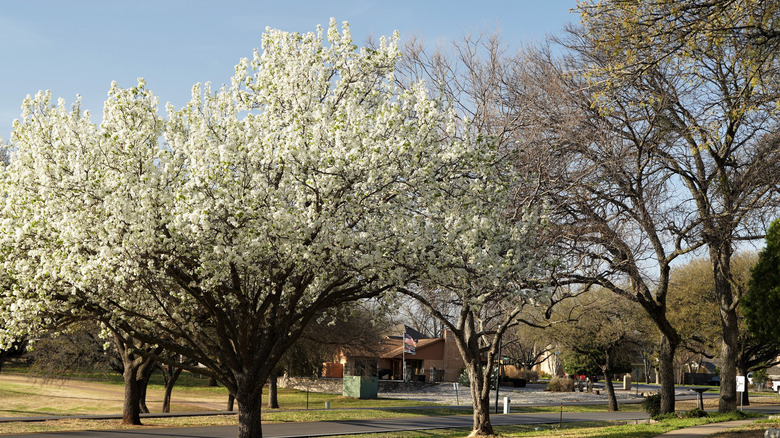
Do not be fooled by how pretty Bradford pear trees look in bloom. These are one of the most foul smelling trees out there. The stink of their fruit has been equated to that of rotting fish. While this serves its purpose to attract pollinators, it can leave such a bad smell that you'll find yourself spending less time in your yard to avoid it.
While they had their heyday as a fast-growing ornamental variety between the 1960s and 1990s, Bradford pear trees are notoriously weak. This species, which is native to China and Vietnam, grows what are called co-dominant leaders. If you've ever seen a tree that is growing from one base and shooting off into two separate trunks, those are co-dominant leaders. According to Monheim, "Co-dominant leaders can be a problem in trees because trees can sometimes exhibit included bark, which is bark that rolls in on itself rather than exhibiting a nice bark branch ridge. This type of growth can cause instability in a tree as the tree gets older and the branches get heavier — in many cases causing tree failure."
Apart from being weak and having a short lifespan, Bradford pears are also notoriously invasive. They have begun to breed with other native pear trees, creating hybrids that bear stinky fruit and outcompeting other native varieties. So, keep your yard smelling wonderful and your other plants safe by avoiding this foul smelling (albeit fast-growing) tree.
Mulberry
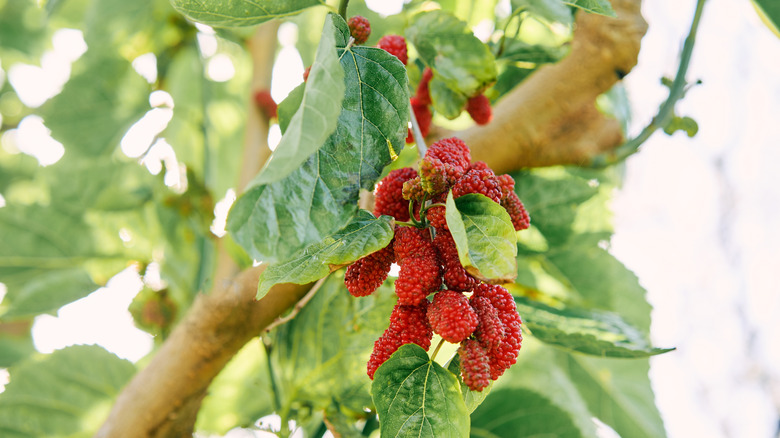
Mulberry is an interesting species of tree. They can either be the best tree you've ever planted, or the very worst. All varieties of mulberry – no matter the color – yield edible fruit that can be eaten fresh, or preserved into jams and jellies. If you are someone who is prepared to use and eat this fruit, by all means grow mulberry trees. For those who are not, avoid these trees at all cost.
That same fruit that is so prized for eating can also very easily stain surfaces. If you have a mulberry tree planted near or over a walkway, that fruit will fall and stain the stone. It'll also stain your clothes if you're not wearing protective gear whilst pruning. Thankfully, numerous formulas exist to remove mulberry stains.
Much like Bradford pears, the wood of mulberry trees is very weak. This is a recurring characteristic of the trees on this list. Mulberries are prone to breakage during weather events, as well as rot, pests, and a host of different diseases. Because they grow so quickly, they can also be a pain to keep on top of, and their roots can very easily break through surfaces or drain lines. Plus, depending on where you live, mulberries could very well be illegal due to the fact that they are highly invasive and will choke out other species.
Black walnut
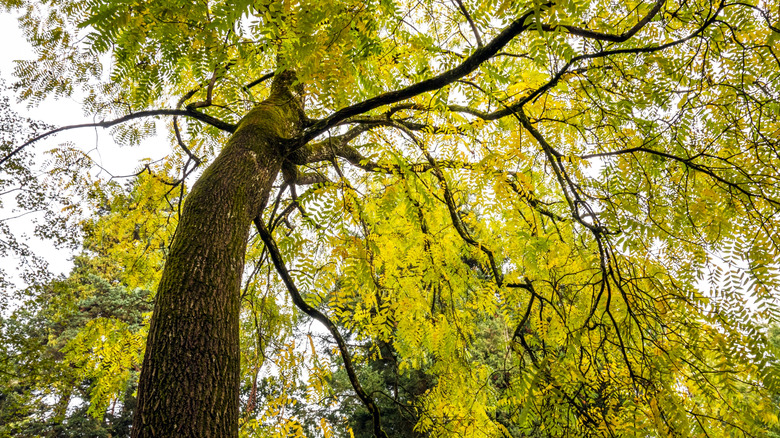
Like mulberry, black walnut trees can be beautiful and productive when grown in the right space and by people who can utilize their bounty. Apart from yielding their signature nuts, black walnut trees can also become towering and strong. This makes them markedly different from the other varieties on this list. They are also relatively disease resistant, and are beloved among carpenters for their gorgeous, dark-hued wood. However, there is a major downside to planting a black walnut tree in your yard.
Black walnut trees produce a substance called juglone. It is found in all parts of the three, from the roots and branches, to the leaves and nuts hulls. Whenever a black walnut falls and cracks open, some of this juglone is leached into the surrounding soil. It is also leached through the roots, and any fallen timber. Even if a tree dies and is taken away, juglone leached from the decaying roots will remain for some time.
This naturally occurring chemical can have adverse effects on the surrounding landscape. Most grasses, flowers, berries, and garden vegetables will die if exposed to too much of the juglone. This is why it is not recommended to plant a black walnut in a small yard. They are much better in more open spaces. Their nut hulls can also stain virtually any surface, leaving quite the mess after a good wind storm blows through.
Cottonwood
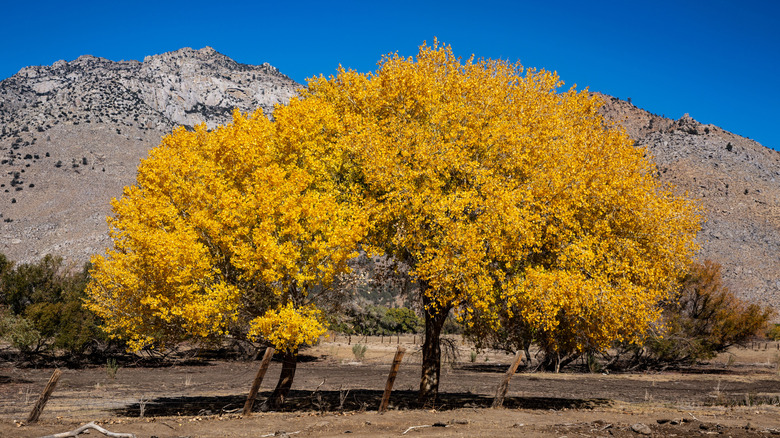
Cottonwood trees are enormous and absolutely majestic. At full maturity, they can grow upwards of 100 feet and have incredibly wide branch spans. They can reach this maturity faster than you might think. With a growth rate of up to 6 feet per year, you can have a really sizable tree in your yard in a very short amount of time. This could be excellent if you have a huge open space that can contain a tree. For most suburban yards, however, cottonwood trees are a no-go.
This fast-growing tree doesn't just do all of its work above the ground. Owing to the fact that the cottonwood's native landscape is a floodplain, their root system is very shallow. This can pose a problem, especially when it comes to where you want to plant the tree. "Make sure to pick the right tree for the right spot. Trees with very shallow roots, like red maples, will lift sidewalks," says Monheim. The roots of a cottonwood tree could also wreak havoc on a house foundation if planted too close.
Then there are the blooms to consider. Cottonwoods produce seeds that are contained within a cottony cocoon. These are infamous for clogging air conditioners and pool filters, as well as causing a general mess. They are also susceptible to a number of different diseases, and have very weak wood. So, while these trees may look stunning, they are best suited to larger fields far away from a home.
Mimosa trees
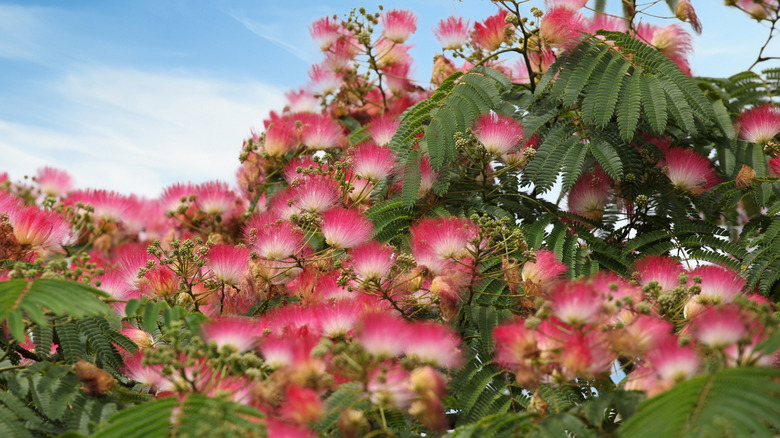
Originally from Japan, the mimosa tree is another beautiful, exotic variety whose looks hide some incredibly unattractive features. Mimosa trees are arguably the most invasive on this list. If not kept in check, they will spread rapidly throughout an ecosystem, choking out native plants and establishing dominance. This is thanks to their propensity to self-seed. So, if you're not on top of cleaning up their messy seed pods, or pulling saplings before they have time to establish, you could end up with more mimosas than you bargained for. Fine for Sunday brunch, but not great for the health of your yard.
Another aspect to the mimosa tree's invasiveness is its tendency to attract mimosa webworms. These are not on the list of beneficial insects you want in your garden. These are an invasive species of worm from Japan and China that can do massive damage to trees. They will devour leaves and can completely defoliate trees. If you see their presence, deal with it immediately.
To top it all off, the mimosa tree is another fast-growing tree with notoriously weak wood. If one is planted near a house in order to show-off its delicate blooms to neighbors, the branches could likely cause some property damage.
Tree of heaven
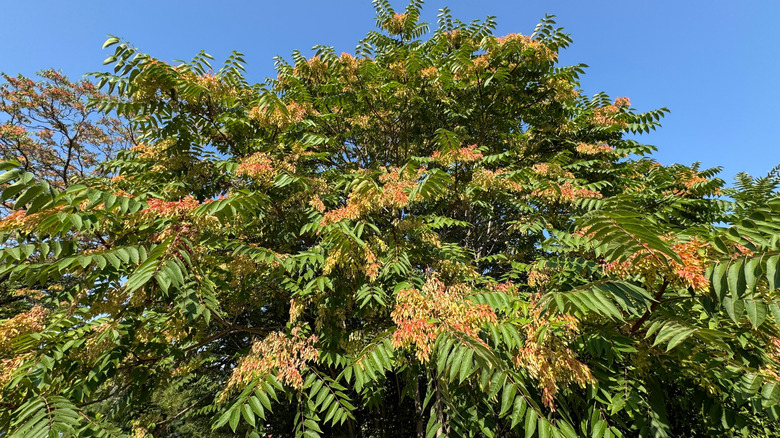
Despite its divine sounding name, having a tree of heaven in your yard might actually be more like hell. The name derives from their natural fast growth. These trees can reach upwards of 70 feet tall in a very short period of time. They are another exotic and invasive species that has managed to acclimatize to a wide variety of different soil types in the United States. They are a particular problem in urban areas, where they are known to grow out of cracks in the sidewalks.
Trees of heaven also multiply incredibly fast, meaning that they can very easily choke off a native landscape. This is thanks, in part, to its ability to self-seed, but also to a similarity it shares with the black walnut.
You see, trees of heaven also emit toxic chemicals that can very easily kill surrounding vegetation. These are called allelopathic chemicals and they target other plants in order to stunt their growth and destroy their root system. This makes way for the tree of heaven's extensive root system, allowing it to permanently take hold in an area. Once they establish themselves, these trees are incredibly difficult to get rid of. Overall, they're unsuitable for home environments, especially if you want to encourage biodiversity.
European beech
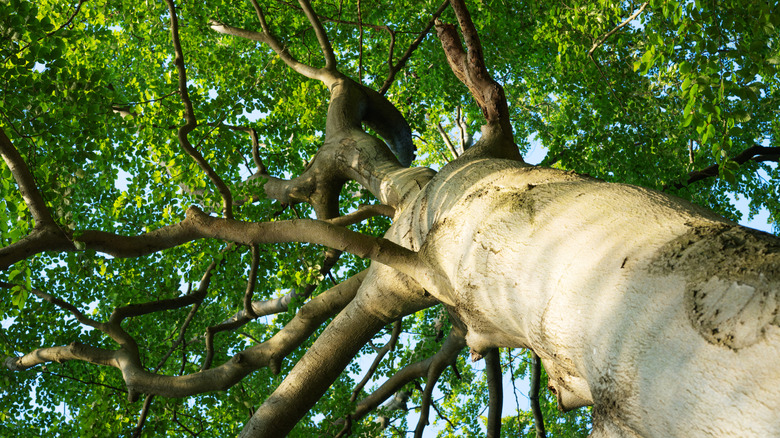
This tree is a particular issue with people who live in New England. European beech trees, while not necessarily invasive, tend to prefer dominance when left unchecked. These trees can completely take over an understory, robbing their fellow trees of the essential nutrients of the surrounding soil, clogging up the forest airflow, and depriving other seedlings of necessary sunlight. They can even cause harm to the native insect population, who are often fed on a diet of specific trees.
As such, European beech trees need to be thoroughly managed. Though they do grow moderately quickly, they are not nearly as fast as the other varieties on this list. As such, European beech is a strong tree that provides ample shade and is prized by woodworkers for its strength and fine grain.
Since European beech trees can reproduce from their roots, any that are causing harm will need to be entirely uprooted in order to avoid having them come back in a resurgence. However, if you can keep your European beeches managed, they make for lovely borders and great individual shade trees. Just make sure to keep on top of things if you see seedlings starting to shoot up.
Lombardy poplar
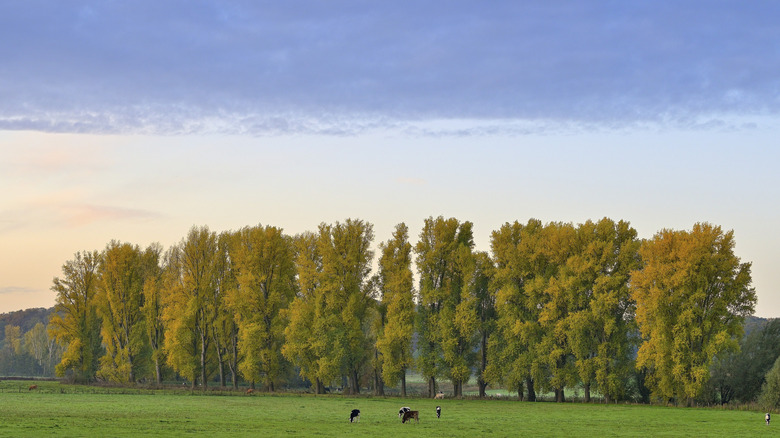
In spite of their popularity as a privacy screen tree, Lombardy poplar don't tend to stick around once they are established. These are short lived trees that can reach massive heights in very short periods of time. They grow an average of 6 feet per year, but have been known to grow as much as 12 feet in a single year. Since they have a limited life span of around 15 years (which is young for a tree), you are going to be looking at cutting back over 100 feet worth of privacy screens in very little time.
When situations like this arise, Monheim recommends the following: "When the tree is too big for you to prune, call a Certified Arborist to prune your trees. They know correct pruning techniques and they have to go back to continuing education to learn the latest science in tree development and care." Lombardy poplar, especially ones planted in close proximity to a house, can be very dangerous for inexperienced people to take care of. It's better to leave this one to the professionals.
Another downside to Lombardy poplar is the common canker disease they can face. Called pitch canker, this fungal disease causes rot from within, leading to branches dying, premature yellowing of the needles, and more cankers to appear in many places. Arborvitaes are a much better, far hardier solution to your privacy problems.
Slower-growing alternative trees to plant
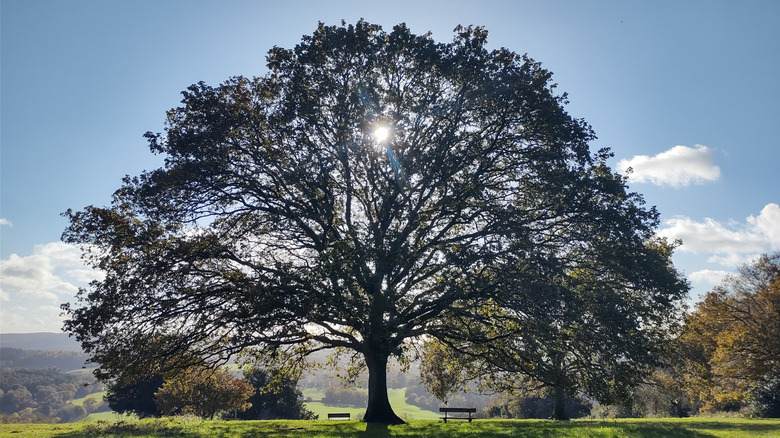
Does all of this information mean that you can't plant any fast-growing trees in your yard and that you should stick with perennial flowers you only need to plant once and then forget about? No, of course not. You can still plant trees in your yard — you are just going to need to wait a little longer for certain varieties to grow.
Here are a few that Monheim recommends as slower growing alternatives to the trees we've listed. "Oaks (Quercus), hickories (Carya), [and] trifoliate maples (Acer griseum, Acer triflorum, etc.)," she shares, adding, "If you have a shady area, pick trees that typically grow in the understory layer like wafer-ash (Ptelea trifoliata), redbud (Cercis canadensis), pagoda dogwood (Cornus alternifolia), trifoliate maples — paperbark maple (Acer griseum), three-flowered maple (Acer triflorum), etc.), [and] snakebark maple (Acer pensylvanicum),"
It can take anywhere from 10 to 50 years for some of these trees to reach their full maturity. So, if you plant one, think of it as an investment in your property. One day it will be the enormous, strong, and gorgeous tree you imagine it to be. You just need to be patient.
Fast-growing trees you want in your yard
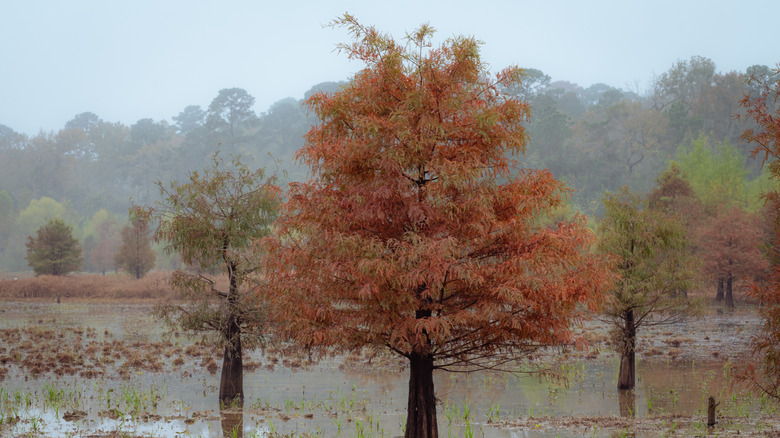
Naturtally, there are some faster-growing trees that are actually going to serve as a benefit to your yard. This is especially true if you have water issues. Monheim explains: "Fast-growing trees are very beneficial in areas that have water issues. Great examples are the bald cypress (Taxodium distichum), dawn redwood (Metasequoia glyptostroboides), and katsura (Cercidiphyllum japonicum). These help in wet areas and will absorb runoff. But all three can be planted in drier areas, too. That is the beauty of trees. Some are very adaptable, while others are more specific in their growth needs. They also sequester carbon faster too. All three of these can live a very long life." Just be wary about using cypress mulch around your other trees.
Here are a few more fast-growing trees Monheim recommends: "The tulip tree (Liriodendron tulipifera) is usually a fast grower when young. As it grows older it slows down in growth. Many of your evergreens can be fast growers, too, like Eastern white pine (Pinus strobus), pitch pine (Pinus rigida), hemlocks (Tsuga), etc."
So, while you want to avoid specific types of fast-growing trees in your yard, you don't have to avoid them completely. So long as you choose the right varieties, there is no reason why you cannot have a few fast-growing trees to turn your yard into the beautiful landscape you want it to be.