

Avoid Planting Invasive Ivy And Consider This Stunning Ground Cover Instead
We may receive a commission on purchases made from links.
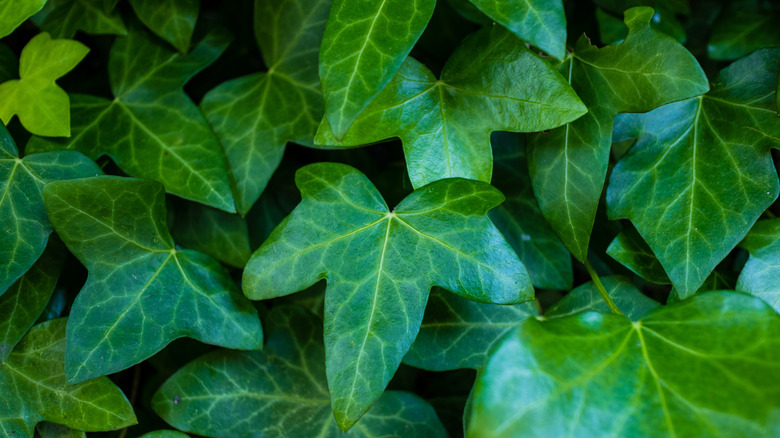
When it comes to choosing the right ground cover, English ivy seems the obvious choice for many, especially those looking for something to grow in heavily shaded areas. But, despite its elegant appearance, it is among the most dangerous invasive plant species in the United States. So, you should not only reconsider planting English ivy, but avoid planting this invasive plant altogether. Instead, you can utilize golden ragwort to accomplish much of the same thing.
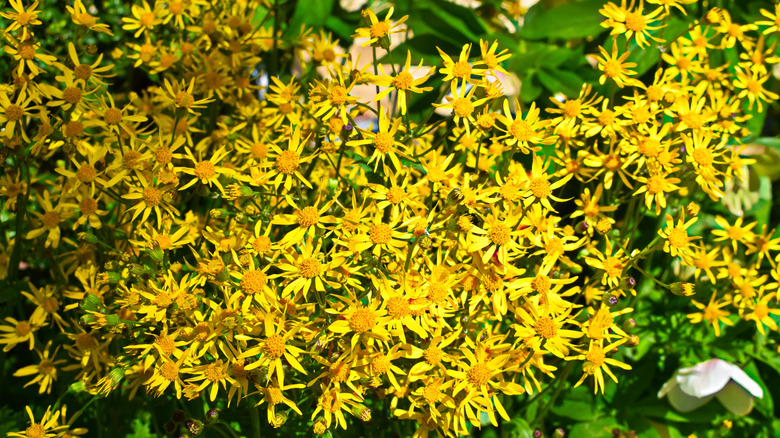
Like English ivy, golden ragwort can spread rapidly and aggressively across wide swatches of land. However, unlike its invasive counterpart, golden ragwort is a native species, occurring naturally throughout the Midwest and Eastern United States. Additionally, golden ragwort is every bit as capable of growing in shaded areas as English ivy and, as a bonus, produces a bright yellow — or golden — flower to add some color to your landscape.
There are several advantages to planting this native ground cover plant. As is the case with most ground cover plants, golden ragwort provides stability to the soil and helps prevent erosion. Planting this ground cover can prevent grass from growing in your flower beds as well. Furthermore, golden ragwort's colorful flowers do more than just please the eye. A wide variety of pollinators ranging from bees to butterflies are attracted to the flowers, which also provide an ample source of nectar. Like English ivy, it prefers moist soil, but once it is established, it is considered more drought tolerant.
Cultivating golden ragwort as an alternative to English ivy
Golden ragwort seeds can be planted in either fall or spring by simply spreading them over the area you want the plant to grow and raking them into the soil. If you already have golden ragwort plants growing, you can collect the seeds from the flower heads and save them in packets such as the FireKylin Stand Up Kraft Paper Bags until you are ready to use them. If, on the other hand, you want to slow the spread of your patch of golden ragwort, you can clip off the deadheads before they fall and propagate.
Other than the occasional thinning, golden ragwort is about as close to maintenance-free as it gets. It does best in moist soil, but can still survive with low or no watering. This makes it a good choice not just for primary residences, but also for weekend homes, cottages, and cabins. Conversely, it will not be drowned out by heavy watering, so it can also be added bogs and rain gardens. Golden ragwort usually flowers in early spring, with the colorful flower petals remaining in place for a few weeks.
One thing golden ragwort will not do — and that ivy will — is climb. While some may enjoy the sight of green-leafed vines vertically climbing walls and trees, English ivy damages almost everything it contacts. Roots penetrating bricks can cause walls to crumble. As it quickly crawls up trees, it chokes out the trees own leaves, preventing it from performing photosynthesis. This can kill not just individual trees, but in some instances, lead to deforestation. The potential harm of climbing ivy vines far outweighs its aesthetic appeal.