

Fill Your Yard With Pretty Pink Blooms By Planting This Ground Cover
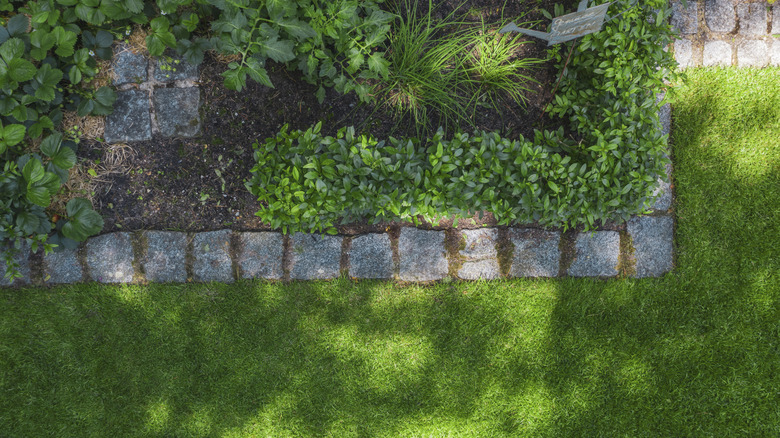
Ground cover in your flower beds can be better than mulch, and if you're looking for one without a commitment to high-maintenance plants, powderpuff mimosa (Mimosa strigillosa) might just be your garden's new BFF. This interesting ground cover, also known as sunshine mimosa, is a quick-spreading perennial that does well in full sun or partial shade and forms a blanket of bright pink, pom-pom-like flowers. The blooms, which look a bit like tiny fireworks, show up in spring and last all summer, adding color to your yard for months. If you want to add a pop of yellow alongside your pink, you could also plant the stunning fellow perennial, golden star.
The unique thing about powderpuff mimosa is the way it fills in bare areas so quickly. That's what makes it such a great option for erosion-prone or hard-to-grow areas. Although its flowers are showy, its fern-like, feathery leaves provide texture and interest even when the plant is not in bloom.
Although it appears fragile, this plant holds up quite well to foot traffic. It's commonly used in paths or among stepping stones because it will tolerate occasional trampling without appearing worn. Additionally, the plant fixes nitrogen in the soil, which enriches the soil organically over time. It not only works hard — it also plays well with others. Powderpuff mimosa is right at home in native landscapes and pollinator gardens, where it easily attracts bees and butterflies. Best of all? It's drought-tolerant once established and requires very little maintenance.
How to successfully grow powderpuff mimosa
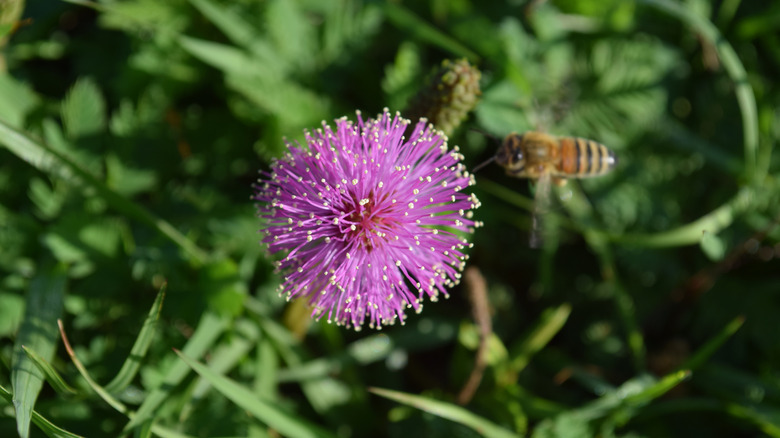
Powderpuff mimosa is as simple to grow as finding it a sunny location and providing it with space to expand. Begin with well-draining soil and plant cuttings. Stems spread laterally and fill in rapidly once established, forming a dense, flowering mat within a single growing season.
Water for the initial weeks to allow the roots to establish themselves. Beyond this, the ground cover is extremely low-maintenance. When it comes to fertilization, this can be done every 4-6 weeks. Pruning is not required, but a gentle trim during late winter or early spring will keep it neat and prevent it from spreading into places where it's not desirable. It's also best to keep it back from the borders of formal lawns because its runners are rather insistent. In a larger space, let it have its head — it forms natural boundaries and even prevents weeds from growing.
The plant's hardiness extends into heat and humidity, as well, making it a suitable option for southern landscapes where other ground covers wilt or fade. It's not bothered by many pests or diseases, although aphids and spider mites can appear on new growth and are something to look out for. For those wanting to transform empty lots into lush, bee-haven stretches of pink, there are few plants that can rival the beauty and ease of powderpuff mimosa.