

Here's How Deep You Should Plant Seeds For Successful Growth
We may receive a commission on purchases made from links.
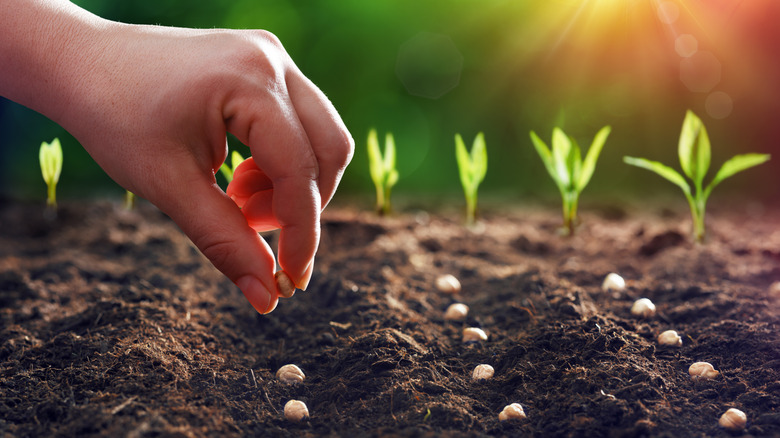
When it comes to planting your garden or seeding your yard, ensuring the seeds are planted at the right depth is key to successful growth. Not adhering to the basic tenements of proper seed placement is a common gardening mistake, and one that can prevent your plants from germinating, sprouting, or reaching their full potential — even if they are being grown in containers. While there are a variety of factors that can help determine the right depth to plant seeds, including the type of seed, soil composition, and climate, there are some basic rules of thumb that can simplify the process of determining how deep you should plant seeds for successful growth. If you're totally lost, aim for a depth about twice the size of the seed itself.
However, it is also important to understand why the proper planting depth is critical to successful plant growth. Although there are some seeds that you can sow on top of the soil, particularly some varieties of grass seeds, most seed types need to be beneath a layer of soil. This covering of dirt not only reduces theft from birds and animals, it also provides a level of insulation from temperature swings and lets the seed soak up the moisture it needs for germination. However, if this layer of dirt is too thick, seeds may not germinate or sprout, which is why planting at the right depths is critical.
General rules for determining proper planting depth
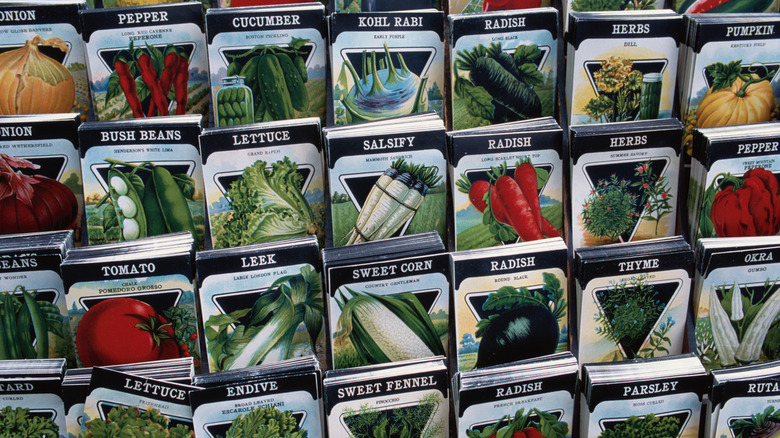
Typically, packages of commercially available seeds will have planting guidelines printed on the back. If you have access to this information, follow the instructions. However, if you bought seeds in bulk, no longer have the original package, or are working with seeds you harvested yourself, you may be in a situation where you have to determine the proper planting depth yourself. There is varying advice on using the seed's width or diameter to determine depth that can help guide you.
That information ranges from twice its width to 4 times its width to 3 times its diameter. Much of this is also contingent on the soil. In perfect gardening conditions, the deeper depths are workable. However, in more compact soil, it is better to go shallower. When in doubt, it is usually best to use less soil on top, as the repercussions from planting too deep tend to be more dire than if planted too shallow.
If you don't want to do the math, another general rule is to plant small seeds ¼-inches deep and large seeds at 1-inch. Utilizing a tool such as the Garden Guru seed planting shovel, which has marked measurements on the blade, can help ensure you place the seeds at the right depth. For smaller seeds, devices like the Gostur handheld seed dispenser can make the task much easier as well. Such a tool is particularly handy if you are starting seeds indoors in seeding trays.