

Who Needs Fertilizer? Fix Your Soil With A Cheap And Natural Grocery Staple
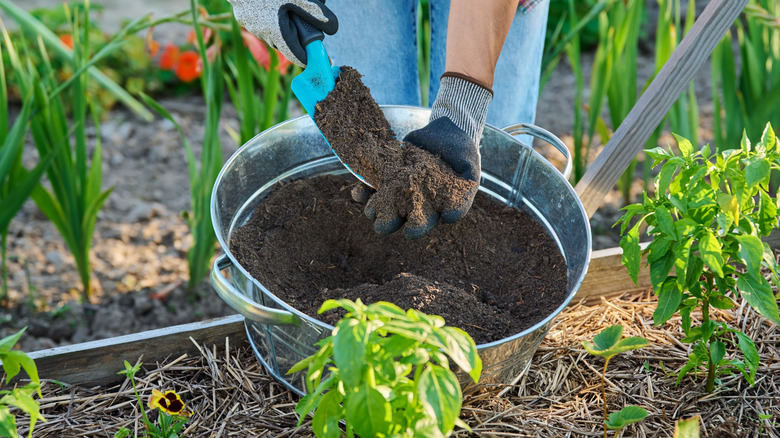
If you're a home gardener, you already know that healthy soil is the foundation for thriving vegetables. And if you're looking to boost nitrogen levels naturally, here's a quick hack that uses an inexpensive grocery store staple: Black-eyed peas (aka cowpeas). These inexpensive legumes could be a simple way to help out your garden beds.
As a legume, black-eyed pea plants are able to increase the levels of nitrogen-fixing bacteria in the soil. They attract, house, and feed a bacterium called rhizobia, which converts atmospheric nitrogen into a form your plants can use. While the black-eyed peas are growing, the rhizobia will supply them with nitrogen, and a small amount might become available to neighboring vegetables as well. And if you cut the cowpea plants down and incorporate them into your soil or compost, the nitrogen they got from the bacteria will become available for new vegetables. This isn't just an old wives tale either. While a lot of garden legumes don't actually have the strong nitrogen-boosting capabilities that people assume (thanks to domestication), a 2022 study published in the journal Evolution found that black-eyed peas still retain a high ability to attract nitrogen-fixing bacteria.
When your garden soil is lacking in nitrogen, plants can develop yellow leaves and stunted growth. A packet of black-eyed peas is cheaper than a bag or bottle of fertilizer, and besides helping to boost soil nitrogen levels, these legumes can also function as a cover crop. When incorporated into a garden's soil, black-eyed pea plants won't just add nitrogen, they'll also add organic matter.
How to harness the nitrogen-fixing abilities of black-eyed peas in your garden
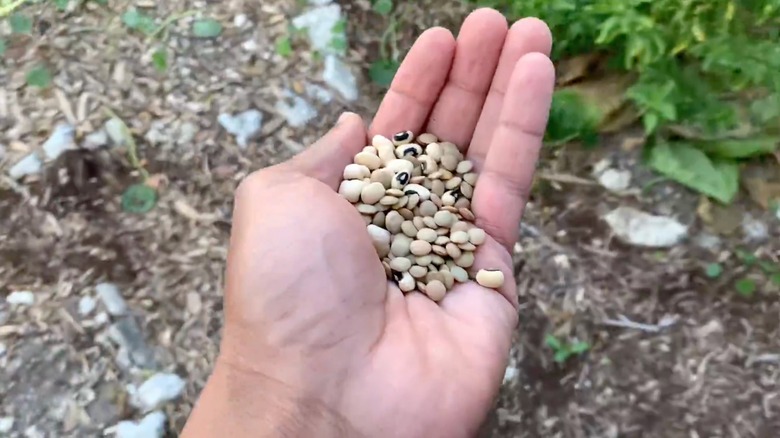
Using black-eyed peas to improve your garden's soil health is a fairly straightforward process. You'll need some dried grocery store beans and a few minutes to plant them. Technically, you could just scatter the dried beans over your beds, but you might get better germination by sowing into the soil at the recommended depth.
Once you've got your dried legumes, put them ½-inch deep in well-draining soil, in a full-sun position, and water to establish. You can let them grow all the way to maturity and harvest the cowpeas — or choose to use the plants as a green manure (which will probably add more nitrogen). To do this, cut them down before any mature pods are produced. This will leave the roots to break down naturally under the soil, unleashing rhizobia back into the ground. Chopping up the leaves and stalks and using them as a surface mulch will allow the captured nitrogen to become available to your next crop as the plant matter decomposes.
From there, you can routinely plant black-eyed peas in rotation with your other crops, to continue adding nitrogen to your garden soil naturally. Obviously, these legumes aren't a universal replacement for fertilizer and other amendments, but they do offer a simple and affordable way to harness naturally available nitrogen. With any luck, these beans could even provide enough enrichment to boost nitrogen-hungry crops like brassicas.