

You Never Want To See These 12 Snakes In Your Yard
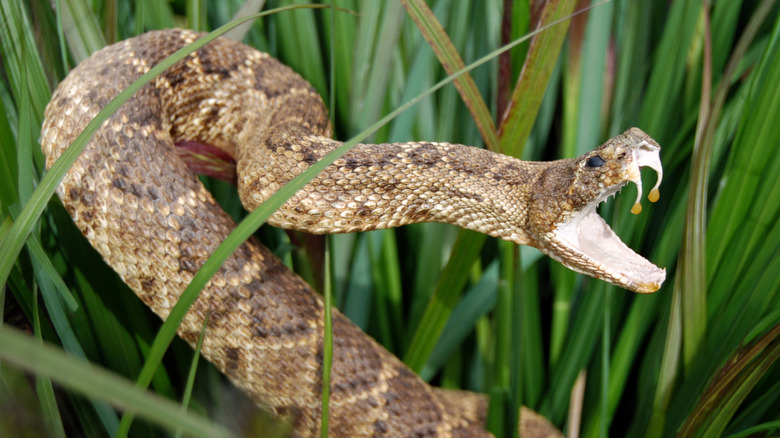
For the average home gardener, a snake in the grass is more than just a turn of phrase. Finding one of these slithering danger noodles in your own backyard can be an unsettling experience, especially when they're venomous. While most snakes prefer to avoid people, certain species can pose legitimate safety concerns, threaten local wildlife, or create problems when they establish themselves in neighborhoods where they don't belong. From camouflaged rattlesnakes hiding among fallen leaves, to enormous invasive constrictors capable of swallowing woodland creatures whole, many serpents deserve a healthy dose of caution when they turn up close to home.
Identifying a snake correctly is an important first step toward understanding the risks they pose. If you do run across one of these wriggling reptiles, be sure to pay close attention to its coloring, markings, approximate size, and location. Many species have similar appearances, but pose different levels of risk, so it might take a little investigative work to determine exactly what you're seeing. Of course, avoid getting up close and personal for a better look, and never allow pets or young children to cross paths with a snake that hasn't been properly identified. If possible, consider taking a photo from a safe distance, and consulting with a reliable wildlife identification resource.
Obviously, not all snakes are bad. Native snakes are actually very beneficial to a garden, since they provide free and natural pest control services. Knowing which species warrant extra caution can help you make safer decisions. To that end, here's a quick guide to 12 snakes you'll never want to cross paths with.
Eastern copperhead
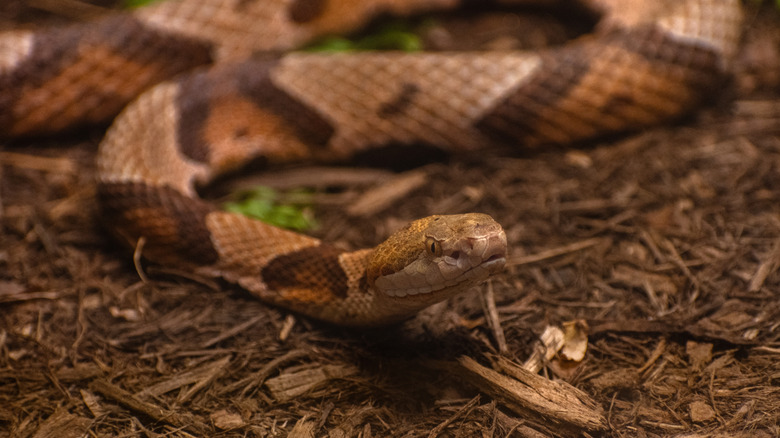
The eastern copperhead is a venomous pit viper known to inhabit wooded neighborhoods, gardens, and yards bordering natural areas, using exceptional camouflage to blend seamlessly into fallen leaves and ground cover. Copperheads typically measure 20 to 37 inches long, with a coppery-colored head and distinctive dark crossbands shaped like hourglasses. Found across the Eastern U.S., Copperheads aren't generally aggressive to humans, and they do drive away a wide variety of pests, but they can still bite people when accidentally stepped on, cornered, or manhandled. If a bite does occur, copperhead venom can cause significant pain and swelling, so any suspected bite requires immediate medical evaluation.
Mojave rattlesnake
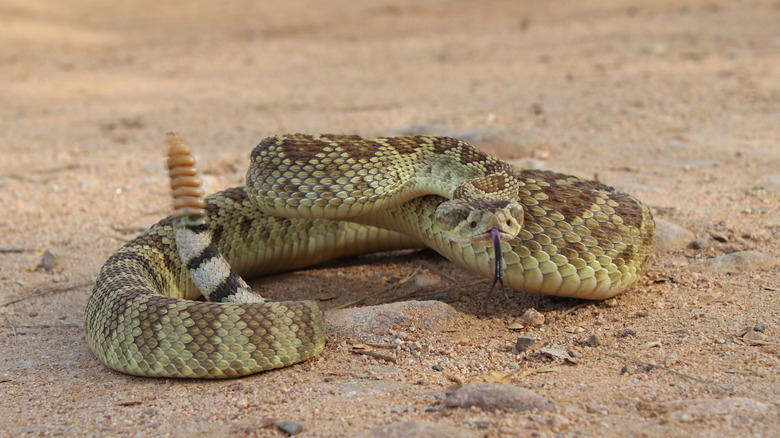
Nicknamed the "Mojave green," this desert-dweller is known to blend into its southwestern landscape particularly well. Found across parts of California, Nevada, Arizona, Utah, and New Mexico, this rattler favors dry desert sand, and ranges from 2 to 4.5 feet in length. Like other snakes on this list, the Mojave green prefers to feed on small rodents and mammals, rather than lost hikers, but its potent venom can be a serious problem for those who cross its path. If you hear that telltale rattle in your yard, give this slithering predator plenty of room.
Cottonmouth
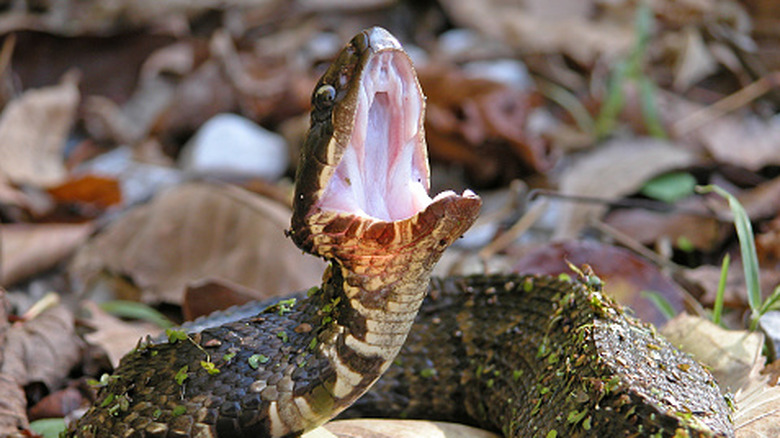
If your yard backs up to a pond, marsh, or other wetland, the cottonmouth is one venomous snake worth recognizing. Also known as the water moccasin, this semiaquatic pit viper inhabits much of the southeastern United States, and gets its name from the cotton-white lining inside its mouth, which it may expose when threatened. Cottonmouths are most active at night, and don't tend to seek out fights with people, but may strike if threatened. A bite from a cottonmouth can result in pain, tissue damage, and even necrosis, so be sure to seek immediate medical help if you do wind up on the receiving end of one.
Eastern diamondback rattlesnake
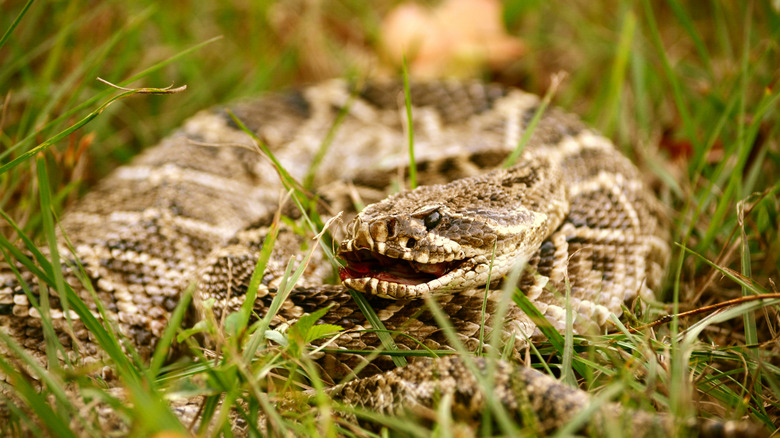
Eastern diamondback rattlesnakes are the largest and heaviest rattlesnake species in the United States, often reaching lengths of 3 to 6 feet. Their thick body features dark, diamond-shaped markings bordered by lighter scales, with a distinctive rattling tail. Native to the southeastern United States, eastern diamondbacks most commonly inhabit longleaf pine forests, particularly in Florida and Georgia. Like others on this list, this snake is venomous, and can cause painful injury or death when it strikes. However, eastern diamondbacks typically prefer to slither away rather than confront people. Keep your distance, and never attempt to harm one.
Burmese python
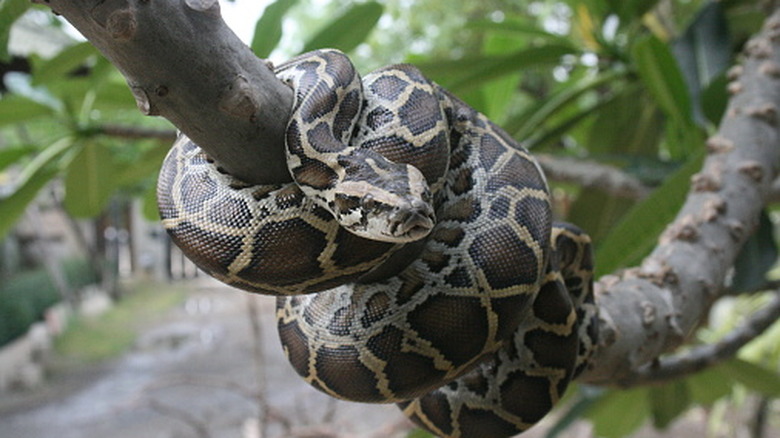
The Burmese python is one of the world's largest snake species, with adults found in southern Florida typically measuring 10 to 16 feet long. Unlike other snakes on this list, these are nonvenomous. Still, this powerful constrictor is considered an invasive species, particularly throughout the Everglades, and is known to prey on native mammals, birds, and reptiles, putting local wildlife at risk. They might even threaten your small pets, if you're not careful. Given their invasive status, Burmese python sightings should be immediately reported to the Florida Fish and Wildlife Conservation Commission.
Eastern coral snake
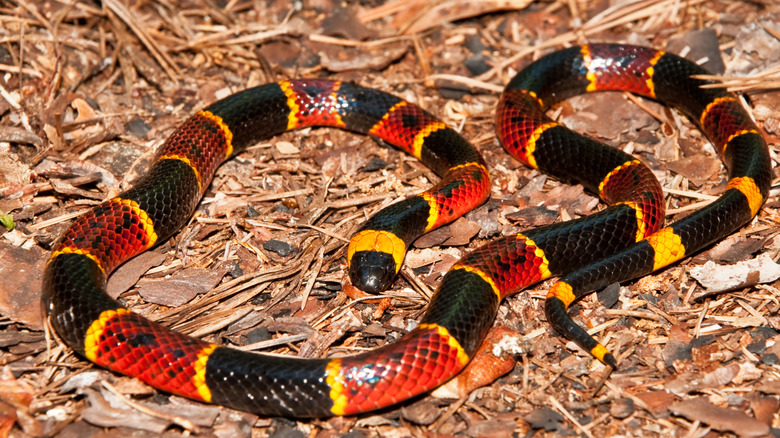
If you live in the southeastern United States, you surely won't want to cross paths with an eastern coral. This brightly colored, highly venomous species is distinct for its red, yellow, and black rings, and rounded black snouts. Eastern coral snakes tend to spend much of their time hidden underground or beneath ground cover, but they do emerge during the shoulder seasons when heavy rainfall submerges their underground abodes. Though strikes are rare, this snake does pack a highly toxic venom, which interferes with the nervous system and causes life-threatening symptoms in their victims.
Mojave desert sidewinder
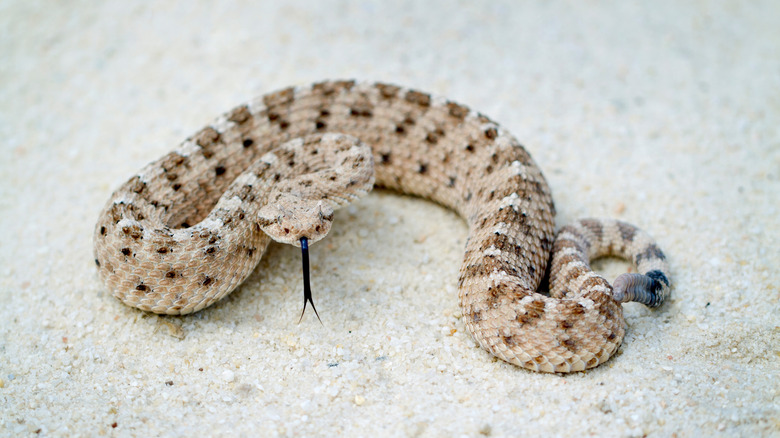
This sneaky desert-dweller, commonly found in the Mojave and Sonoran deserts of the American Southwest, is extremely distinctive for its sideways movement and hornlike scales above the eyes. The sidewinder's J-shaped slither helps it skim across the scorching sands while minimizing contact with the hot ground, often seeking lizards, rodents, and the occasional bird for a light snack. As with most snakes on this list, this rattlesnake will not seek out intentional fights with humans. Still, you should remain highly cautious if you see one, since their bite is venomous.
Broad-banded copperhead
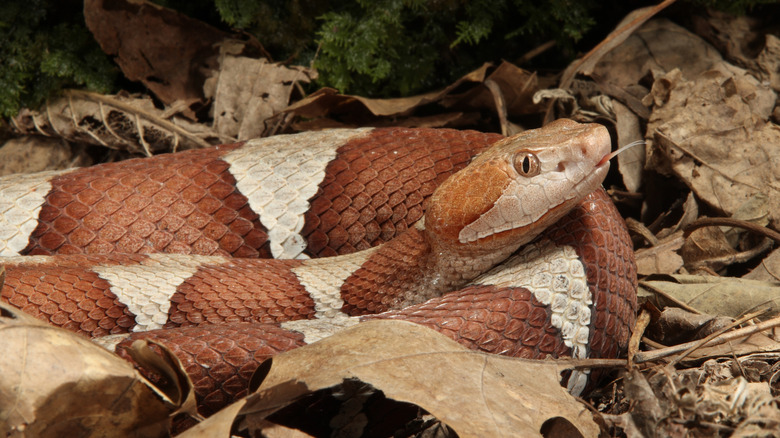
With coppery splotches and chunky bands, this picturesque serpent may look quite cute, in the right light. Unfortunately, the broad-banded copperhead is relatively venomous, with a bite that can cause significant pain, swelling, tissue damage, and necrosis. If you find yourself tidying a lawn in western Texas, Oklahoma, or Kansas, keep a keen eye on any leaf piles or overgrown yard edges, as broad-banded copperheads like leafy cover. However, this venomous, 2-3 foot long snake is mostly nocturnal, hunting for lizards, frogs, and rodents at night.
Tiger rattlesnake
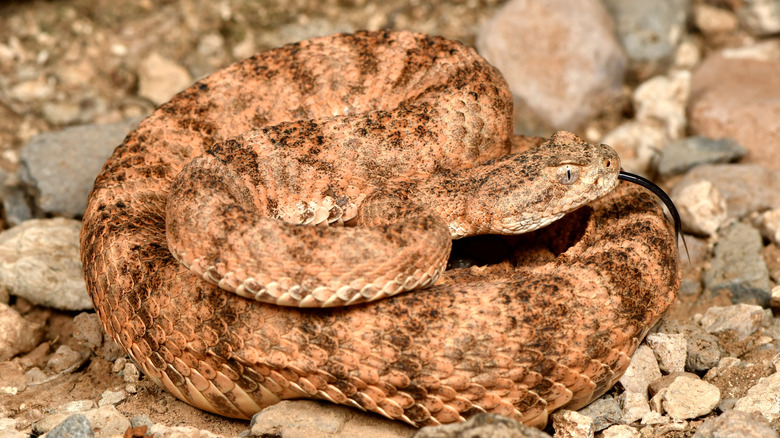
This dangerous devil of the desert can be found prowling around southern and central Arizona, where it lurks among rocky slopes, desert foothills, scrubland, grasslands, and rugged canyons in search of lizards and small rodents. Like other rattlesnakes on this list, the tiger is a proficient killer, with a venomous bite that should be avoided. The tiger rattlesnake has a highly toxic venom that contains potent neurotoxins which disrupt the nervous system. Watch your step when exploring rocky landscaping and desert brush, and prepare to retreat if you hear their menacing rattle in your yard.
Eastern massasauga
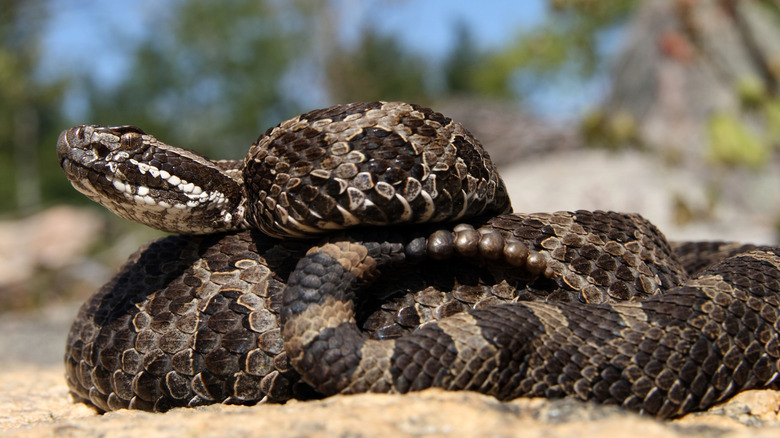
The eastern massasauga, also known as the "swamp rattler," is compact, well camouflaged, and dangerously easy to overlook. Adults typically measure 2 feet in length, with a gray or light-brown body marked by dark, light-edged blotches. This snake lives around wetlands, marshes, and prairies across parts of the Great Lakes region, where its camouflage makes it practically disappear among leaves and vegetation. Don't let its small stature fool you, as a bite from this federally threatened snake is highly venomous, and will require immediate medical attention.
Red diamond rattlesnake
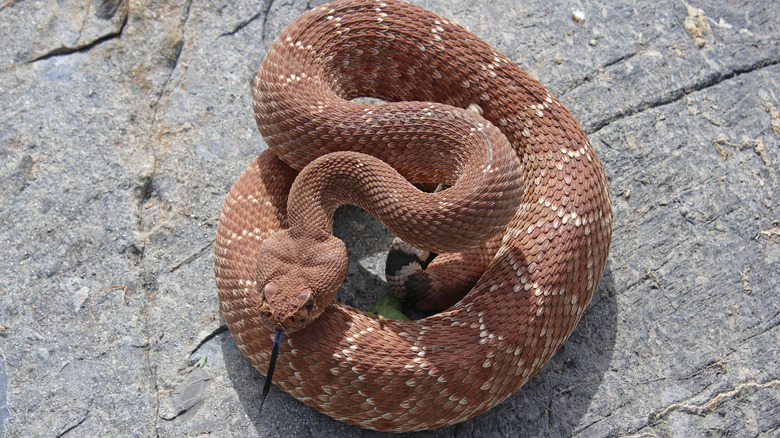
This highly venomous serpent can grow over 5 feet, with a brick-red, pinkish, or reddish-brown body decorated with a diamond-shaped pattern. It can be found across most of southwestern California, as well as Mexico's Baja California Peninsula. The red diamond rattler's preferred habitat is rocky terrain, thick brush, and coastal chaparral, but it can turn up in residential areas that border or encroach on natural terrain. If you live in southwest Cali, keep an eye out when you step into your agave-covered no-mow garden, as this rattlesnake's venomous bite is dangerous.
Black mamba
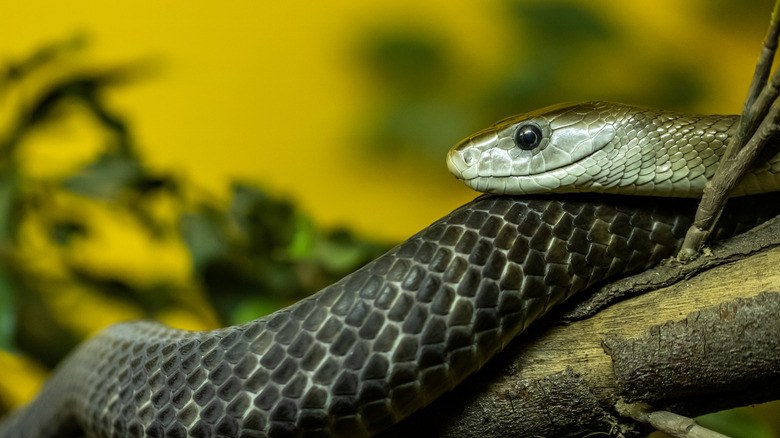
If you find this snake anywhere near your home, something has gone horribly awry. Native only to sub-Saharan Africa, the black mamba has no established population in the United States, so a sighting could only point to an escaped zoo animal, or a released research snake. Known as one of the deadliest and most fearsome snakes on Earth, the black mamba can grow to 14 feet long. Despite the name, its skin is typically a gray-brown color. When threatened, the black mamba opens its inky-black mouth, before striking with a fast-acting neurotoxic and cardiotoxic venom that rapidly causes life-threatening symptoms. Though it's extremely unlikely that you'll find one in your yard, we couldn't wrap up this list without warning you to steer clear.