

The Cute Carved Pumpkin Planter Trend To Try This Fall
We may receive a commission on purchases made from links.
This spooky season, creators all over social media are showing off a super cute fall planter idea. If you're tired of pool noodle fall DIY projects and want to try something charming, biodegradable, and deliciously whimsical, this trend is for you: Scooping out a real pumpkin to create a porch planter.
This, ahem, gourdgeous idea is pretty effortless. It doesn't involve any intricate glueing, painting, Mod Podge-ing, etc. It also doesn't require any tools beyond a knife and a spoon for scooping — unless you feel like using a jigsaw or Sawzall to speed up the cutting. Plus, depending on the pumpkin you pick, it shouldn't cost more than $4 to $20 (Walmart's carving pumpkins are $3.97 this season), which is far cheaper than most plastic or resin planters you can pick up at the store. And while this planter isn't, of course, going to last for months, there are a couple of tricks you can employ to combat decay. Also, once its time is over, there's a fun (and practical) way to dispose of your all-natural pumpkin planter.
How to make a pumpkin planter (plus preservation tips)
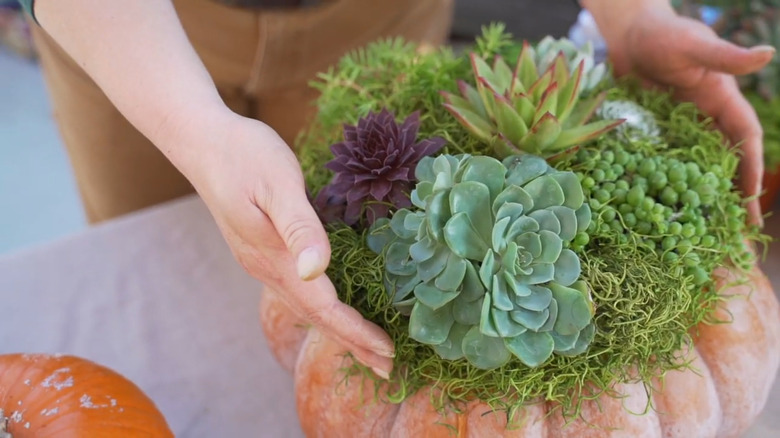
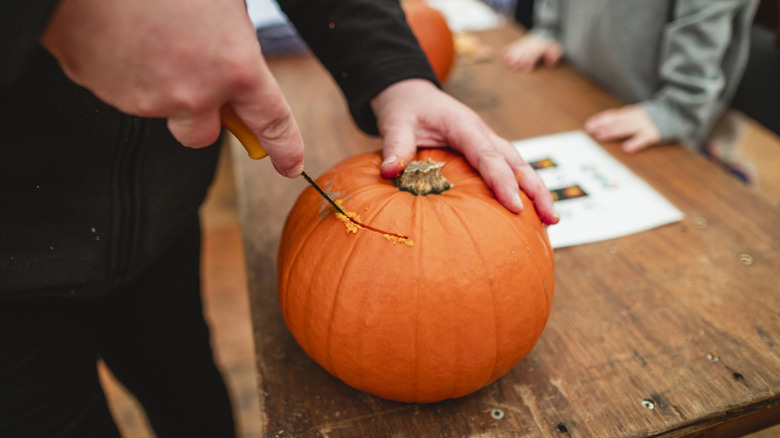
Once you've procured a pumpkin, start by cutting off the top. Try to make the cut neat and clean, as this will be the rim of your planter. Scoop out the seeds, and then turn it upside down and cut some drainage holes. From here, you can use it like a cache pot and pop in an already-potted plant, or fill the pumpkin with soil and then add plants.
Cut pumpkins can last between one and two weeks, but this is very dependent on heat and humidity levels. You can push the timeline out by spraying or rinsing the hollowed pumpkin with a 1:10 diluted bleach solution. Placing the planter in a cool spot on your porch could also prolong its life. Using the pumpkin as an outer pot, rather than planting into it, might also slow decay, as the inside walls won't be in contact with soil. Quick tip: If you're thinking of doing this with chrysanthemums, repotting first can help your mums thrive, as most are root-bound when you buy them.
If you prefer to plant directly into the pumpkin, here's a fun hack that caters to the future of both the pumpkin and the plant inside: Select a plant that you'd like to place in a garden bed at some point in the fall. Once the pumpkin's time is up, dig a hole and place the entire thing in the ground. Incorporating vegetable scraps into the soil is one of the easiest ways to compost, and the pumpkin will feed your plant as it breaks down. Don't have a place to sink the pumpkin into the soil, but still want to plant directly into it? Line the inside with some plastic. The plastic might help slow decay, and you can easily remove the plant and soil when the pumpkin is done.