

The Difference Between Mold And Mildew & How To Fight These Fungi
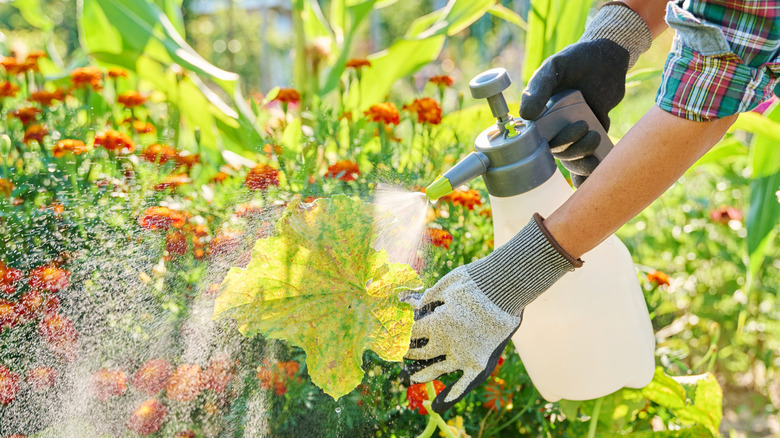
If you've ever noticed icky black spots popping up on fence planks — or a powdery fungal growth when watering your fall pumpkin plants – you may have wondered whether you're looking at mold or mildew. The two terms are often used interchangeably, but there are distinct differences. Mildew isn't a completely separate category of organism: It's the common name used for types of mold that grow in a relatively flat formation. In other words, all mildew is a form of mold — but not all types of mold are mildew. If this sounds confusing, don't sweat. Mold and mildew have easy-to-tell-apart features, and identifying what you're actually seeing can help determine what action to take.
There are thousands of mold species, and they can grow on a variety of organic materials when moisture and other environmental conditions are favorable. Outdoors, that can mean everything from slime mold in mulch to black mold on wooden fences. Mold can have a wide range of appearances, including fuzzy, slimy, or discolored patches, depending on the species and what it's growing on. Mold also sends out hyphae, which can extend deep into materials.
Mildew, on the other hand, is a surface fungus and has a fine, flatter look, usually starting out as light gray spots. It can pop up on things like outdoor cushions, awnings, wooden railings, etc. Then there is also powdery mildew — a fungal disease that affects plants, and which develops as pale, powdery patches across leaves and stems. If an infection becomes severe, powdery mildew can impair photosynthesis and affect plant vigor.
How to combat mold and mildew in your yard and garden
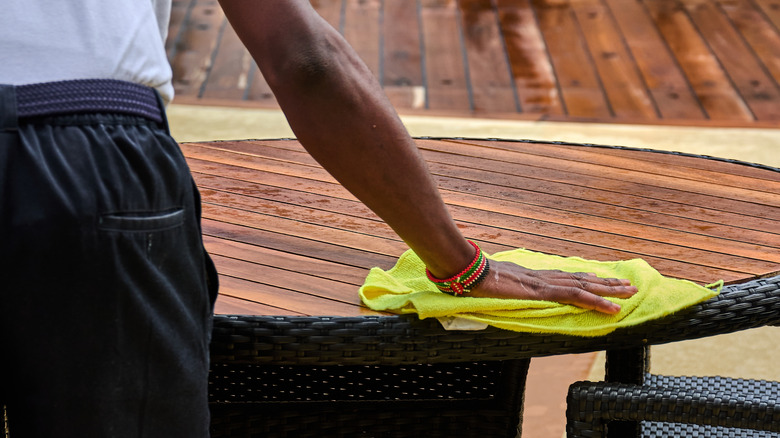
The core steps to preventing mold and mildew revolve around reducing moisture and increasing airflow. In a garden, overcrowded plants can create favorable conditions for fungal diseases such as powdery mildew. On a wooden deck, fence, or garden structure, prolonged exposure to rain and humidity can encourage mold, mildew, and other forms of biological growth, particularly if dirt and organic material accumulate on the surfaces.
To combat powdery mildew, leave enough room between plants so as not to inhibit air movement. If plants are already growing too close together, you can try transplanting or thinning them out. Pruning back overgrown areas of your yard can further encourage airflow. There are also various things you can try to treat infected plants. For instance, some people use milk against powdery mildew, however results aren't guaranteed. Alternatively, you can apply horticultural oil or even a fungicide for plants that are very susceptible.
For wooden outdoor structures, aim to regularly sweep away leaves and debris, and you'll want to address drainage problems that leave wood continually damp. You can get rid of most surface-level mildew and light mold growth by scrubbing with some detergent or, for painted surfaces, diluted bleach. If you're tackling thick patches of mold, wear a respirator so you don't breathe in the spores. For exterior paintwork, repainting with a mildew-resistant paint after cleaning can net you a few mildew-free years. Wood that's developed deep-seated mold spots may need to be sanded down and refinished.