

The Driveway Material That's Nearly Impossible To Crack
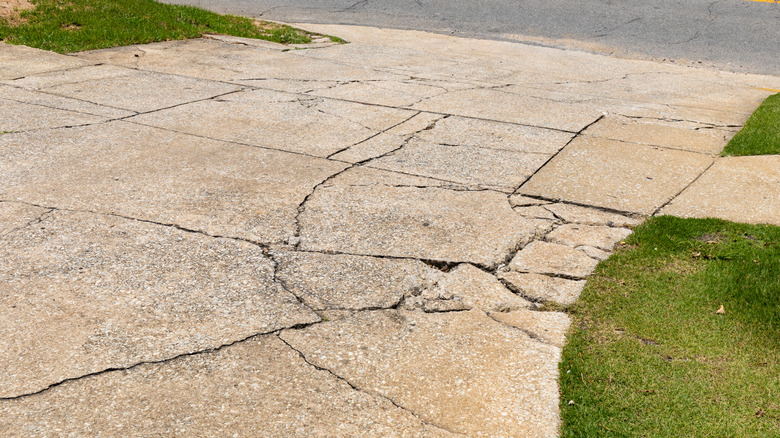
Almost everyone who has a concrete or asphalt driveway knows that at some point, cracks will form. While it is possible to keep using such a driveway, at the very least it is unsightly. That's not to mention the additional maintenance that comes from constantly having to remove weeds from the cracks in your driveway. At some point the driveway cracks ultimately have to be fixed or the structural integrity becomes compromised, erosion increases, and other issues arise. Despite these issues, concrete and asphalt were, for decades, the best option for a clean design in front of homes or garages. But there's another durable material that provides long-lasting curb appeal without concrete's flaws — rubber paving, a driveway material that's nearly impossible to crack. Though it's been a popular surface in the United States on playgrounds and athletic tracks since at least the 1980s, these days many companies offer rubber resurfacing for driveways.
Rubber paving, also known as rubber resurfacing or rubber stone, is a unique solution for driveways in that it combines many of the best qualities of various driveway materials: It has the permeability of gravel, the longevity and durability of concrete, and the flexibility of asphalt. It's also become popular for use in DIY paver projects, pool decks and more. In fact, one of the advantages of utilizing rubber paving on driveways is that the same product can be used to create coordinating outdoor surfaces, such as sidewalks and patios. While there doesn't seem to be specific data on the popularity of rubber-resurfaced driveways, the global rubber paving market has seen significant growth in recent years according to Growth Market Reports, with a predicted compound annual growth rate of 7% into the 2030s, especially in North America.
What you need to know about rubber paving
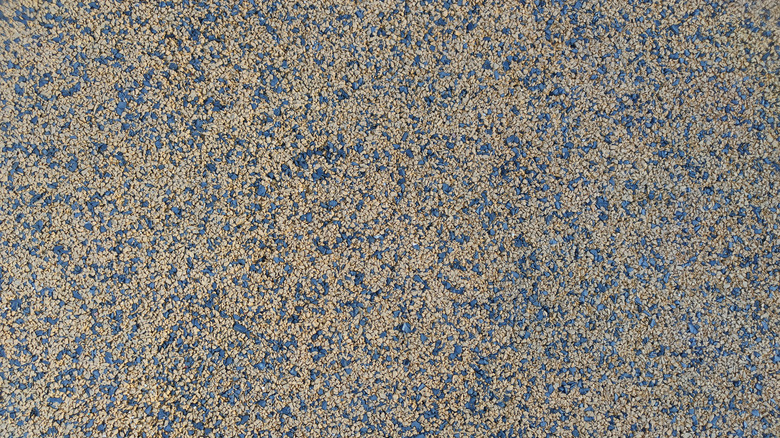
Like all building materials, there are both pros and cons to rubber paving. One of the biggest advantages, in the eyes of many, is that it is both sustainable and eco-friendly, since it's made from recycled materials, such as tires. When properly installed, it is permeable, which means rainwater can reach the soil beneath your driveway. This may sound trivial, but that actually helps recharge groundwater supplies, avoids clogging storm drains, and reduces flooding risks.
Another advantage is that rubber paving can be applied over a wide range of existing driveway surfaces, like concrete, asphalt, and paver stones. Resurfacing doesn't take long — a day or two if you hire a pro —and it's available in a wide array of colors. It also provides good traction, even in wet conditions, and requires relatively little maintenance. And, as mentioned earlier, it is almost impossible to crack thanks to its flexibility.
However, rubber paving is not ideal for every situation. It's not the best option where heavy vehicles, such as RVs and travel trailers, are parked and stored. Secondly, it can fade without additional UV protection. Additionally, the up-front cost of installation may be higher than spot repairs of existing surfaces. Some groups, like the Ecology Center contest the eco-friendliness of the material. Since crumb rubber is recycled from tires, the same potential toxins — including lead and other heavy metals — may be leaching into your soil, or kicked up as dust. Finally, although rubber paving is durable, some precautions are necessary. For example, while you can safely use both salt and sand to de-ice a rubber pavement driveway, metal snow shovels can severely damage the surface.