

Brighten Your Yard's Shady Areas With This Cheery Perennial's Long-Living Flowers
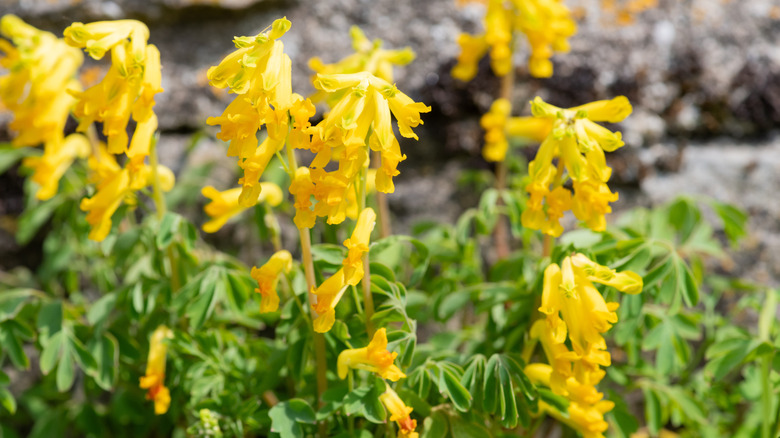
When creating a thoughtful layout in your home garden, tackling a shady area can be an especially challenging hurdle. While many perennial flowering plants thrive in full sun, most of these struggle to produce abundant blooms under trees, alongside a house, or in other low-light areas. That's what makes yellow corydalis (Corydalis lutea) such a standout. This cheerful perennial has earned a loyal following thanks to its ability to brighten shady spaces in your garden with delicate yellow flowers that can last for months at a time.
Not only is yellow corydalis ideal for shady spaces, it's also known for an exceptionally long flowering season. In favorable conditions, these flowers can begin adding beautiful color to your lawn in the late spring and continue producing fresh blossoms until the first hard frost. The plant's finely divided, blue-green foliage also remains attractive throughout the growing season, with a soft, fern-like texture that pairs beautifully with other shade-loving plants. The bright, long-lasting flowers are exceptionally appealing to bees and other helpful pollinators, which adds further ecological value to your home and garden.
Another major draw is the plant's relatively low maintenance. Once established, yellow corydalis forms tidy clumps and often self-seeds, allowing it to spread out to fill in nearby cracks and climb along stone walls, creating a natural, woodland-inspired look.
How to grow the best and brightest yellow corydalis flowers
As noted, yellow corydalis performs best in partial to full shade, making it an excellent choice beneath trees, in rocky outcrops, or alongside shaded pathways. It can tolerate a bit of morning sun, especially in cooler climates, but intense afternoon sunlight and prolonged heat causes flowering to slow and foliage to look tired. In warmer regions, it's best to plant corydalis somewhere where the afternoon sun won't beam down on it at all, in order to keep it looking fresh and bright.
One of the biggest advantages of yellow corydalis is that it asks for relatively little once it begins thriving in the shade. Just pop seeds or starts in the soil, give it basic care until established, and this dependable perennial can take it from there, particularly in cooler regions. The key is mimicking the woodland environments and humus-rich, well-draining soils where corydalis naturally thrives, like those found in USDA Hardiness Zones 5 though 8. Most corydalis plants find little trouble adapting to rocky crevices and stone structures. Once established, these plants can tolerate short dry spells, but they'll still appreciate consistent moisture, particularly during the dead heat of the summer.
The plant's tendency to self-seed can be a welcome feature In informal woodland gardens, allowing plants to gradually colonize gaps and create an organic display. In more manicured landscapes, however, occasional deadheading may be necessary to keep the plant where you want it. If the flower ends up growing where you don't want it, it's easy to remove by cutting it to the ground following several hard frosts.