

The Best Way To Stop Weeds From Taking Over A Gravel Driveway
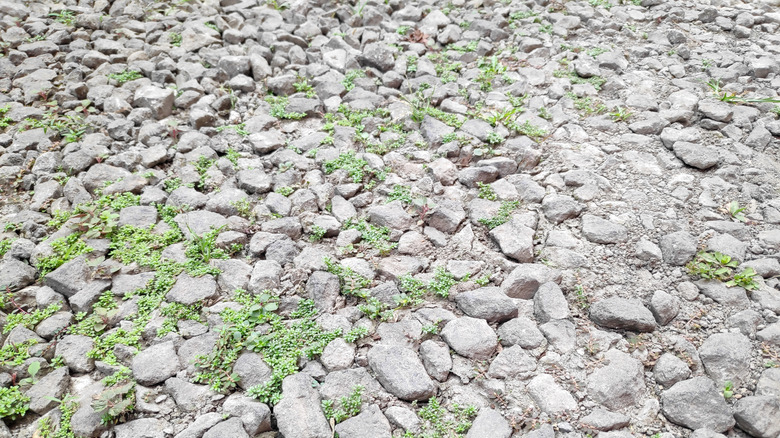
Gravel driveways are popular because they can be created quickly and are relatively inexpensive. They also drain well and are environmentally friendly. One of the reasons they drain so much better than concrete or asphalt is because even a thick layer of gravel does not create a solid surface. But that porous nature is a two-way street: Just as water can drain down, weeds can grow up. While there are a number of ways to kill or remove weeds once they reach the open air, if you want to prevent weeds from taking over your gravel driveway, the best thing to do is treat it regularly with pre-emergent herbicide.
Using herbicide to kill existing weeds — post-emergent — is one thing. Whether you are using a standard post-emergent pesticide or a DIY weed-killer, or simply digging out weeds as they appear, you are essentially managing an existing problem. A pre-emergent herbicide, on the other hand, actually prevents weeds from growing in the first place. These products work by preventing seeds from germinating as opposed to killing weeds that have already sprouted and are actively rooted and growing. These preemptive herbicides will serve the same function if you have a driveway made of porous pavers rather than one made of gravel.
Timing is key to successful application of pre-emergent herbicides
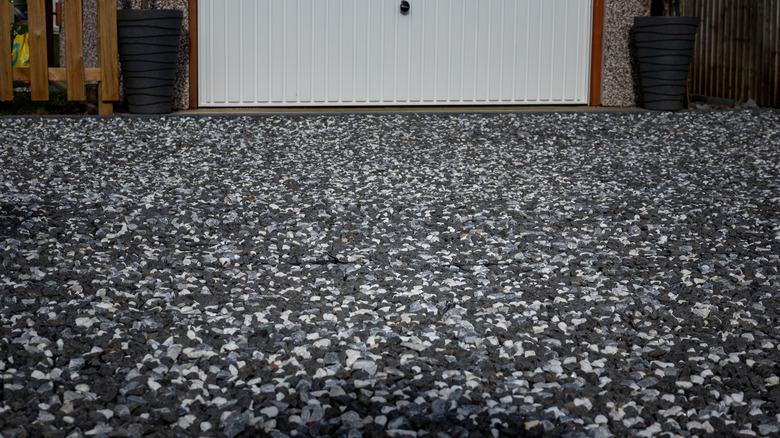
Because it functions by preventing seeds from germinating, timing a pre-emergent herbicide is of utmost importance. In short, it will not be effective if it is applied after seeds germinate. With that in mind, the best way to control and prevent weeds in your gravel driveway is to apply pre-emergent herbicide twice a year, in spring and fall. In spring, apply it once the ground temperature is between 50 and 55 degrees Fahrenheit. In regions where winter soil temperatures don't drop that low, treat driveways by early February.
For fall applications, it is best to wait until soil temperatures get below 70 degrees. Again, the exact time will vary by geography. In the majority of the country, this takes place in September. In some Southern areas, it will happen later, if at all. Even in the warmest parts of the country, the product should be applied no later than mid-November. If you are wondering why you should even do a second application in the fall, that's because a number of winter weeds germinate in late autumn, including chickweed and annual bluegrass.
Pre-emergent herbicide isn't the only way to prevent weeds in a gravel driveway. Many people recommend layering landscape fabric beneath gravel driveways. While landscape fabric helps keep your gravel driveway weed-free, it eventually breaks down (in five to 10 years). When this happens, weeds then grow through the gravel. Picking up pieces of decayed, shredded fabric in gravel can also turn into a maintenance mess. Of course, it isn't practical to lay landscape fabric beneath an existing gravel drive. Perhaps most importantly, durable geotextile fabric is generally a much-preferred underlayment for gravel driveways, but it is not useful as a weed barrier in the way landscape fabric is.