

The Popular Lawn Tool On The Verge Of Being Banned
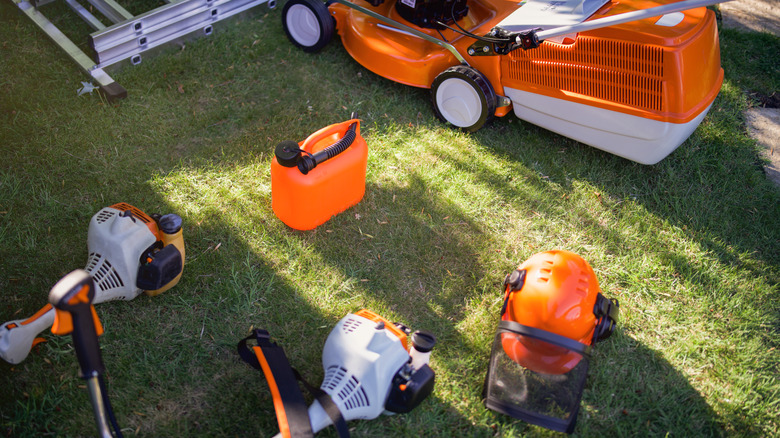
Practically everyone who does lawn work owns a leaf blower. After all, despite the name, these machines can be used for everything from blowing debris off of porches to making snow removal easier throughout the winter. This versatility makes leaf blowers a true year-round lawn and garden tool. However, if that leaf blower is a gas model, you may not be able to use it much longer, depending on where you live. That is because despite their multi-use capabilities, gas-powered versions of this popular lawn tool — both two-stroke and four-stroke engines — are on the verge of being banned. In fact, in many parts of the country, they are already prohibited.
Gas leaf blowers have been the industry standard since the 1970s. While they quickly became popular — and remain so today — there have always been some drawbacks to using the gas versions. For one, they can be incredibly noisy. Secondly, they produce a high level of emissions. In fact, using a gas leaf blower for one hour puts the same quantity of pollutants in the air as driving a newer car for 1,100 miles. While attempts were made by some companies to introduce quieter four-stroke engines, the industry still relies on the lighter two-stroke engine for most hand-held models.
These issues are hardly new. As early as the 1990s, attempts were made to make quieter, more efficient gas-powered leaf blowers. By the early 2000s, corded electric models began appearing across the United States, followed by blowers with rechargeable batteries. Nonetheless, gas-powered blowers remained the top choice for many, including lawn care professionals. With the proliferation of bans and restrictions in cities, states, and neighborhoods across the U.S., it's possible there will no longer be a choice between gas or electric leaf blowers for many areas.
Not everyone agrees with banning gas-powered leaf blowers
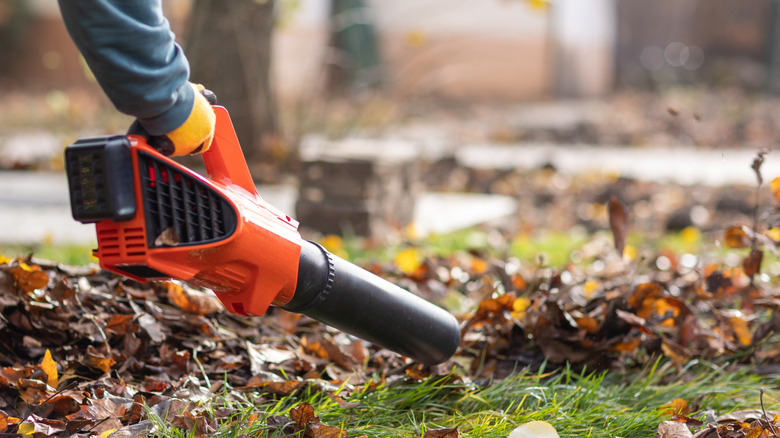
Since the intent of the bans and restrictions is to reduce noise and pollution, it would seem as if everyone would be happy about it, but that's not the case. In fact, many lawn care professionals and homeowners oppose the bans. They argue that most electric leaf blowers are not powerful enough to tackle bigger jobs such as lifting wet leaves or cleaning out gutters. While the capabilities of electric leaf blowers are rapidly advancing, opponents argue that the more powerful electric models are much more expensive than comparable gas versions. However, with improving technologies, and factoring in gas and maintenance, that argument may become increasingly moot.
Despite those arguments, many cities and states are moving forward with bans and restrictions. Philadelphia proposed banning gas leaf blowers last year, joining Washington D.C, Miami, and over 200 other cities in this movement. At present, 27 states have one or more cities with some sort of ban or restriction on gas leaf blowers. Some states have de facto bans. For instance, California requires all new lawn equipment to be zero-emission. So, except in individual cities where outright bans are in place, it is legal to use gas leaf blowers. However, you will not be able to replace it.
These ordinances are not homogenous. In some cities, such as Portland, Oregon, a phase-out process is in place where gas leaf blowers are allowed during fall and early winter for the next two years, then banned year-round after that. This is a nod to the argument that electric models can't handle wet leaves. The idea is that within the two-year period, stronger, less expensive electric models will become more readily available. Given how rapidly these bans have been emerging, it's smart to check local ordinances before buying or operating a gas leaf blower.