

What's The Difference Between Concrete And Cement?
We may receive a commission on purchases made from links.
If you are looking for the best quality material for a patio when you're on a budget, you may be considering concrete. After all, aside from water, concrete is the most utilized construction material in the world, including for many DIY projects. But, do these projects require concrete, cement, or both? Although many people think of these two materials as one and the same, they are actually different, albeit closely related, products.
So, what's the difference between concrete and cement? Turns out, one is used to make the other. In simplest terms, cement is a binding agent. Concrete, on the other hand, is composed of several different materials and is meant to provide structure strength. In fact, one of these component materials is actually cement. Within concrete, cement is used to hold all the other aggregate materials together. But binding concrete isn't the only purpose for cement. Like concrete, cement can also be used for a variety of construction tasks, including repairs and binding many other construction materials beyond concrete.
Cement has several uses
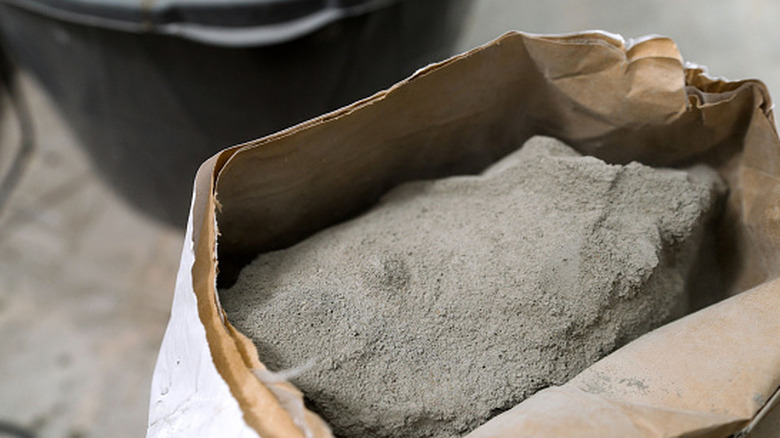
Cement itself is also made from a variety of minerals, with limestone typically being the primary ingredient along with at least one silica source, often an industrial waste byproduct like fly ash. These minerals are mixed and heated to form a substance known as clinker. The clinker is then ground into a powder form, which is what you actually get when you buy a commercial product such as Rockite cement. When this powder is mixed with water, it becomes a thick, adhesive paste which will eventually harden, or set.
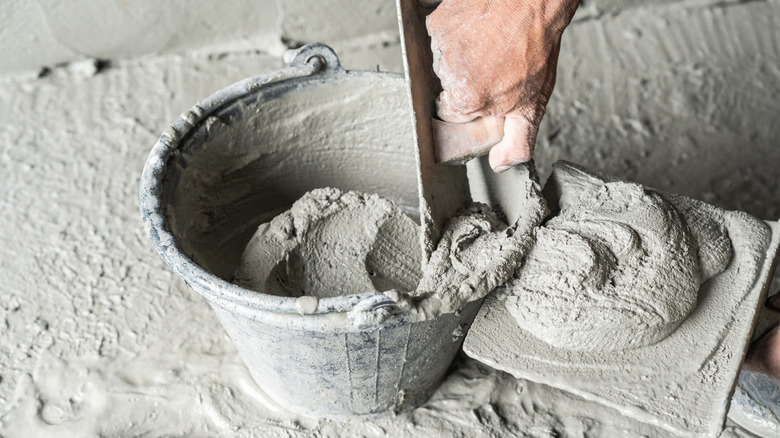
Cement has a variety of uses, both as a component and as a stand-alone product. Again, it is an essential ingredient for concrete. If you mix sand with cement you get mortar, which is used for a variety of tasks ranging from binding bricks to making a DIY mosaic tile planter. Basically, mortar or grout is used almost any time you're installing brick or tile. Cement is also used for stucco on walls and to repair cracks in concrete structures. Although it doesn't have the same strength as concrete, cement is also a good choice for small projects such as making DIY stepping stones in your garden or creating a planter bed.
Concrete provides superior strength
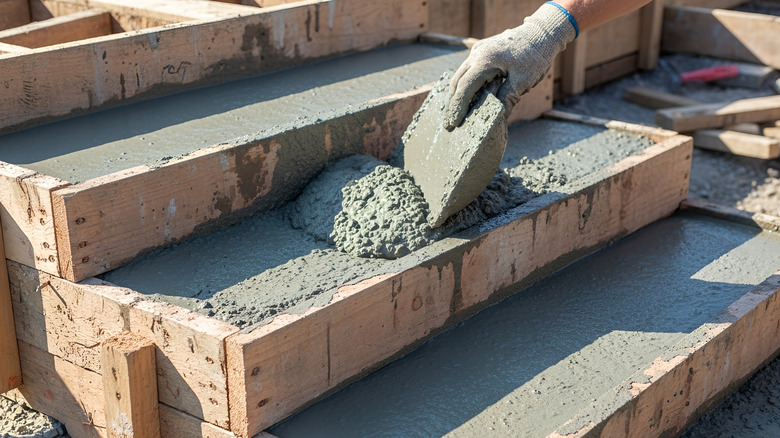
Concrete is a mix of different materials, including cement. It is mostly made of sand and aggregates like gravel and crushed stone, but can also include more interesting options like oyster shells, semiprecious gemstones, or broken glass. These materials are what give concrete its structural strength. The remainder — usually about one-quarter — is wet cement, used to bind the aggregates together. This is what you can expect when you purchase a product like Quikcrete concrete mix. What water is added to the mix, the cement inside the concrete is activated and will begin binding the aggregates.
Thanks to the addition of the aggregates, concrete has a substantial strength advantage over plain cement, making it a good choice for use in a wider range of projects. Concrete is a perfect choice for setting a fence post or mailbox stand. It is what you definitely need when pouring a sidewalk, patio, or driveway. Of course, concrete is also what is primarily used for home foundations. Additionally, because it's so strong, concrete is the proper choice for retaining walls or any other load-bearing purpose.