

Say Goodbye To Termites With A Natural Solution They Can't Survive
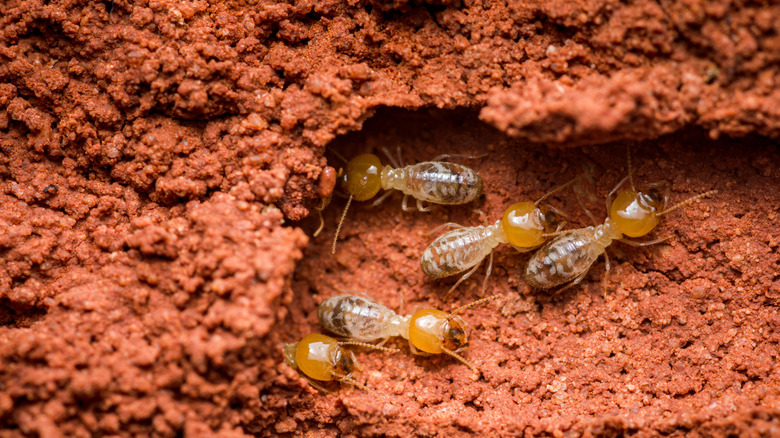
Termites are a common and serious problem for homeowners throughout much of the United States. These wood-loving insects can literally eat a house from the inside out if left untreated. They can also be the reason your deck boards are cracking, your wooden privacy fence is falling, or your shed is no longer stable. Essentially, no wood structure is safe when termites attack. While a full-on infestation of termites within a home typically takes a chemical treatment to rectify, there are natural methods for controlling and preventing them from entering your house in the first place. One way is to turn loose a deadly predator that termites can't escape: nematodes.
Nematodes are unsegmented, microscopic worms. There are thousands of named species of nematodes and perhaps millions more yet to be classified. Some species feed on termites and can be used as a natural pest control measure. However, before unleashing an army of these microscopic worms in your yard, it is extremely important to note that not all nematodes are beneficial. In fact, some can be harmful to both pets and people, causing a variety of health problems for humans, including gastrointestinal issues and anemia. Harmful nematodes such as hookworms can cause intestinal infections in domestic pets. They can also be harmful to plants, which is why gardeners often cultivate plants that will repel nematodes and other pests. So, it is very important that only beneficial nematodes be used to control termites. The best way to do this is to consult with your local garden center, buying from a trusted source in person or online.
Using nematodes as natural pest control
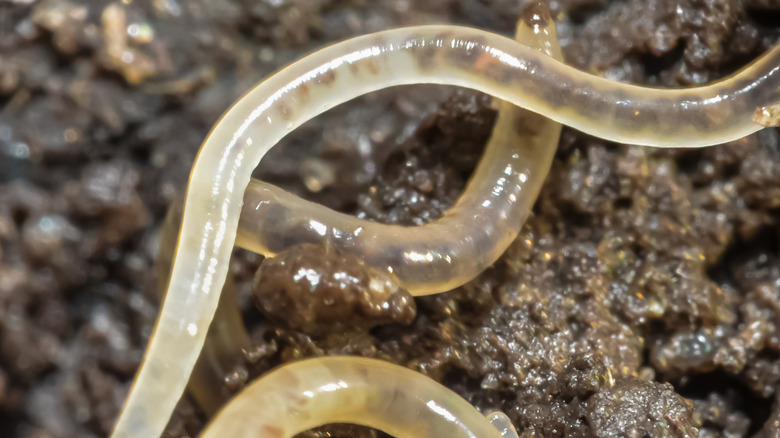
The first step in using nematodes as a natural pest control is to secure a supply of beneficial nematodes. Several species of entomopathogenic nematodes target termites — Steinernema riobrave, Steinernema feltiae, and Heterorhabditis bacteriophora are considered to be among the best for this purpose. The good thing is, the use of nematodes in pest control has been scientifically established. The U.S. Department of Agriculture and other organizations have touted nematodes as an effective option for over a decade.
Even though these nematodes attack and kill termites, they don't target them specifically. They will also predate on insects such as beetles, weevils, and ants, as well as grubs, a common cause of brown spots and other lawn issues. That means beneficial nematodes can be used as broad-spectrum pest and grub control in your lawn, in addition to keeping termites from attacking your house.
Once you have an ample supply, the next step is to let them loose in your yard, with a general measurement for effective application being 50 million nematodes per acre. To do so, mix nematodes with water in a pump sprayer or watering can (follow instructions for the exact proportions). You can also use a hose-end sprayer for this job. Start by spraying them into the soil around your foundation, then around the perimeter of your house or any other structures built with wood. If you locate a termite nest, pour a mixture of water and nematodes directly into the opening leading to the underground nest. However, if the infestation is too established, or nematodes don't seem to be doing the trick, don't hesitate to call in professional exterminators.