

These 'Grapes' Look The Same, But One Is Edible And One Is Poisonous
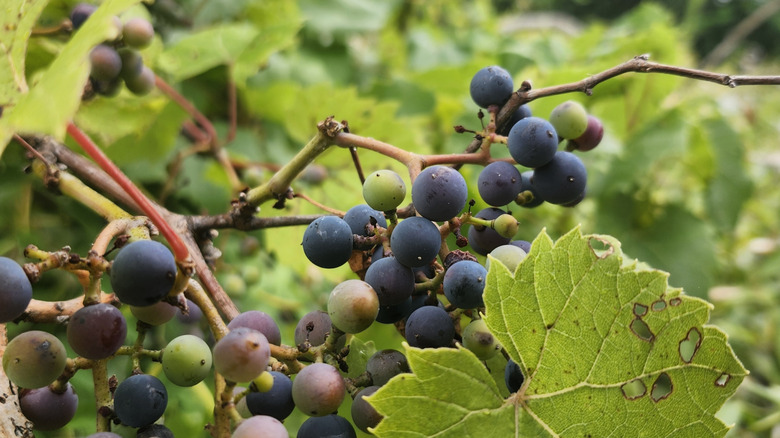
Grapes are a popular fruit we love to consume in a variety of ways. However, not all grapes are the same: European clones of Vitis vinifera are best for winemaking, while the 60 or so wild grape species (Vitis spp.) native to North American and their hybrids are better for juice, jams, and munching. Even more confusing: Not everything in the field or on the trail that looks like a wild grape is a grape. For example, Canadian Moonseed (Menispermum canadense) — a vine that bears clusters of hanging fruit that look like wild grapes — can kill you. Because the leaves and fruits of these two very different vines look similar, Moonseed may be among the plants you might not know are deadly. With that in mind, it is important to know how to distinguish between edible and poisonous varieties when gathering fruit afield.
Since the dozens of wild grape species across North America share a common evolutionary history of hybridization, they also share common characteristics that most foragers recognize: The jagged leaves, tendrils in search of footholds, and the telltale clusters of purple or green grapes. Canadian Moonseed, on the other hand belongs to a huge family consisting of more than 70 genera and 450 species of vines, shrubs, and bushes. Moonseed is a vine, indigenous to the U.S. and Canada, and its general appearance and fruit greatly resembles the riverbank grape (Vitis riparia). However, unlike wild grapes, Canadian Moonseed is highly toxic, causing severe illness and even death. Like death camas, a dangerous sounding plant to look out for, moonseed contains dangerous alkaloids, including berberine and menispine. It's worth noting this toxic plant does support beneficial pollinators and may have medicinal benefits. However, if you're a novice forager, you're risking your life by not knowing how to spot this grape imposter.
Check the leaves and berries to identify Canadian Moonseed
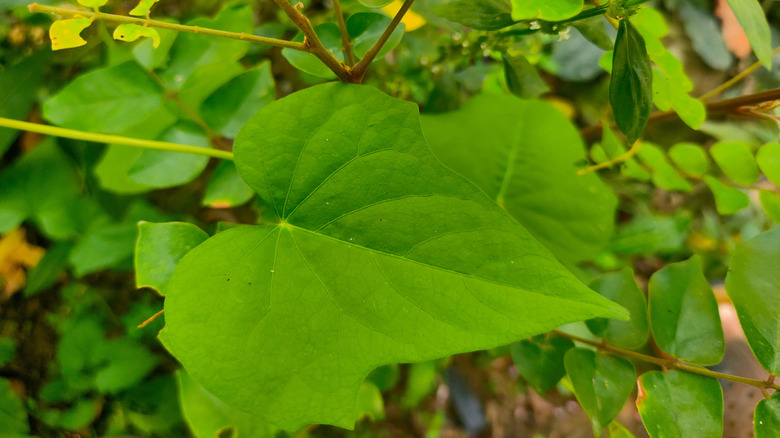
Technically speaking, all grapes are drupes, or stone fruit berries. The fruit on Canadian Moonseed is also a berry that grows in similar clusters. But if you're looking for edible food when lost in the woods, you really need to know the differences. Starting with the foliage will offer some clues.
Moonseed vines tend to be shorter than wild grape vines. Typically, a moonseed vine will max out at less than 20 feet, while native grapes can grow up to 100 feet when unrestrained. Grape vines will sport those famous green, spiraling tendrils in spring and summer, while moonseed does not. Additionally, while the leaves and their lobes are similar in shape, moonseed leaves have smooth edges whereas a wild grape leaf sports a jagged, "toothed" edge. The leaves on moonseed also tend to be broader and flatter. Additionally, older moonseed plants will have distinctively woody stems.
The most obvious physical difference between the two, however, lies inside the fruits. True wild grapes will have multiple small seeds within each berry. A moonseed berry, on the other hand, has a single, crescent-shaped seed — hence the name. So, the best way to ensure the fruit you are gathering is safe to eat is to crush open some of the berries and check the seeds. Be certain to handle the berries carefully until you know what you're dealing with and wash your hands thoroughly after any contact with moonseed.