

Instantly Transform Your Driveway With This Trendy Concrete Alternative
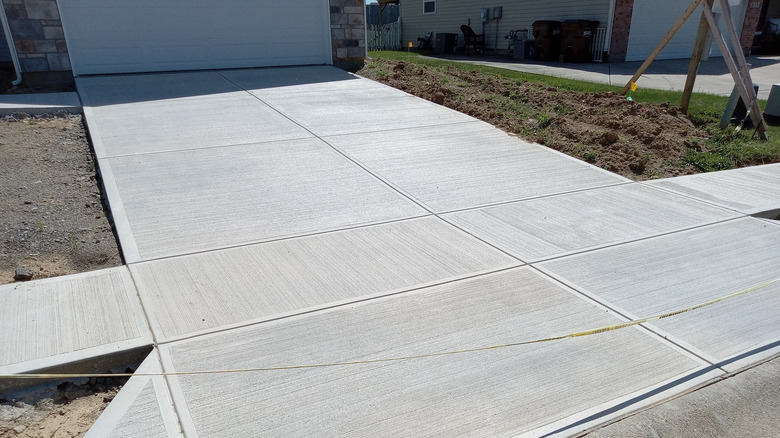
Concrete has long been one of the most common materials used for residential driveway construction in the United States. It's a popular choice largely because concrete driveways are relatively inexpensive, low-maintenance, long-lasting, and durable. However, there are some downsides to poured concrete driveways, including something of a generic appearance. With that in mind, you can transform the aesthetic appeal of our driveway by using permeable pavers, a trendy — and practical — alternative to traditional concrete driveways.
While they are seeing a renewed popularity, using pavers for driveways is not actually a new technique. In fact, pavers were first used by the Ancient Romans. and saw an uptick following World War II, thanks to the scarcity of concrete. Indeed, even Thomas Jefferson chose pavers for use around Monticello for their elegant visual appeal. Although the earliest models of pavers consisted of natural stone, more modern versions are often made from brick, pervious concrete, or permeable composite materials, allowing for a variety of shapes, sizes, and colors. This means there are a myriad of options when it comes to choosing the right pavers for your driveway.
Regardless of the type, size, or pattern you choose, permeable pavers are typically considered an update that will add value to your home and give it a more aesthetically pleasing look. With the variety of styles and colors today, homeowners can elevate curb appeal of any type of home by installing a pavers driveway. But permeable pavers are more than simply an attractive alternative to concrete: They provide a number of benefits from easy maintenance to environmental sustainability.
Permeable pavers offer advantages beyond aesthetics
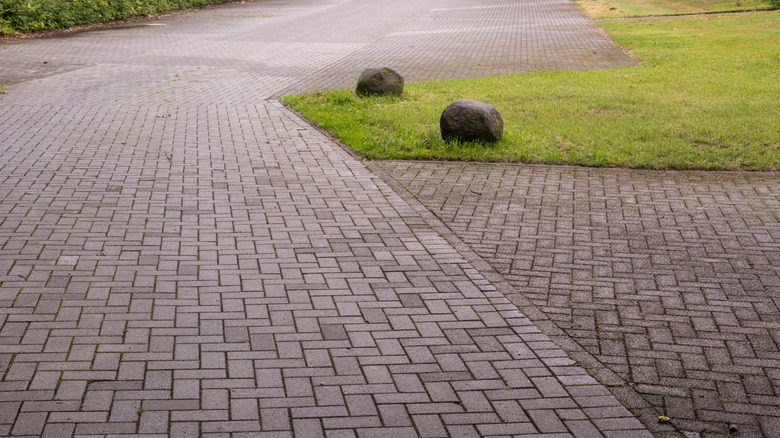
Improving aesthetics isn't the only reason to choose permeable pavers for your driveway material. One of the biggest advantages is that it is an eco-friendly solution that can significantly improve drainage in your yard. Because they are permeable, water is absorbed by the soil under the driveway. This reduces pooling, runoff, and erosion during heavy rains. It also diminishes the risk of flooding. This makes pavers a particularly good choice for driveways in areas that receive substantial rainfall. What's more, pavers that are crafted locally — especially those made incorporating recycled materials — require less energy than concrete to produce and transport.
Although durability and longevity are trademarks of poured concrete driveways (30 years or more), pavers actually have a longer expected lifespan at 50 to 75 years or more, depending on the materials. On top of that, concrete driveways are prone to oil stains and cracking. To repair damage, entire sections of concrete typically have to be cut away and replaced, or the entire driveway must be redone. Should a portion of a pavers driveway suffer any damage, individual bricks can be easily removed and replaced at a fraction of the price.
Having said all of that, permeable pavers are not without drawbacks. The initial installation takes longer and costs more than the same concrete driveway. Of course, you can save money by turning driveway into a DIY pavers project, even with no construction experience. Pouring an entire concrete slab, on the other hand, typically requires a professional crew. Regardless of who installs it, pavers driveways are susceptible to weed growth between joints. So some time and energy will be invested each year to ensure your driveway stays weed-free.