

How To Prevent Mushrooms From Growing On Your Trees
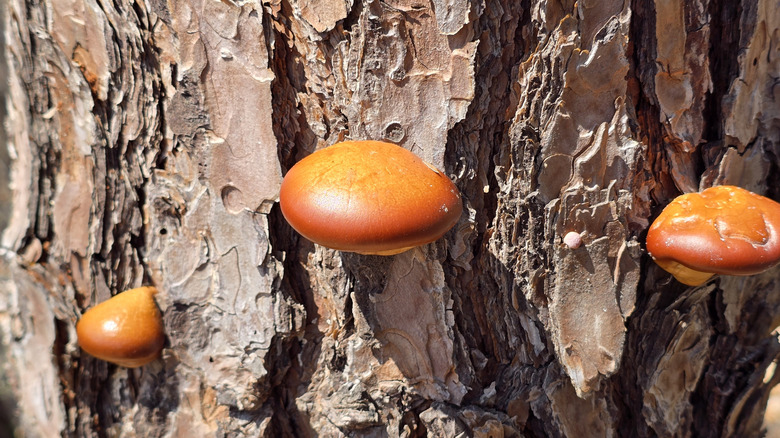
Mushrooms are a popular food item, with a wide variety of them pairing well with different dishes. While many people love eating them, most aren't so happy to see mushrooms growing in their yard. Typically, they are even less enthusiastic when they spy them growing on trees. This is for good reason, as mushrooms growing on tree trunks is typically not a good sign. The best ways to prevent this from happening involve utilizing caution around your trees and properly caring for them.
The reason mushrooms are not as welcome on trees as on dinner plates is simple: Mushrooms are fungi, and their mycelia — fibrous "root" networks — can reach far into a tree's interior. A number of mushroom types that grow on trees can cause various types of wood rot. This, in turn, can lead to severe issues such as structural damage to the interior of the tree, weakening it and increasing its vulnerability to insects and disease. Some species of mushroom, called saprophytic mushrooms, do not cause rot, but consume material that is already dead. This can also be cause for concern, as it indicates there is dead wood within your tree. In either instance, a mushroom is often a visual cue that something is wrong internally with your tree.
Different mushrooms indicate different issues. Shelf mushrooms can cause brown rot, and may indicate a tree has been irreparably damaged. While not all mushrooms at the base of a tree are bad, honey fungus attack and kill tree roots, and can actually be transferred among neighboring trees through their roots. While such information can be helpful, it's best if your trees are healthy enough that these damaging types of mushrooms never appear in the first place.
Preventing and dealing with mushrooms on trees
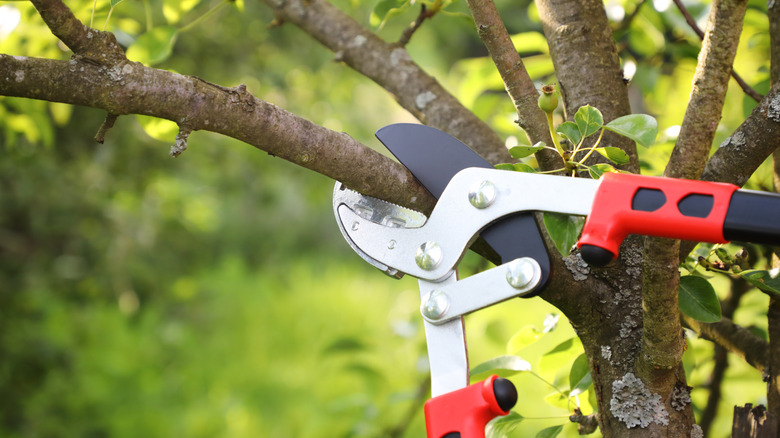
Although there are no 100% guarantees against all fungi, there are steps that greatly reduce the likelihood of a fungal takeover. Preventing mushrooms from growing on your trees comes down to making sure trees remain healthy and don't sustain damage which could allow easy access for mushrooms and other fungi. Stressed trees, whether due to drought or physical damage, are especially susceptible.
That really is as simple as it sounds, but it's easy to become forgetful or careless. Developing and maintaining a good tree-care routine is key. This includes carefully watering and fertilizing your trees on a regular basis. Proper pruning — a common yard maintenance project that can deter squirrels — will also keep mushrooms at bay by preventing trees from retaining too much moisture and reducing stress. Additionally, use caution when going about your regular lawn maintenance duties. Be particularly careful when mowing or using string trimmers or brush hogs to cut grass around trees — bark is a tree's first line of defense. Damage inflicted by these implements can give mushrooms and fungal infections a literal opening in which to take root.
If you do happen to spot mushrooms growing on your trees, don't just knock them off and assume the problem is solved. Mushrooms are simply the visible symptom of the problem. It is important to understand what is causing the issue to determine if the damage can be limited or if the tree will need to be removed. Look for signs like dying branches, whitish fungus inside the bark, or pale leaves. The most accurate way of assessing what is wrong and what needs to be done is to have a certified arborist conduct an inspection and outline the necessary next steps.