

Prevent Sunburn While Hiking With The Best-Reviewed Sunscreen
We may receive a commission on purchases made from links.
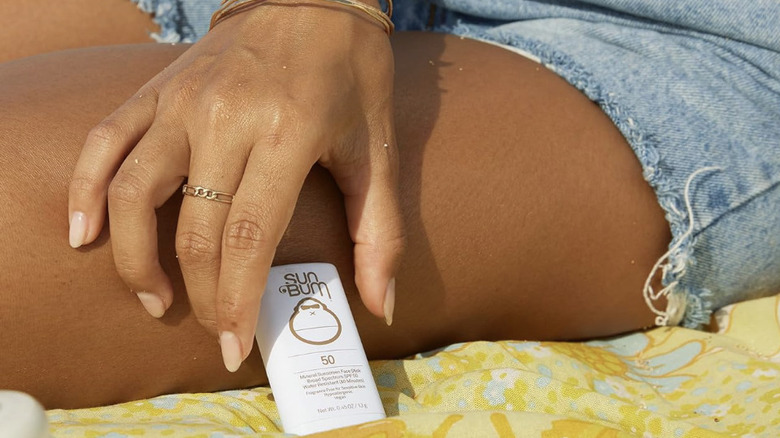
Hiking exposes skin to reflected and direct UV for hours. I've paid the price for this exposure in skin cancer, which is why I now focus less on sunscreen and more on following one rule — wearing UPF clothing, glacier goggles, and big hats. While I prefer this sort of physical coverage, mineral-based sunscreen like Sun Bum Mineral SPF 50 face stick is the best for your face and hands. It's compact, lightweight, and is an easy sunscreen to reapply while on the move. Over at Explorers Web — which rated Sun Bum the best face stick of 2026 — gear editor Chelsey Cook, "keeps it in the pocket of her soft-shell pants while traveling on the glaciers of Alaska, and likes that she can quickly apply it one-handed while moving on a rope team."
One bummer about the Sun Bum mineral stick is that it's a solid sunscreen, so it can be annoying to apply when it gets cold. I keep it in my zipped pant pocket so it stays warm from body heat. The mineral stick is white, and if you care about looking "cool" on the trail, a tinted mineral-based option might be better. I prefer it because my hiking buddies can easily see where I've missed a spot.
REI customer Crazylegs24 prefers Sun Bum's compact size for backpacking and says, "Overall, I think it worked pretty well and the best thing is that it's not loaded with chemicals like other brands." Beyond the pocket-friendly features, perhaps the best benefit of this sunscreen is that it stays mostly in place, even when you get sweaty while hiking. It isn't greasy, is water resistant, and we don't notice any eye stinging or dripping sunscreen when we are huffing and puffing on the trail. Because of the SPF 50, Sun Bum recommends reapplying it every 80 minutes.
Reasons you might want to bring a backup sunscreen
Beyond the common gripe of the white cast it can leave if it isn't rubbed in, other 1-star reviews on the REI site warn that this sunscreen did not prevent them from getting sunburned, despite following the instructions. Ewing says, "I spent the past two days climbing Mount Adams and trusted this product to protect me from the sun...I followed the directions, even over-applying to avoid being burnt. It was almost like I was using no sunscreen at all!" In fact, in areas of high sun exposure and reflective environments like snowy, high alpine climbs or on bodies of water, covering up is better than just wearing sunscreen. We recommend wearing long-sleeve breathable sun shirts, big hats, pants, and full coverage glasses like the Julbo slack cover glacier glasses. If you like to wear shorts and t-shirts while hiking, consider larger bottle of quality lotion sunscreen, remembering to apply sunscreen often throughout your hike.
Lola also gave this sunscreen a 1-star despite loving the original Sun Bum sunscreen lotion. "Perhaps the most disappointing feature is that when I use it consistently for a couple days, my skin will break out in little white pimples called milia. Turns out that the sunscreen isn't coming off when I wash it off at night even though I wash my face twice." Whether day hiking or overnight backpacking, we recommend a full face wash. If you're in a backcountry campsite, bring face wipes to get the grime of the day's hike off and give your pores a break.
Methodology
The author is an experienced thru-hiker and backcountry hiker who recently completed a sunny glacier hike. We also checked consumer reviews from retail sites like REI and Amazon, and blog rankings from outdoor sites like Explorers Web and Dun Magazine. We sought out criticisms and caveats as well as detailed positive reviews to get the best overall picture of highly rated sunscreens for hiking.